
Homemade Dishwasher Rinse Aid: Does It Save Money?
$avings Potential: $0.05–0.15 per fill
TDS Money-Saving Strategist: Andrea Norris-McKnight | posted July 2026
These tips may contain affiliate links. The Dollar Stretcher is an Amazon Associate and may earn a small commission if you purchase through a link, at no extra cost to you. Prices fluctuate, and featured products aren’t guaranteed to be the lowest price. As always, we recommend checking prices and buying only when it makes sense for your budget. Learn how we choose and recommend products.
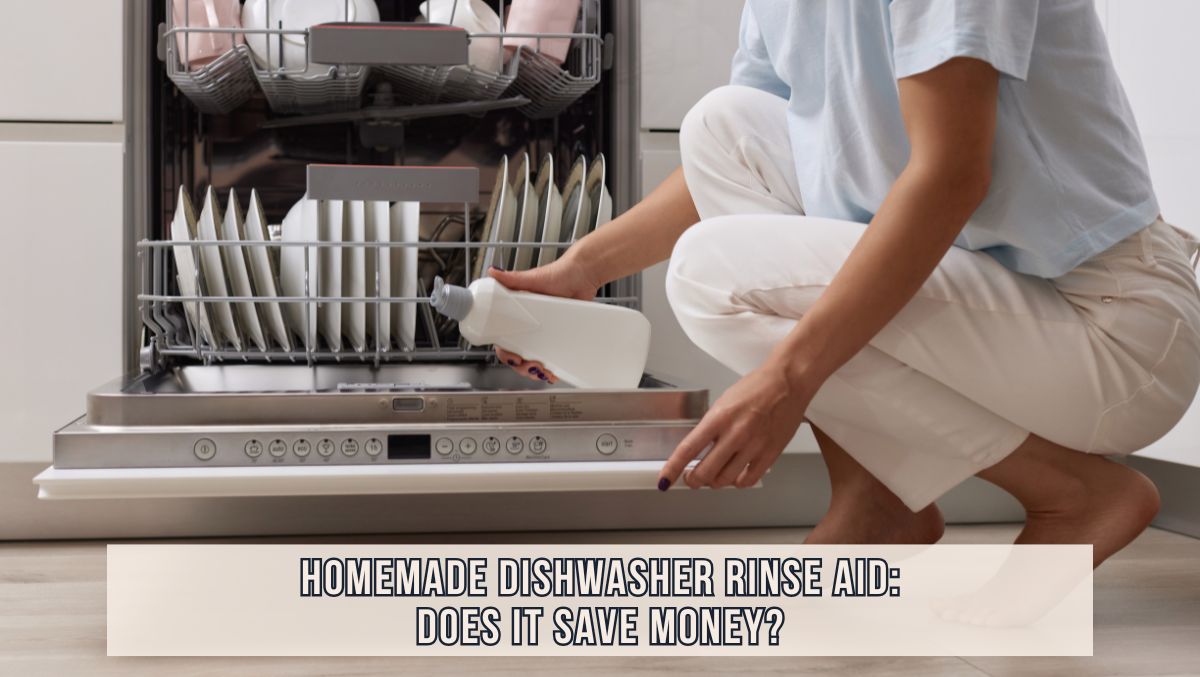
Rinse aid helps water sheet off dishes instead of forming droplets that dry into spots. The store-bought versions work well. But if you’re trimming every line in your budget, it’s fair to ask: Can you make your own?
Here’s what you need to know before you pour anything into that little rinse-aid compartment.
What a Rinse Aid Actually Does
Rinse aid:
- Reduces water spots
- Prevents cloudy film on glassware
- Helps dishes dry faster
- Cuts down on towel-drying
It works by lowering the surface tension of water so it slides off dishes more easily during the final rinse.
If you live in a hard water area, rinse aid can make a noticeable difference. If you have soft water and your dishes already come out clear, you may not need it at all.
Who Probably Needs Rinse Aid
You’re more likely to benefit if:
- Your water leaves mineral spots on faucets and shower doors
- Glasses look cloudy after washing
- Plastic containers come out dripping wet
- You skip the heated dry cycle to save electricity
If you’re trying to cut utility costs (which many Dollar Stretcher readers are), rinse aid can help dishes dry without running extra heat.
Who May Not Need It
You may be able to skip rinse aid if:
- You have a whole-house water softener
- Your dishwasher has a built-in drying system that works well
- You don’t mind hand-drying a few items
- Your detergent already includes a rinse booster
Before adding anything, try running a load without heated dry. If dishes come out mostly dry and clear, you’re fine without it.
Cautions Before You Make Your Own Rinse Aid
A few important notes:
- Check your dishwasher manual. Some manufacturers warn against using anything except commercial rinse aid.
- Don’t mix chemicals. Never combine vinegar with bleach or chlorine-based dishwasher detergents.
- Watch for rubber seal wear. Over time, straight vinegar may dry out rubber gaskets in some machines.
- Avoid essential oils. They can leave residue and may damage internal parts.
If your dishwasher is newer or under warranty, you may decide the few dollars saved isn’t worth the risk.
Want MORE TIPS for Stretching Your Budget?
Get the free eBook with 226 simple money-saving tips — plus the Dollar Stretcher newsletter with practical, real-life ways to make a tight budget go further.
We value your privacy.
Unsubscribe anytime.
Simple Homemade Rinse Aid Recipes
If you’d like to give DIY a go, here are a few recipes to try.
1. Straight White Vinegar (Most Common Option)
How to use:
Fill the rinse-aid compartment with plain white vinegar.
Why it works:
Vinegar helps break down mineral deposits and reduces spotting.
Cost:
Often just pennies per fill.
Watch for:
Long-term use may affect rubber seals in some machines.
2. Vinegar + Rubbing Alcohol
Recipe:
1 cup white vinegar
1 tablespoon rubbing alcohol
Shake gently before filling the compartment.
Why it works:
Alcohol helps water evaporate faster and can improve drying.
About The Dollar Stretcher
The Dollar Stretcher shares practical ways to lower everyday costs, build steadier money habits and move from stuck to stable on a tight budget.
Learn more about how we can help you.
Get All 226 Money-Saving Tips—Free Download
You’ll also get our free newsletter each week. It’s full of useful ways to cut costs and stretch your dollars.
3. Citric Acid Solution
Recipe:
1 tablespoon citric acid powder
1 cup warm water
Stir until dissolved. Let cool before adding.
Why it works:
Citric acid reduces mineral buildup and can help clear cloudy film.
Good choice if:
You’re concerned about vinegar affecting seals.
4. Hydrogen Peroxide + Vinegar (Separate Use Method)
Instead of mixing, some people:
- Fill the rinse compartment with hydrogen peroxide.
- Add vinegar to a small bowl on the top rack
This method keeps the two separate during storage but allows them to work during the cycle.
Only try this if you understand your detergent ingredients and avoid chlorine products.
What This Replaces in Your Budget
A small bottle of commercial rinse aid might cost $4–$7 and last a month or two.
Homemade versions often cost:
- 5–15 cents per fill
- Under $1 for several months
For someone on a Very Tight budget, that small monthly savings matters.
For someone on a Light trimming plan, this may not be worth experimenting with—especially if you have a newer machine.
One More Money-Saving Tip
Before you assume you need rinse aid, clean your dishwasher:
- Run an empty cycle with a bowl of vinegar on the top rack.
- Check and clean the filter.
- Scrape food debris before loading.
Sometimes cloudy dishes aren’t about rinse aid at all. They’re about buildup inside the machine.
Budget Level Quick Guide
Very Tight Budget: Try vinegar first. Monitor seals and performance. Skip heated dry to save more on electricity.
Moderate Budget: Test vinegar or citric acid for 30 days. Compare results before switching permanently.
Light Savings Focus: If your dishwasher works well with store-bought rinse aid, this may not be an area worth changing.
TDS Takeaway
Homemade rinse aid can save a few dollars a month. For some households, that’s worth it. For others, it’s one of those swaps that sounds bigger than it is.
If your dishes already look good, skip it.
If you’re fighting spots and trying to lower both product and electricity costs, a simple vinegar test run may be all you need.
Small savings add up—especially when they don’t make your life harder.
Did this article help you save or stretch a few dollars or plug a financial leak? The Dollar Stretcher can help you make your dollars go even further.
Join the free Dollar Stretcher newsletter to get money-saving tips and articles delivered to your inbox each week, plus a copy of the 226 money-saving tips eBook — a reference you can use whenever money feels tight.
About the Author
Andrea Norris-McKnight is the Money-Saving Strategist behind The Dollar Stretcher.
She helps people on tight budgets cut everyday costs, build steadier money habits and create a little breathing room—without guilt, gimmicks, or unrealistic advice.
More Ways To Save

Dishwasher Detergent: Powder, Gel or Pods — Which Saves the Most Money?

When Buying Generic Dishwasher Detergent Doesn’t Save as Much as You Think
Here’s how to tell if it’s truly a bargain in your kitchen.

Powder, Liquid or Pods: Which Laundry Detergent Saves the Most Money?
Not all laundry detergents cost the same per load.

DIY Laundry Detergent: Does It Really Save Money?
Here’s what it really costs, when it saves money and when a cheap store brand may be the better bargain.
About The Dollar Stretcher
The Dollar Stretcher shares practical ways to lower everyday costs, build steadier money habits and move from stuck to stable on a tight budget.
Learn more about how we can help you.