
20+ Money-Saving Uses for Rubbing Alcohol Around the House
A bottle of rubbing alcohol costs just a few dollars but can replace several specialty cleaners around your home. Here are practical, money-saving ways to use it safely (many from our readers), plus a few important precautions.
TDS Money-Saving Strategist: Andrea Norris-McKnight | posted July 2026
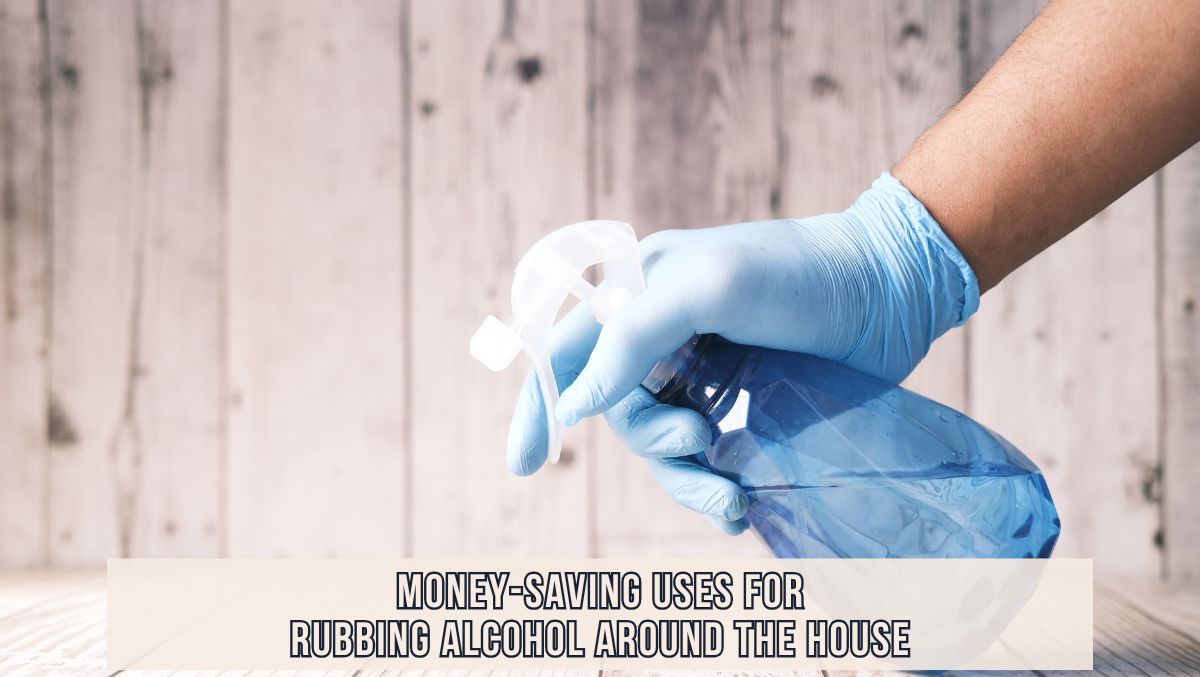
Rubbing alcohol (isopropyl alcohol) is one of those inexpensive products that can replace several specialty cleaners. Instead of buying separate products for glass, stainless steel, electronics and sticky residue, a single bottle of rubbing alcohol can often handle the job.
Like many Dollar Stretcher favorites, it works best when you know where to use it and where not to. While it’s an effective cleaner and disinfectant for many surfaces, it isn’t appropriate for every material and should always be used with proper ventilation.
Here are some of the best ways to stretch a bottle of rubbing alcohol.
Note: Be sure to review the “do not use for” list and safety cautions at the end of the article.
Freshen Frequently Touched Surfaces
Door handles, light switches, remote controls and other hard, non-porous surfaces collect fingerprints and grime.
A cloth lightly dampened with rubbing alcohol can quickly remove oils and dirt while also disinfecting many hard surfaces.
Always follow the manufacturer’s cleaning recommendations for electronics and avoid allowing liquid to seep into openings.
Shine Stainless Steel
Water spots and fingerprints on stainless steel appliances can often be removed with a microfiber cloth lightly dampened with rubbing alcohol.
It evaporates quickly, leaving a streak-free shine.
Clean Glass and Mirrors
For many glass surfaces, a mixture of equal parts rubbing alcohol and water works well as an inexpensive glass cleaner.
Use a lint-free or microfiber cloth for the best streak-free results.
Remove Sticky Residue
Price tag adhesive, tape residue and sticky labels often come off much more easily with rubbing alcohol than with specialty adhesive removers.
Apply a small amount to a cloth, let it sit for a minute or two and gently rub away the residue.
Remove Hairspray Buildup
Bathroom mirrors, countertops and tile often develop a sticky film from hairspray and other styling products.
A little rubbing alcohol on a cloth cuts through the residue quickly without much scrubbing.
Clean Dry-Erase Boards
Over time, dry-erase boards develop a hazy buildup that regular erasers won’t remove. Dampen a soft cloth with rubbing alcohol and wipe the board clean. It quickly removes old marker residue and helps restore a smooth writing surface.
About The Dollar Stretcher
The Dollar Stretcher shares practical ways to lower everyday costs, build steadier money habits and move from stuck to stable on a tight budget.
Learn more about how we can help you.

Get All 226 Money-Saving Tips—Free Download
You’ll also get our free newsletter each week. It’s full of useful ways to cut costs and stretch your dollars.
Clean Decorative Candles
Stored candles often collect dust that can be difficult to remove.
A cloth lightly dampened with rubbing alcohol removes dust without leaving moisture behind.
Caution: Allow the candle to dry completely before lighting it.
Deodorize Shoes
Spraying the inside of shoes lightly with rubbing alcohol may help reduce odor-causing bacteria.
Allow the shoes to dry completely before wearing them again.
Stretch Your Cleaning Budget
Perhaps the biggest money-saving use of rubbing alcohol is simply replacing multiple specialty products.
One inexpensive bottle can often take the place of:
- Stainless steel cleaner
- Glass cleaner
- Adhesive remover
- Electronics cleaning solution (when appropriate)
- Sticky residue remover
- Spot cleaner for some inks and stains
Fewer specialty products means less money spent and fewer bottles to store.
Cleaning Tips From Other Dollar Stretchers
Over the years, we’ve received many cleaning tips from readers that call for rubbing alcohol.
Clean Laminate Flooring
To make a laminate floor cleaner, mix:
1/3 white vinegar
1/3 rubbing alcohol
1/3 water
three drops of dishwashing liquid for a quart total.
For best results, wipe off quickly.
Fred
I have laminate wood flooring and was looking for a cheaper way to use my Swiffer. So, I experimented with placing eight ounces of rubbing alcohol with 32 ounces of hot water. It works great! I still purchase the Swiffer pads in the economy box, but I spray the floor with my solution first.
Cathy, Indiana
Clean Granite Countertops
To create a homemade cleaner recipe for my granite countertops, I reviewed the ingredient list of an expensive brand designed specifically for the task. Now, I use equal parts water and rubbing alcohol with a squirt of dishwashing soap. It works great!
Connie
Homemade Disinfectant Wipes With Alcohol and Essential Oils
Here’s a simple recipe to make your own disinfectant wipes. You will need:
- A roll of good-quality paper towels
- An airtight container or bag
- 1 1/2 cups of 70% isopropyl alcohol
- 1/2 cup of distilled water
- 1 tablespoon of dish soap
- 10-15 drops of essential oil (e.g., lavender, tea tree, eucalyptus, or lemon) – optional, for a pleasant scent
Instructions:
- Cut the paper towel roll in half or into thirds, depending on the size of your container. This will make it easier to fit into the container and to pull out individual wipes later.
- Combine the isopropyl alcohol, distilled water, dish soap, and essential oil (if using) in a mixing bowl. Stir the solution until everything is well combined.
- Place the cut paper towel roll into the airtight container. Pour the solution evenly over the paper towels, making sure they are fully saturated.
- Close the container tightly and let it sit for a few minutes to allow the paper towels to absorb the solution fully.
- Open the container and carefully remove the cardboard core from the center of the paper towel roll. This should leave you with a tube of wipes that you can pull from the center.
- Seal the container to keep the wipes moist when not in use.
Make Homemade ‘Commercial’ Freshener
I hated the smell and price of commercial fresheners, so I asked my husband, a chemist, what makes this stuff work. He said all it contains is water, modified starch, perfume and alcohol (the alcohol makes it dry quickly and works as a disinfectant).
To make your own, simply mix four cups of water with several drops of your favorite scent and half a cup of rubbing alcohol. Avoid using fabric softener for your scent, as many contain beef tallow and harsh chemicals that can coat your fabrics and clog the bottle’s tip.
When you first spray the solution, you’ll smell the alcohol, but in a few minutes, it will dissipate, and the fabric will dry much faster. For extreme odors (like cat urine), you can add a bit of an enzyme-based cleaner, such as Nature’s Miracle.
Melissa C.
Clean Ceiling Fans
I made a simple (and cheap!) anti-static spray with a tablespoon each of fabric softener and 70% rubbing alcohol mixed into one cup of water. Double or triple the recipe to fit your spray bottle. Spray the fan blades and exterior housing after you clean the fan. This should give you a longer break before having to climb that ladder again.
Margaret
Shine Bath Fixtures
I have the best way to make bathroom fixtures look like new for years. Use rubbing alcohol! I use it with a paper towel, and my fixtures always sparkle. Rubbing alcohol is also the very best way to get hairspray (and I use a lot of hairspray) off of the bathroom doorknob. And best of all, rubbing alcohol is very inexpensive!
Mrs. C.
Make Handy Bathroom Wipes
I purchase the most inexpensive brand of baby wipes I can find. Often, these brands contain alcohol, which can be drying on a baby but great for my use. I remove the lid and pour one-half or an entire bottle of rubbing alcohol in with the wipes.
I use these wipes to quickly wipe down the bathroom in between regular cleanings. It’s so easy to wipe your sink, faucets, toilet seat, and even the bathroom doorknob (which collects a lot of germs).
Valerie
Mix Up a Cheap Pet Urine Antidote
The most wonderful antidote for urine stains and to totally have your dog reject any area is as follows: Take two cups of rubbing alcohol and add four drops of lemongrass oil. Place in a spray bottle (plastic is fine) and voila.
It’s the best solution I have ever used, and it’s so cheap to make. This makes a supply that will last for several months.
Shirley
Make Eyeglass Cleaning Cloths
I was tired of spending money on lens cleaning cloths for my eyeglasses and hated the thought of all the little foil packages that were getting thrown in the landfill when I used them. One day, I realized that they were nothing but a small piece of soft cloth soaked in alcohol. Now, I make my own.
If I’m home, I just wet a small piece of clean, white, soft paper towel (the cheaper kinds work better because they usually don’t have metal in them to make them “stronger”) with a small amount of rubbing alcohol. Then I clean my glasses and polish them with another piece of paper towel.
When I’m going out, I put a couple of alcohol-dampened pieces of paper towel into a zipper baggie and have another baggie with pieces of dry paper towel. I can clean my glasses over and over again for less than 10% of what the lens cleaners used to cost me.
Kamia
Some Non-Cleaning Uses for Rubbing Alcohol
Make a Flexible Ice Pack: Instead of buying reusable gel packs, make your own. Mix one part rubbing alcohol with two parts water in a heavy-duty freezer bag. Seal it tightly, label it clearly and place it inside a second freezer bag for extra protection. The mixture stays slushy instead of freezing solid, making it easier to mold around sore muscles or minor bumps.
Make Winter Windshield De-Icer: In cold climates, a homemade de-icing spray can help loosen frost on vehicle windows. Many people mix two parts 70% rubbing alcohol with one part water in a spray bottle. Spray it on icy glass to make scraping easier.
Get Rid of Gnats or Fruit Flies
I put a sprayer (Windex spray bottle sprayer) on a bottle of 70% rubbing alcohol and give them a quick spray when I see them in the house. It really works. I used it in my bathroom, where they began forming, and they are gone.
Crone
What Rubbing Alcohol Should Not Be Used On
Even though rubbing alcohol is versatile, avoid using it on:
- Finished wood without testing first, since it may damage some finishes.
- Natural stone such as marble or granite.
- Painted or shellacked surfaces unless the manufacturer recommends it.
- Acrylic plastics, which can become cloudy or crack.
- Near open flames, pilot lights or while smoking because rubbing alcohol is highly flammable.
When in doubt, test an inconspicuous area first.
Safety Tips
Always use rubbing alcohol in a well-ventilated area and keep it away from heat, sparks and open flames. Store it tightly closed and out of reach of children and pets.
Never mix rubbing alcohol with bleach or other household cleaners unless the product instructions specifically say it is safe.
TDS Takeaway
Rubbing alcohol is one of those inexpensive pantry and cleaning staples that earns its shelf space. A single bottle can replace several specialty cleaning products while handling everything from sticky residue to streaky glass. Used correctly, it can help simplify your cleaning supplies and stretch your household budget at the same time.
Did this article help you save or stretch a few dollars or plug a financial leak? The Dollar Stretcher can help you make your dollars go even further.
Join the free Dollar Stretcher newsletter to get money-saving tips and articles delivered to your inbox each week, plus a copy of the 226 money-saving tips eBook — a reference you can use whenever money feels tight.
About the Author
Andrea Norris-McKnight is the Money-Saving Strategist behind The Dollar Stretcher.
She helps people on tight budgets cut everyday costs, build steadier money habits and create a little breathing room—without guilt, gimmicks, or unrealistic advice.
More Ways To Save
Borax: Where It Still Makes Sense and Saves Cents (And Where It Doesn’t)
Borax still has a place in a tight budget household — if you use it strategically.
How To Stretch Baking Soda (and Replace Several Household Products)
With a simple rotation system, you can use every box longer and maybe skip buying other single-purpose products.

10 Things You Shouldn’t Clean With Vinegar (That Could Cost You More Later)
These 10 common mistakes can damage surfaces and lead to expensive repairs if you’re not careful.
Things You Can Clean With Murphy Oil Soap Besides Wood
About The Dollar Stretcher
The Dollar Stretcher shares practical ways to lower everyday costs, build steadier money habits and move from stuck to stable on a tight budget.
Learn more about how we can help you.