
Don’t Lose Food Dollars to This Freezer Mistake
TDS Money-Saving Strategist: Andrea Norris-McKnight | posted February 1, 2026

The freezer is a great tool for keeping food costs in check. Yet one small habit quietly turns good food into rock-hard ice bricks no one wants to use.
The mistake: freezing food without first breaking it into usable portions.
It sounds minor. It’s not.
How It Happens
You cook a big pot of soup, buy a sale-priced family-size pack of meat or freeze leftover sauce in a single container. Into the freezer it goes. Weeks later, you need just one serving or enough for one recipe. Instead, you’re staring at a frozen block that won’t budge without thawing the whole thing.
That’s when food starts to get wasted. You thaw too much. Plans change. The extra sits in the fridge too long. Eventually, it gets tossed.
Why Ice Bricks Cost More Than You Think
- You’re forced to thaw more than you need
- Refreezing isn’t always safe or appealing
- Meals get derailed, leading to takeout
- You avoid your freezer foods because it’s a hassle
Each time that happens, your “saved” food turns into sunk cost.
The Fix: Freeze Flat, Freeze Small, Freeze Flexible
You don’t need special gadgets. Just a small shift in how you freeze.
Freeze in Meal-Size Portions
Before freezing, divide the food into portions you’ll actually use. One-cup portions of soup. Single-meal packs of meat. Half-cup scoops of sauce.
Freeze Flat Whenever Possible
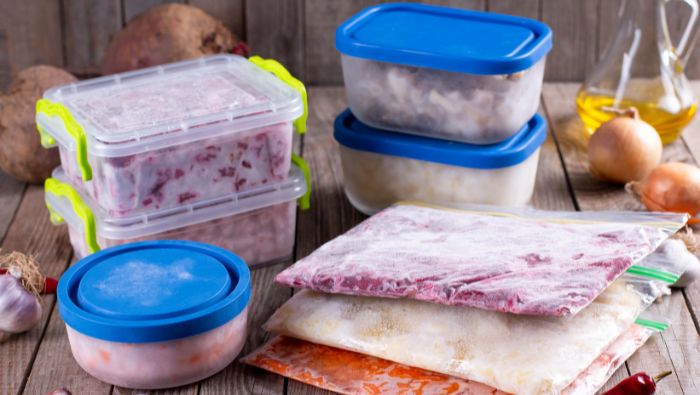
Pour soups, broths, chili or cooked beans into freezer bags and lay them flat. Once frozen, they stack like files instead of bricks.
Pre-separate Before Freezing
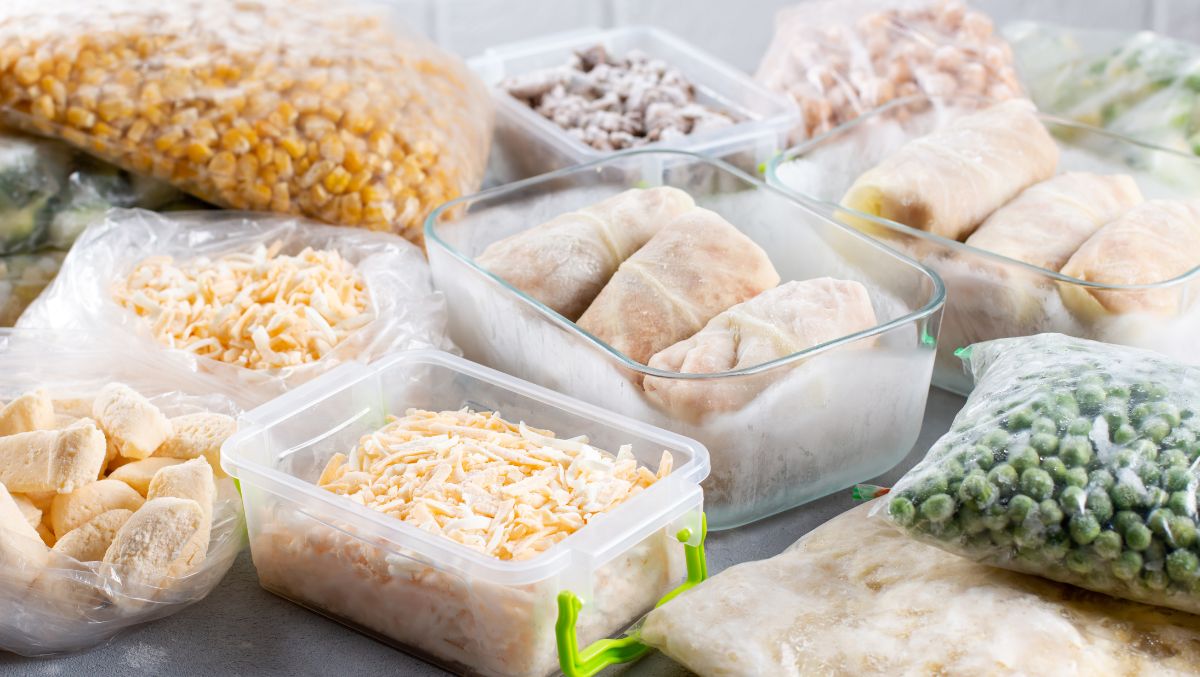
Chicken breasts, pork chops, pancakes and baked goods should be frozen individually first, then stored together. You’ll only take what you need.
Label for Speed, Not Perfection
You don’t need fancy labels. A marker and a date are enough. When food is easy to identify, it actually gets used.
A Quick Gut-Check Before Tossing Something in the Freezer
If you’d hesitate to thaw the whole thing just to grab a portion, it’s headed toward ice-brick status.
The goal isn’t a perfect freezer. It’s a freezer that works on busy nights, tired nights and “I don’t want to cook” nights.
Break food down before it freezes solid, and your freezer finally starts doing what it’s supposed to do: saving money instead of quietly draining it.
Portioning Foods for the Freezer: Tips From Dollar Stretcher Readers
Cooking for one or two people can be hard. Unless you pay a premium for small packages, most packaging holds enough for four or five people. I’ve found a way to overcome some of that. When I buy veggies, I prep and freeze them on cookie sheets. The next day, I place them in freezer bags in quantities that work for my wife and me. I do this for carrots, berries and any other vegetables that freeze well.
Rick
To make portioning single-size servings for the freezer easier, line a small oven- or microwave-safe pan or dish with plastic wrap or foil, place the food on the wrap or foil and put the pan or dish into the freezer. You’re only going to leave the dish in the freezer long enough for the food to freeze — not long-term. Once frozen, remove the frozen food brick from the pan, wrap it for long-term freezer storage, and return it to the freezer. When ready to use, remove the wrapping, return the frozen food to the pan in which you originally froze it (it will fit perfectly since it was originally frozen in this size), and reheat. There is no need to keep the original pan or bowl in the freezer.
Carole L.
Shopping for one is always a challenge. This is especially true for meats. I got in the habit of repackaging meat as soon as I get home from the store. I take single-serving sizes, place them in regular zipper bags, and then put the bags inside a larger freezer bag. That way, I can throw away the cheaper zipper bags and rinse and reuse the freezer bag.
Now I’m not throwing away an extra chop or half a pound of ground beef. It’s also easy for me to tell what I have in the freezer. I know that each bag is one meal.”
Miriam

Mary
When I buy a package of bacon, I roll up each individual piece of bacon. Then I place them all on a parchment-lined tray (not touching) and freeze them. Once frozen, I toss them all into a freezer bag. When I want bacon, I just take out the number of pieces I need and leave the rest in the bag. Since they are all frozen as individual rolls, they don’t stick together.
Joann M.
About The Dollar Stretcher
The Dollar Stretcher shares practical ways to lower everyday costs, build steadier money habits and move from stuck to stable on a tight budget.
Learn more about how we can help you.

Get All 226 Money-Saving Tips—Free Download
You’ll also get our free newsletter each week. It’s full of useful ways to cut costs and stretch your dollars.
When you buy a long loaf of French bread, here’s how to keep it fresh and crusty. As soon as you get home from the store, slice the portion you won’t use that day into the sizes you usually use. Wrap them individually in plastic wrap. Then put the pieces in resealable freezer bags and store them in your freezer.
When you’re ready to use it, simply remove the desired number of pieces from the freezer and let them defrost at room temperature (it doesn’t take long), or unwrap them and warm them in the oven.
I store the plastic wrap pieces in the freezer so I can reuse them to wrap the next loaf I buy.
L.
About once every few months, I cook large quantities of foods that I like and freeze them in portion sizes. This habit has paid off not only when I don’t feel like cooking, but also when I’ve been too sick to cook, when someone drops in, when I’ve been snowed in and can’t get to the store and when it’s too hot to cook in the summer. I add a salad to my “frozen dinner” and have a great meal!
Kari
Buying meat in ‘family packs’ is almost always cheaper. Instead of spending money on small freezer bags to freeze portions I will use later, I wrap each chicken breast (for example) in plastic wrap and then place the pieces in one or two gallon freezer bags. Since each piece of meat is wrapped in plastic, the pieces don’t stick together when they freeze and are also less likely to get freezer burn. I can pull out exactly how much I want, without taking out too much or too little.
Katie
Although it’s only the two of us, I buy meat in larger packages. When I take it home, I portion everything, wrap it in plastic wrap and freeze it. When I take the meat out for a meal, it’s often quite difficult to unwrap because I can’t find the edge of the plastic wrap. To alleviate this problem, I now wrap the meat at a 45-degree angle and, using a black marker, I darken the corner that I make sure ends up on the outside top. To unwrap, find that black spot, and it’s easy to peel the wrapping opened — no more searching for that elusive edge!
Jeannine
Did this article help you save or stretch a few dollars or plug a financial leak? The Dollar Stretcher can help you make your dollars go even further.
Join the free Dollar Stretcher newsletter to get money-saving tips and articles delivered to your inbox each week, plus a copy of the 226 money-saving tips eBook — a reference you can use whenever money feels tight.
About the Author
Andrea Norris-McKnight is the Money-Saving Strategist behind The Dollar Stretcher.
She helps people on tight budgets cut everyday costs, build steadier money habits and create a little breathing room—without guilt, gimmicks, or unrealistic advice.
More Ways To Save

What Size Freezer Do You Need for Your Frugal Family?
A freezer can be a great money-saving tool.
Food Storage Tips for the Pantry, Fridge and Freezer
Try these tips to see how much waste you can eliminate.
Tips for Freezing 6 Types of Foods That Don’t Freeze Well
Your freezer can help you save a lot of money — or waste a lot.
8 Refrigerator Mistakes That Can Cost You Money
See if you’re making any of these fridge faux pas.
About The Dollar Stretcher
The Dollar Stretcher shares practical ways to lower everyday costs, build steadier money habits and move from stuck to stable on a tight budget.
Learn more about how we can help you.