
Fresh vs Frozen vs Canned Produce: How To Choose for the Best Value
TDS Money-Saving Strategist: Andrea Norris-McKnight | posted April 2026
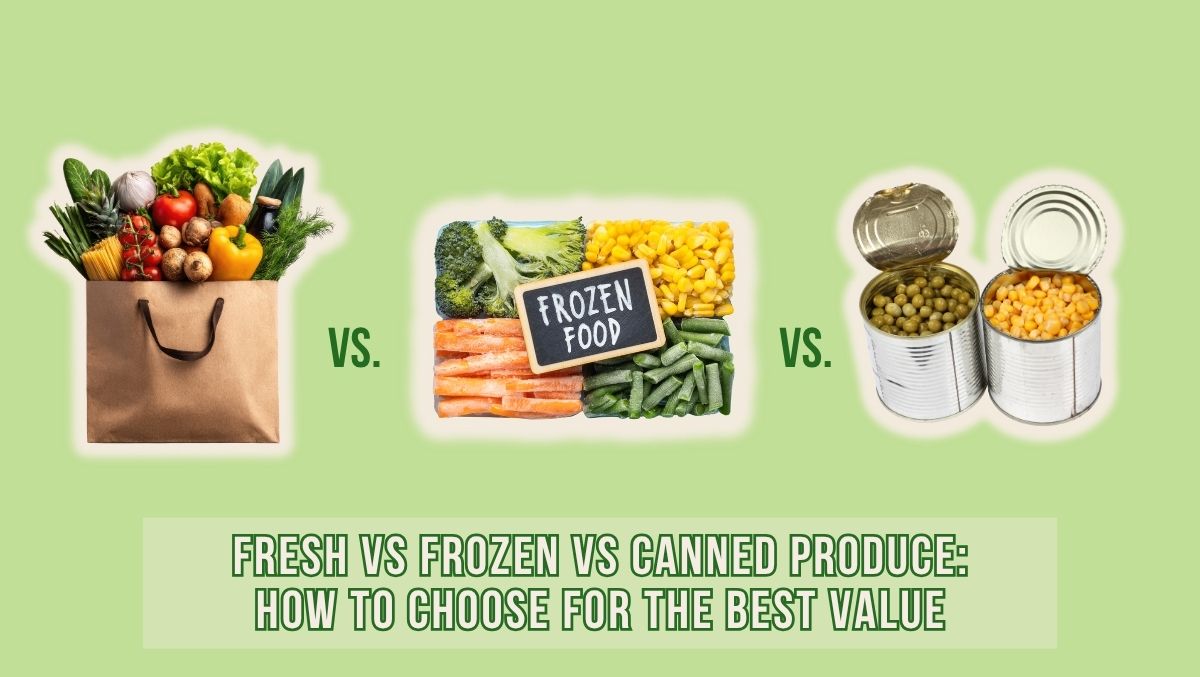
Buying produce isn’t just about finding the lowest price.
It’s about choosing the right form—fresh, frozen or canned—so you get the most value without sacrificing taste or wasting food.
Each option has its place. The key is knowing when to use each one.
Here’s how to decide.
Use Fresh Produce When Price and Timing Work in Your Favor
Fresh produce works best when it’s:
- In season
- Priced lower than usual
- Likely to be used within a few days
When those three line up, fresh is often the best choice.
Fresh produce tends to have the best texture for things like:
- Salads
- Snacking
- Garnishes
- Simple side dishes
But it also comes with a risk. If you don’t use it in time, the savings disappear.
Best use: Meals where texture matters and you know you’ll use it quickly.
Use Frozen Produce for Consistency and Less Waste
Frozen produce is one of the easiest ways to keep costs steady.
It’s typically:
- Picked and frozen at peak ripeness
- Available year-round at consistent prices
- Easy to use in small amounts
You can use only what you need and save the rest, which helps reduce waste.
Frozen works well for:
- Stir-fries
- Soups and stews
- Pasta dishes
- Smoothies
- Side dishes where texture isn’t the focus
It’s especially useful for items that spoil quickly when fresh.
Best use: Everyday cooking where you want convenience and no waste.
Want MORE TIPS for Stretching Your Budget?
Get the free eBook with 226 simple money-saving tips — plus the Dollar Stretcher newsletter with practical, real-life ways to make a tight budget go further.
We value your privacy.
Unsubscribe anytime.
Use Canned Produce for Low Cost and Convenience
Canned produce is often the most budget-friendly option.
It’s:
- Shelf-stable
- Ready to use
- Often priced lower than fresh or frozen
Canned works well in dishes where ingredients are cooked and blended together, such as:
- Chili
- Soups
- Casseroles
- Sauces
The texture is softer, which doesn’t matter as much in these types of meals.
Best use: Cooked dishes where texture isn’t a priority.
Match the Type to the Meal
One of the simplest ways to save money is to match the type of produce to how you’ll use it.
Fresh: When you need crisp texture or are eating it raw
Frozen: When you want flexibility and less waste
Canned: When you’re cooking and need a low-cost option
Using the right type in the right situation helps you avoid overpaying.
Avoid Paying for Out-of-Season Fresh Produce
One of the most common ways people overspend is buying fresh produce out of season.
When something is out of season:
- Prices are higher
- Quality may be lower
- Shelf life may be shorter
In those cases, frozen or canned is usually the better value.
Reduce Waste by Mixing All Three
You don’t have to choose just one type.
Most households save the most by using a mix:
- Fresh for a few meals each week
- Frozen for backup and flexibility
- Canned for low-cost staples
This approach helps you avoid running out while also preventing waste.
About The Dollar Stretcher
The Dollar Stretcher shares practical ways to lower everyday costs, build steadier money habits and move from stuck to stable on a tight budget.
Learn more about how we can help you.
Get All 226 Money-Saving Tips—Free Download
You’ll also get our free newsletter each week. It’s full of useful ways to cut costs and stretch your dollars.
Budget Level Savings: Produce
No need to tackle every tip at once. Start with the tips best suited for your budget.
Rely mostly on frozen and canned produce. Use fresh only when it’s clearly affordable and will be used quickly.
If your budget is stable, but irregular expenses knock you off track:
Use a mix of all three. Focus on fresh produce when it’s in season and supplement with frozen and canned.
If your budget is strong, but you want additional savings:
Use fresh more often, but still rely on frozen and canned to avoid waste and reduce costs.
What This Replaces in Your Budget
Choosing the right type of produce can replace:
- High-cost, out-of-season fresh produce
- Food waste from unused fresh items
- Extra grocery trips to replace spoiled food
It’s not just about saving on produce—it’s about reducing total grocery costs.
TDS Takeaway: A Smarter Way To Buy Produce
The goal isn’t to buy everything fresh.
It’s to buy what makes the most sense for your meals, your schedule and your budget.
When you match the type of produce to how you’ll use it, you can keep costs down without giving up quality or variety.
Did this article help you save or stretch a few dollars or plug a financial leak? The Dollar Stretcher can help you make your dollars go even further.
Join the free Dollar Stretcher newsletter to get money-saving tips and articles delivered to your inbox each week, plus a copy of the 226 money-saving tips eBook — a reference you can use whenever money feels tight.
About the Author
Andrea Norris-McKnight is the Money-Saving Strategist behind The Dollar Stretcher.
She helps people on tight budgets cut everyday costs, build steadier money habits and create a little breathing room—without guilt, gimmicks, or unrealistic advice.
More Ways To Save

9 Practical Ways To Save on Produce
Buying fruits and vegetables doesn’t have to stretch your budget.
A Simple Trick for Getting Free Prepackaged Produce (and Avoid Getting Shortchanged)
Get your money’s worth on produce with this simple trick.

Produce Purchasing Tricks From a Produce Manager
These three tips from a produce manager are sure to help you save on your next visit to your grocer’s produce department.

Learn To Preserve Seasonal Produce for Year-Round Savings
Learn these basic methods of preserving your seasonal produce and you can reap even more savings throughout the year.
About The Dollar Stretcher
The Dollar Stretcher shares practical ways to lower everyday costs, build steadier money habits and move from stuck to stable on a tight budget.
Learn more about how we can help you.