
Are Scanning Errors Costing You? How To Catch Grocery Pricing Mistakes Before You Leave the Store
TDS Money-Saving Strategist: Andrea Norris-McKnight | posted August 2026
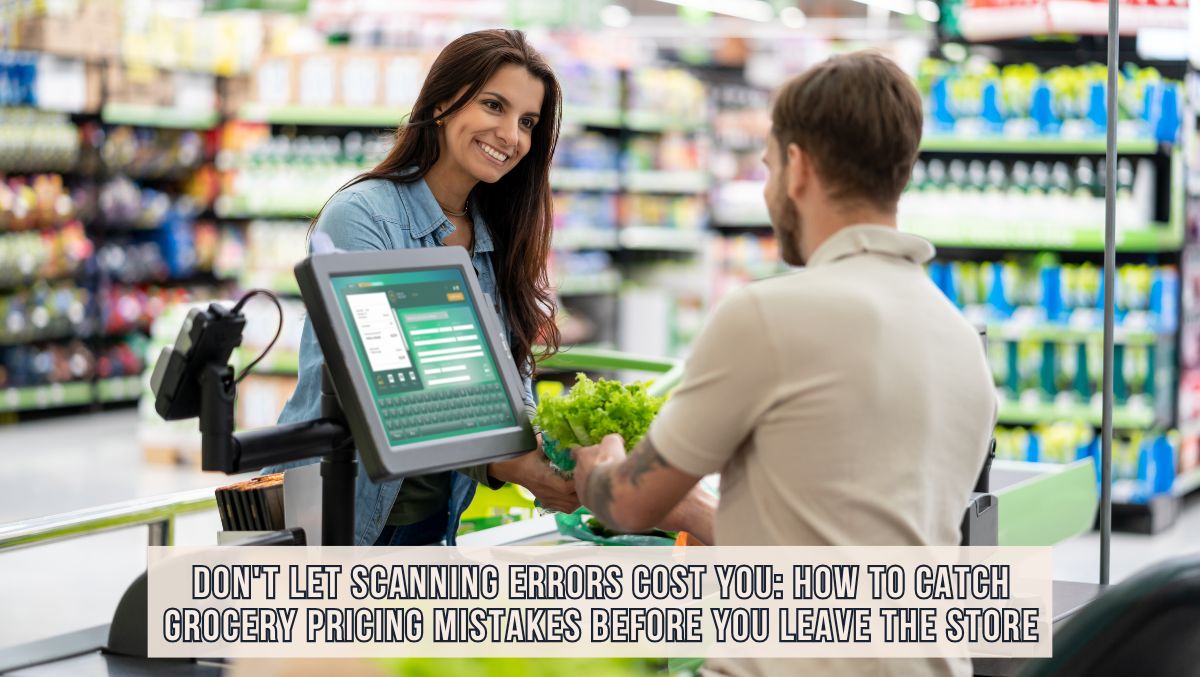
Most of us assume that if a grocery item scans, it must be the correct price.
Unfortunately, that’s not always the case.
Pricing databases have to be updated, sale prices change every week, shelf tags get moved and employees occasionally make mistakes. Retailers are periodically checked for pricing accuracy by state and local Weights and Measures divisions, but errors still happen.
Most stores work hard to keep prices correct, and the vast majority of pricing mistakes are just that—mistakes. But if you don’t notice them (and the error is not in your favor), you’re still the one who pays.
You don’t have to memorize every price in the store to protect yourself. A few simple habits can help you catch many of the most common pricing errors.
1. Pay Special Attention to Sale Items
Items on sale are among the most likely to ring up incorrectly.
That’s because sale prices change frequently, and stores have to update both shelf tags and computer systems at the same time.
If you’re shopping during the first day or two of a new sales cycle, it’s especially worthwhile to pay attention.
Know which items on your shopping list are supposed to be on sale so you’ll recognize if one rings up at the regular price.
2. Make Sure the Shelf Tag Matches the Product
Sometimes the problem isn’t the scanner.
It’s the shelf tag.
A tag may have been placed in front of the wrong item, or the correct product may have sold out and been replaced with a different size or variety while the old sale tag remained.
Before putting an item in your cart, check that:
- The product matches the shelf tag.
- The size is correct.
- The variety or flavor matches the advertised sale.
This small habit can prevent disappointment—and overpaying—at checkout.
Rely on Your Grocery App
When I shop in-store, I keep my grocery store’s app open to the scan feature. If I’m unsure about an item, I can quickly scan its barcode to confirm the price and sale status and make sure I’ve grabbed the correct size or variety. It’s much easier to catch a mistake while I’m still in the aisle than to discover it later at self-checkout.
3. Watch Price-Per-Pound Items Carefully
Pricing mistakes on canned goods may only cost a few cents.
Pricing mistakes on meat, seafood, cheese or produce sold by weight can cost several dollars.
Pay attention to:
- Sale prices per pound.
- Weight labels.
- Produce sold individually versus by weight.
A small error multiplied across several pounds can add up quickly.
Want MORE TIPS for Stretching Your Budget?
Get the free eBook with 226 simple money-saving tips — plus the Dollar Stretcher newsletter with practical, real-life ways to make a tight budget go further.
We value your privacy.
Unsubscribe anytime.
4. Double-Check Unplanned Purchases
We’ve all spotted an unexpected sale while walking through the store.
If you decide to buy something that wasn’t on your list, take an extra second to note the advertised price.
Sometimes an old sale tag remains on the shelf after the promotion has ended.
Other times, the sale is valid only for a specific size or variety.
If you know what you expected to pay, you’ll be much more likely to notice if the price is different at checkout.
5. Stay Focused During Checkout
Many stores now display each scanned price on a customer-facing screen.
Take advantage of it.
It’s easy to become distracted by your phone, conversations or bagging groceries while items are being scanned.
Instead, glance at the screen occasionally to make sure:
- Sale prices appear correctly.
- Coupons are deducted.
- Quantities are accurate.
- Nothing scans twice.
If you use self-checkout or your store offers scan-as-you-shop technology through its app, you may find it even easier to monitor prices as you go.
About The Dollar Stretcher
The Dollar Stretcher shares practical ways to lower everyday costs, build steadier money habits and move from stuck to stable on a tight budget.
Learn more about how we can help you.

Get All 226 Money-Saving Tips—Free Download
You’ll also get our free newsletter each week. It’s full of useful ways to cut costs and stretch your dollars.
6. Review Your Receipt Before You Leave
Your receipt is your final opportunity to catch an error before leaving the store.
Step aside so you don’t block the next customer, then take a minute to review it.
Look for:
- Sale items that rang up at full price.
- Coupons that didn’t apply.
- Duplicate charges.
- Incorrect quantities.
- Unexpected prices on weighted items.
If you receive a digital receipt, pull it up before heading to your car.
The sooner you notice an error, the easier it usually is to have it corrected.
Common Pricing Mistakes To Watch For
Pricing errors often involve:
- Sale prices not applying.
- Digital coupons that don’t deduct.
- Buy One, Get One promotions not ringing up correctly.
- Duplicate scans.
- Incorrect weights on meat or produce.
- Picking up the wrong size because of a misplaced shelf tag.
Most are easy to correct—as long as you notice them before leaving the store.
Remember: It’s Not Just Grocery Stores
While grocery stores process thousands of price changes every week, pricing mistakes can happen at almost any retailer.
Home improvement stores, pharmacies, department stores and warehouse clubs can all experience scanning or pricing errors.
Whenever you make a purchase, especially one involving sale prices, clearance items or coupons, it’s worth taking a quick look at the register display or your receipt.
A minute of attention can save you far more than it costs.
Does Your Store Have a Pricing Accuracy Policy?
Some retailers have pricing accuracy guarantees or scanning error policies that provide a refund, the item free or another form of compensation when an item scans incorrectly. Policies vary by retailer and location, so it’s worth asking customer service whether your store offers one.
Even if your store doesn’t have a formal policy, don’t hesitate to politely point out a pricing mistake. If the shelf price and scanned price don’t match, it’s reasonable to ask for the issue to be reviewed.
TDS Takeaway: Become ‘Scan Vigilant’
Pricing errors are usually honest mistakes, not attempts to overcharge customers.
But whether the mistake is intentional or accidental doesn’t change the result.
If an item scans at the wrong price and you don’t catch it, you pay more than you expected.
Fortunately, becoming “scan vigilant” is easy.
Know what’s on sale.
Watch the scanner.
Check your receipt.
Those three habits can help ensure your grocery savings stay in your pocket instead of disappearing at the checkout.
Did this article help you save or stretch a few dollars or plug a financial leak? The Dollar Stretcher can help you make your dollars go even further.
Join the free Dollar Stretcher newsletter to get money-saving tips and articles delivered to your inbox each week, plus a copy of the 226 money-saving tips eBook — a reference you can use whenever money feels tight.
About the Author
Andrea Norris-McKnight is the Money-Saving Strategist behind The Dollar Stretcher.
She helps people on tight budgets cut everyday costs, build steadier money habits and create a little breathing room—without guilt, gimmicks, or unrealistic advice.
More Ways To Save

8 Money-Saving Grocery Tips That Can Actually Cost You
Buying in bulk, using coupons and cooking from scratch can all save money—but not always.

How To Read a Grocery Ad To Find the Best Deals: 8 Tips
A grocery marketing expert explains how to read it like an insider.

9 Advantages of a Detailed Grocery List
Do you keep your grocery list in your head rather than on your phone or in hand when you shop? It could be costing you time and money.
Ways To Lower Your Grocery Bill When Prices Won’t Come Down
About The Dollar Stretcher
The Dollar Stretcher shares practical ways to lower everyday costs, build steadier money habits and move from stuck to stable on a tight budget.
Learn more about how we can help you.