
5 DIY Draft Stoppers for Reducing Electricity Costs
Drafty doors can leak comfort and cash. A simple DIY draft stopper can help ease the load on your HVAC system—and your budget.
$avings potential*: 10% or more
TDS Money-Saving Strategist: Andrea Norris-McKnight | posted January 15, 2023 | updated January 18, 2025
These tips may contain affiliate links. The Dollar Stretcher is an Amazon Associate and may earn a small commission if you purchase through a link, at no extra cost to you. Prices fluctuate, and featured products aren’t guaranteed to be the lowest price. As always, we recommend checking prices and buying only when it makes sense for your budget. Learn how we choose and recommend products.
Do the exterior doors of your home or apartment have a small gap at the bottom?
Drafts are the largest source of heating and cooling loss in the home, including those through windows, doors, dryer vents, attic fans, and other openings. The experts at Energy.gov say reducing drafts in a home can save 10% to 20% of energy annually and make the home more comfortable.
One easy-to-fix source of drafts is the space beneath your exterior doors. And a frugal way to stop under-door drafts is to make or buy draft stoppers.
Are Door and Window Gaps Costing You Money?
According to Money.com, during the winter, a 1/8-inch gap under a 36-inch-wide door lets in as much cold air as a 2.4-inch-diameter hole in the wall. You can expect similar loss during the summer when running the A/C.
What Are Draft Stoppers?
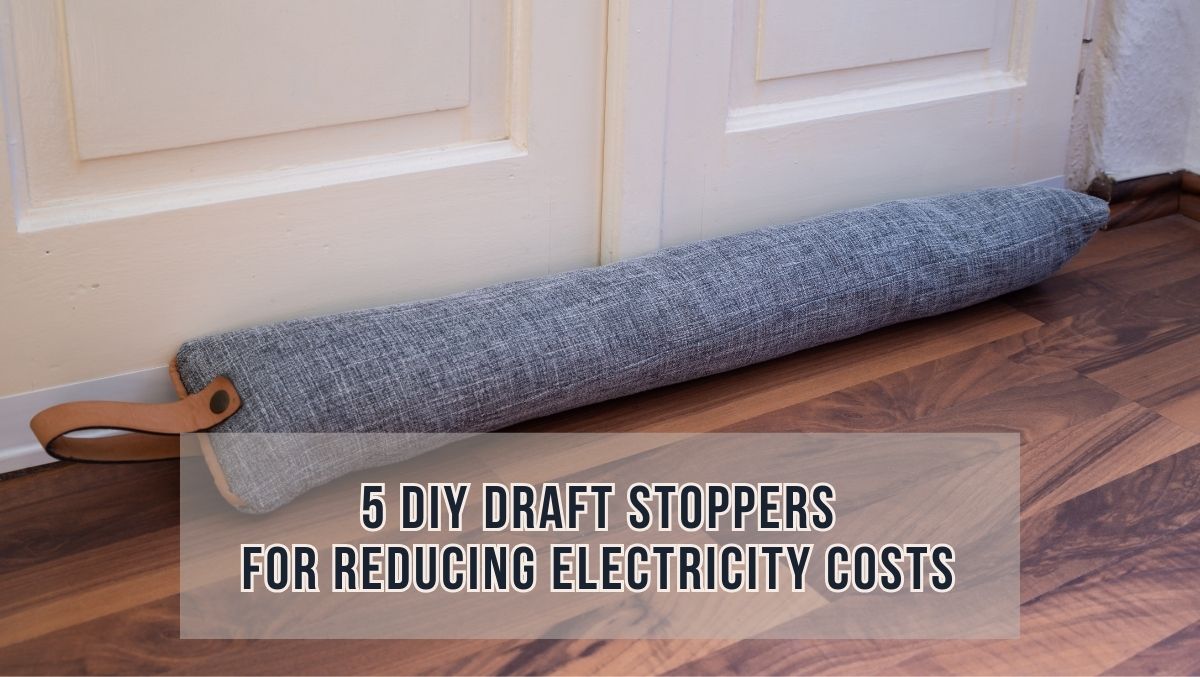
A draft stopper, also called a draft blocker or draft dodger, is simply a device that fills that space under your door to keep the cold air out and the warm air in the winter. They can also be used in the summer to keep the cool air in and hot air out. Draft stoppers can also be placed on window sills to block drafts.
You can buy door draft dodgers for less than $20 (you’ll find a few cheap options below). But you can often make them for less.
5 Ideas for DIY Draft Stoppers
Here are five simple DIY draft-blocking ideas from our frugal readers to help you keep electric costs in check. You may already have the materials at home to make a few of these.
1. Turn a long squeegee blade into a draft blocker.
Go to a wholesale house that sells cleaning supplies, or jump online and buy a 36″ rubber squeegee replacement blade (most doors are 36″). Then screw it to the door so it just touches the floor. No more drafts and it is always in place!
Erich
2. Block drafts with repurposed old jeans.
To stop cold drafts from unused rooms, I used to put rolled-up towels in front of the doors. I was constantly tripping over them or having to put them back in place, so I came up with the idea to make a permanent one.
I took a piece of denim from an old pant leg, the width of the door, doubled it, sewed the ends together, and put enough sand in it to hold it to the floor. Then I fastened it to the door with a strip of wood so it would just touch the floor.
No more drafts and it is always in place.
Mike
Want MORE TIPS for Stretching Your Budget?
Get the free eBook with 226 simple money-saving tips — plus the Dollar Stretcher newsletter with practical, real-life ways to make a tight budget go further.
We value your privacy.
Unsubscribe anytime.
3. Turn foam pipe insulators into draft stoppers.
In my old farmhouse, I found that the best way to stop drafts under doors is by using two foam pipe insulators. First, I made a fabric sleeve that was big enough to hold the two pipe insulators plus the depth of the door (it is as long as the door is wide). Then, I just tucked the end closed so that I could remove the pipe insulators and wash the fabric as needed. Installation was as easy as sliding it under the door, with one foam insulator on each side.
I no longer have to worry about the kids remembering to put the draft stopper back because it stays on the bottom of the door.
Jennifer
If you’re not a DIY-er, you can buy this style of draft stopper on Amazon for less than $15.
4. Create no-sew fabric DIY draft dodgers from old pillowcases.
There are those of us who cannot sew. But I was able to create simple draft dodgers for the bottom of doors using old pillowcases that color-coordinated with the different rooms in my home. I put clothes slated for Goodwill into the pillowcases and used raffia (you could use yarn or string) to tie them every six inches. They work great! When dirty, I simply toss them into the washer and dryer. Recycle, reuse, and redirect the drafts!
Jacque
About The Dollar Stretcher
The Dollar Stretcher shares practical ways to lower everyday costs, build steadier money habits and move from stuck to stable on a tight budget.
Learn more about how we can help you.
Get All 226 Money-Saving Tips—Free Download
You’ll also get our free newsletter each week. It’s full of useful ways to cut costs and stretch your dollars.
5. Borrow Bob Vila’s ideas for draft stoppers.
I came across an article on Bob Vila’s website for DIY draft stoppers and used a few of the ideas to make blockers for our doors. Mine don’t look as “crafty” as some of their ideas, but they work just the same!
A
Affordable Store-Bought Options
These may cost more than the DIY options, but still an investment that can save you money (especially if you’re prone to home improvement procrastination like I am):
How Much Can Draft Stoppers Help You Save?
According to Energy.gov, reducing drafts in a home can save 10% to 20% of energy annually. A source on Homes & Gardens says using a stopper can save many households $100 to $150 “over a single season.”
If your exterior doors are well sealed, draft stoppers might provide little or no savings.
Did this article help you save or stretch a few dollars or plug a financial leak? The Dollar Stretcher can help you make your dollars go even further.
Join the free Dollar Stretcher newsletter to get money-saving tips and articles delivered to your inbox each week, plus a copy of the 226 money-saving tips eBook — a reference you can use whenever money feels tight.
About the Author
Andrea Norris-McKnight is the Money-Saving Strategist behind The Dollar Stretcher.
She helps people on tight budgets cut everyday costs, build steadier money habits and create a little breathing room—without guilt, gimmicks, or unrealistic advice.
More Ways To Save

Frugal Ways To Winterize an Apartment
Protect your apartment from winter’s chill with these suggestions from our frugal readers.

12 Ways To Keep Warm for Less This Winter
Use these frugal home heating tips to keep costs down.

Creative Winter Layering for Lowering Heating Costs
Make layering the theme for your wardrobe, décor and cooking habits this winter and save.

15 Winter Fuel Economy Tips to Make Gas Dollars Go Further
Reward both your wallet and the environment.
About The Dollar Stretcher
The Dollar Stretcher shares practical ways to lower everyday costs, build steadier money habits and move from stuck to stable on a tight budget.
Learn more about how we can help you.