
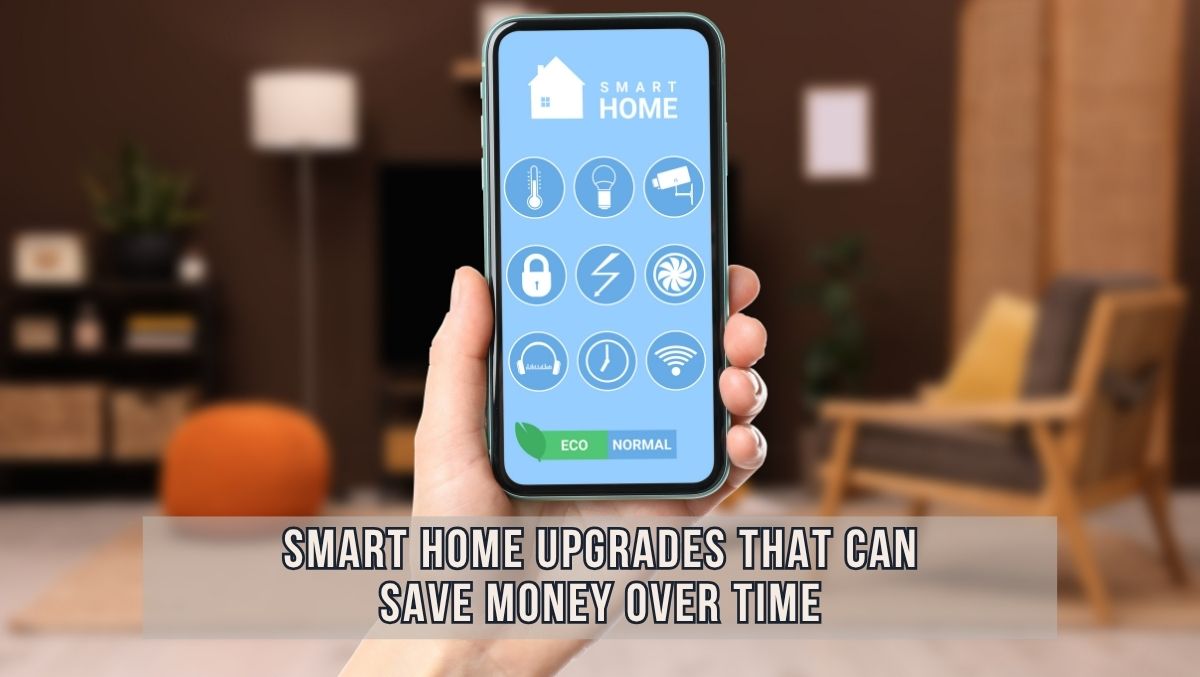
Smart Home Upgrades That Can Save Money Over Time
TDS Money-Saving Strategist: Andrea Norris-McKnight | posted March 2026
These tips may contain affiliate links. The Dollar Stretcher is an Amazon Associate and may earn a small commission if you purchase through a link, at no extra cost to you. Prices fluctuate, and featured products aren’t guaranteed to be the lowest price. As always, we recommend checking prices and buying only when it makes sense for your budget. Learn how we choose and recommend products.
Home automation can sound expensive.
But not every upgrade requires a big investment or a full smart home setup.
Some of the most useful upgrades are simple, affordable and focused on one thing: helping you avoid unnecessary costs over time.
If you choose carefully, a few small upgrades can pay for themselves through lower bills, fewer repairs or avoided losses.
Here are some practical options to consider.
Smart Thermostats That Reduce Heating and Cooling Costs
Heating and cooling are often one of the biggest household expenses.
A smart thermostat can help manage those costs automatically.
Instead of running your system at the same temperature all day, it can adjust based on your schedule. That means less energy is used when you’re away or asleep.
The savings come from consistency. You don’t have to remember to adjust the temperature. It happens automatically.
How Much Can a Smart Thermostat Save?
According to EnergyStar.gov, an ENERGY STAR smart thermostat may reduce heating and cooling costs by 8% annually.
Just replacing a manual thermostat with a basic programmable thermostat without all of the “smart” bells and whistles can save you up to 10% if you program it to set your home temperature back “7°-10°F for 8 hours a day from its normal setting.”
Smart Plugs That Cut “Always-On” Energy Use
Many devices use electricity even when you’re not actively using them.
Smart plugs give you control over those devices.
You can:
- Turn items off remotely
- Set schedules so they power down automatically
- Cut off power to electronics overnight
Individually, the savings are small. But this is one of those habits that quietly work in the background and add up over time.
As a bonus, smart plugs (or bulbs — see below) can also let you switch lights on and off remotely (or by programming them) to make it appear as if someone is home when you’re out of town. Couple them with some dusk-to-dawn bulbs you can pop into your home’s exterior lighting fixtures when you’re away, and you’ll lessen the chance even more that a burglar notices your absence.
Smart Lighting That Reduces Wasted Energy
Smart bulbs or switches can help ensure lights aren’t left on unnecessarily.
You can:
- Set lights to turn off automatically
- Control them remotely
- Schedule lighting based on your routine
This is another small, habit-based savings that adds up over time.
Want MORE TIPS for Stretching Your Budget?
Get the free eBook with 226 simple money-saving tips — plus the Dollar Stretcher newsletter with practical, real-life ways to make a tight budget go further.
We value your privacy.
Unsubscribe anytime.
Water Leak Sensors That Prevent Costly Repairs and Water Waste
Water damage can be one of the most expensive home problems.
A small leak under a sink or behind an appliance can go unnoticed until it becomes a major repair.
Low-cost water leak sensors can alert you when moisture is detected where it shouldn’t be.
Catching a leak early can prevent:
- Costly repairs
- Higher water bills
- Damage to floors, walls and cabinets
This is one of the few upgrades that can pay for itself with a single avoided issue.
Smart Smoke Detectors That Add an Extra Layer of Protection
Standard smoke detectors are essential. Smart versions add one key benefit.
They can alert you even when you’re not home.
That early warning can help you act faster if there’s a problem. While the goal is safety first, avoiding major damage is also a financial benefit.
Some insurance companies may also offer small discounts for upgraded safety devices.
Basic Security Cameras or Doorbell Cameras
You don’t need a full security system to benefit from added visibility.
A simple camera or doorbell camera can help you monitor your home, deliveries or entry points.
This can help reduce the risk of:
- Package theft
- Break-ins
- Property damage
In some cases, visible cameras alone can discourage problems before they happen.
As with smoke detectors, some insurers may offer discounts for added security.
About The Dollar Stretcher
The Dollar Stretcher shares practical ways to lower everyday costs, build steadier money habits and move from stuck to stable on a tight budget.
Learn more about how we can help you.
Get All 226 Money-Saving Tips—Free Download
You’ll also get our free newsletter each week. It’s full of useful ways to cut costs and stretch your dollars.
Insurance Savings and Added Value
Some home automation upgrades may qualify for small homeowners insurance discounts.
These often include:
- Smoke detectors
- Security systems or cameras
- Leak detection devices
The savings vary, but even a small reduction helps offset the cost of the devices over time.
Budget Level Savings: Where To Start With Smart Home Upgrades
No need to tackle every tip at once. Start with the tips best suited for your budget.
If money is stretched and you’re living paycheck to paycheck:/p>
Start with one low-cost upgrade that prevents bigger expenses, such as water leak sensors or smart plugs for older electronics you normally leave on.
If your budget is stable, but irregular expenses knock you off track:
Add a few devices that reduce ongoing costs, like a smart thermostat and smart plugs.
If your budget is strong, but you want additional savings:
Build a simple system with a thermostat, leak sensors and basic security devices that work together to reduce costs and risk.
Focus on What Pays You Back
Home automation doesn’t have to be about convenience or high-end features.
For a tight budget, the focus is simple:
- Prevent expensive problems
- Reduce ongoing utility costs
- Avoid unnecessary waste
You don’t need a fully automated home to see benefits.
A few well-chosen upgrades can quietly save money month after month while helping you avoid bigger costs down the road.
Did this article help you save or stretch a few dollars or plug a financial leak? The Dollar Stretcher can help you make your dollars go even further.
Join the free Dollar Stretcher newsletter to get money-saving tips and articles delivered to your inbox each week, plus a copy of the 226 money-saving tips eBook — a reference you can use whenever money feels tight.
About the Author
Andrea Norris-McKnight is the Money-Saving Strategist behind The Dollar Stretcher.
She helps people on tight budgets cut everyday costs, build steadier money habits and create a little breathing room—without guilt, gimmicks, or unrealistic advice.
More Ways To Save

18 Affordable Anti-Theft Tips To Keep Burglars Out of Your Home
How To Save Money On Your Auto and Home Insurance
A former insurance agent spills the secrets on ways to save.
32 Ways To Save Money on Your Utility Bills
Try a handful of these tips to find some electric and water bill savings.

7 Bright Ideas for Saving Money on Light Bulbs
Lower the cost of lighting your home.
About The Dollar Stretcher
The Dollar Stretcher shares practical ways to lower everyday costs, build steadier money habits and move from stuck to stable on a tight budget.
Learn more about how we can help you.