
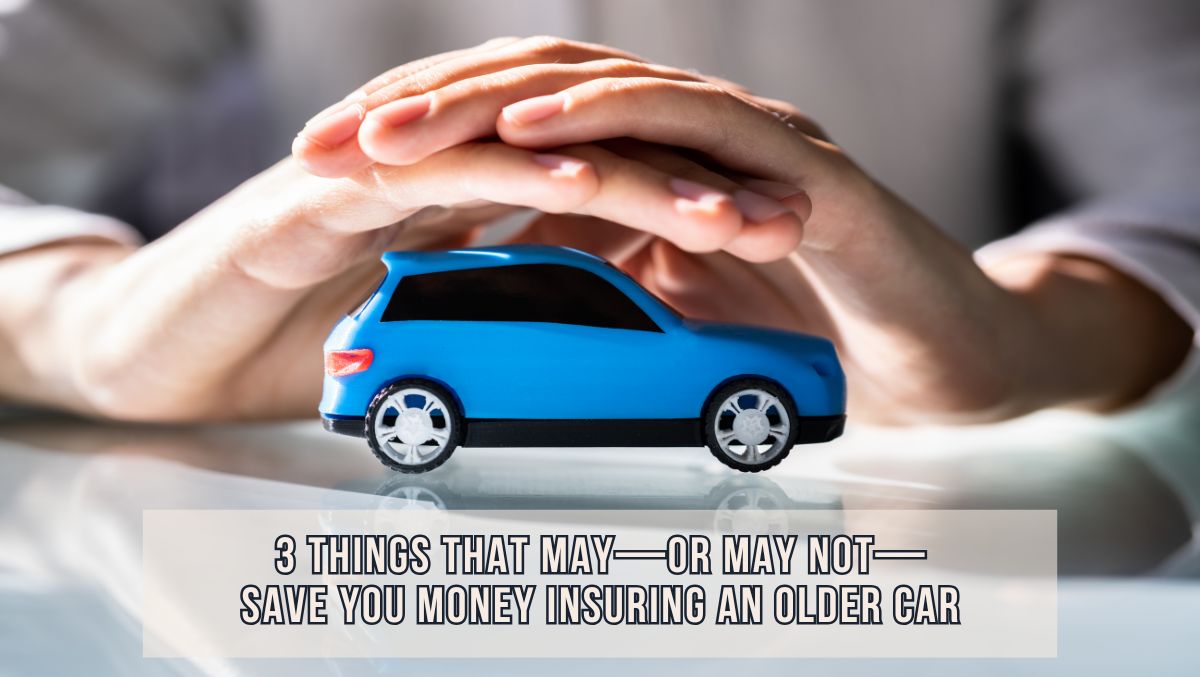
3 Things That May—or May Not—Save You Money Insuring an Older Car
Older cars are often overinsured, but cutting coverage blindly can create expensive problems later. Here are three common insurance-saving strategies for older vehicles and how to decide whether they actually make sense for your situation.
TDS Money-Saving Strategist: Andrea Norris-McKnight | posted May 2026
These tips may contain affiliate links. The Dollar Stretcher is an Amazon Associate and may earn a small commission if you purchase through a link, at no extra cost to you. Prices fluctuate, and featured products aren’t guaranteed to be the lowest price. As always, we recommend checking prices and buying only when it makes sense for your budget. Learn how we choose and recommend products.
The high price of replacing a car has many people driving their current rides as long as possible.
As cars age, insurance coverage that once made perfect sense can quietly become one of the biggest unnecessary ownership costs. The goal isn’t to strip away protection blindly—it’s to make sure you’re not paying for coverage that no longer matches the value of the car or your current financial situation.
Read on for three of the biggest ways people often reduce insurance costs on older vehicles.
Not every insurance-saving strategy works the same way for every driver. A change that saves one person money could create more financial stress for someone else. The key is understanding the tradeoffs before making changes.
1. Dropping Collision Coverage
Collision coverage pays for damage to your car after an accident you cause. On newer vehicles, that protection is often worth the cost. On older cars, it may not be.
A common rule of thumb is to compare:
- Your car’s current value
- What you pay annually for collision coverage
Dropping collision coverage can save meaningful money on an older vehicle—but only if losing the car would not create a serious financial setback. For some drivers, especially those who rely heavily on the vehicle and could not replace it easily, keeping collision coverage a little longer may still make sense.
Learn more: When Is It Safe To Stop Paying for Auto Collision Coverage?
2. Dropping Comprehensive Coverage
Comprehensive coverage protects against things like:
- Theft
- Hail or storm damage
- Vandalism
- Falling trees
- Animal strikes
Comprehensive coverage is often inexpensive relative to the protection it provides, which is why dropping it does not always produce large savings. In areas with theft risk, storm damage or heavy deer activity, keeping comprehensive coverage may still be worth the cost even on an older vehicle.
Learn more: Should You Drop Comprehensive Coverage on Your Older Car To Save Money?
3. Raising Your Deductibles
If you want to lower premiums without dropping coverage entirely, raising deductibles can be one of the fastest ways to save.
Higher deductibles usually mean:
- Lower monthly premiums
- Higher out-of-pocket costs if you file a claim
A higher deductible can lower monthly premiums, but the savings only help if you can realistically handle the deductible after an accident or major claim. For drivers without emergency savings, a lower premium today can turn into a much bigger financial problem later.
And there is another circumstance in which raising your deductibles on an older car might make financial sense.
Learn more: Raising Your Deductible Can Lower Your Auto Insurance Bill—But Should You?
Want MORE TIPS for Stretching Your Budget?
Get the free eBook with 226 simple money-saving tips — plus the Dollar Stretcher newsletter with practical, real-life ways to make a tight budget go further.
We value your privacy.
Unsubscribe anytime.
The Goal Is Smarter Insurance
Lowering insurance costs on an older car is rarely about one perfect move. It’s usually a combination of:
- The car’s value
- Your savings
- Your driving habits
- Your ability to handle unexpected costs
For some drivers, dropping coverage saves real money. For others, keeping certain protections prevents much larger financial problems later.
The best insurance setup is not automatically the cheapest one. It’s the one that realistically fits your car, your risks, and your budget today.
About The Dollar Stretcher
The Dollar Stretcher shares practical ways to lower everyday costs, build steadier money habits and move from stuck to stable on a tight budget.
Learn more about how we can help you.
Get All 226 Money-Saving Tips—Free Download
You’ll also get our free newsletter each week. It’s full of useful ways to cut costs and stretch your dollars.
Did this article help you save or stretch a few dollars or plug a financial leak? The Dollar Stretcher can help you make your dollars go even further.
Join the free Dollar Stretcher newsletter to get money-saving tips and articles delivered to your inbox each week, plus a copy of the 226 money-saving tips eBook — a reference you can use whenever money feels tight.
About the Author
Andrea Norris-McKnight is the Money-Saving Strategist behind The Dollar Stretcher.
She helps people on tight budgets cut everyday costs, build steadier money habits and create a little breathing room—without guilt, gimmicks, or unrealistic advice.
More Ways To Save

Auto Insurance: How Much Liability Coverage Do You Need?
Both too little and too much auto insurance can cost you money.

Lowering Auto Insurance Costs When You Can’t Seem To Find Any Savings
Have your car insurance premiums skyrocketed?
10 Ways To Pay Less for Gas Without Driving Less
A few simple habits can help you lower the price you pay per gallon.

Driving Habits That Waste Gas (and How To Fix Them)
Some of the biggest ways to save on gas have nothing to do with where you buy fuel.
About The Dollar Stretcher
The Dollar Stretcher shares practical ways to lower everyday costs, build steadier money habits and move from stuck to stable on a tight budget.
Learn more about how we can help you.