
Why a Small Household Stockpile Can Save You Money and Stress
TDS Money-Saving Strategist: Andrea Norris-McKnight | posted March 2026
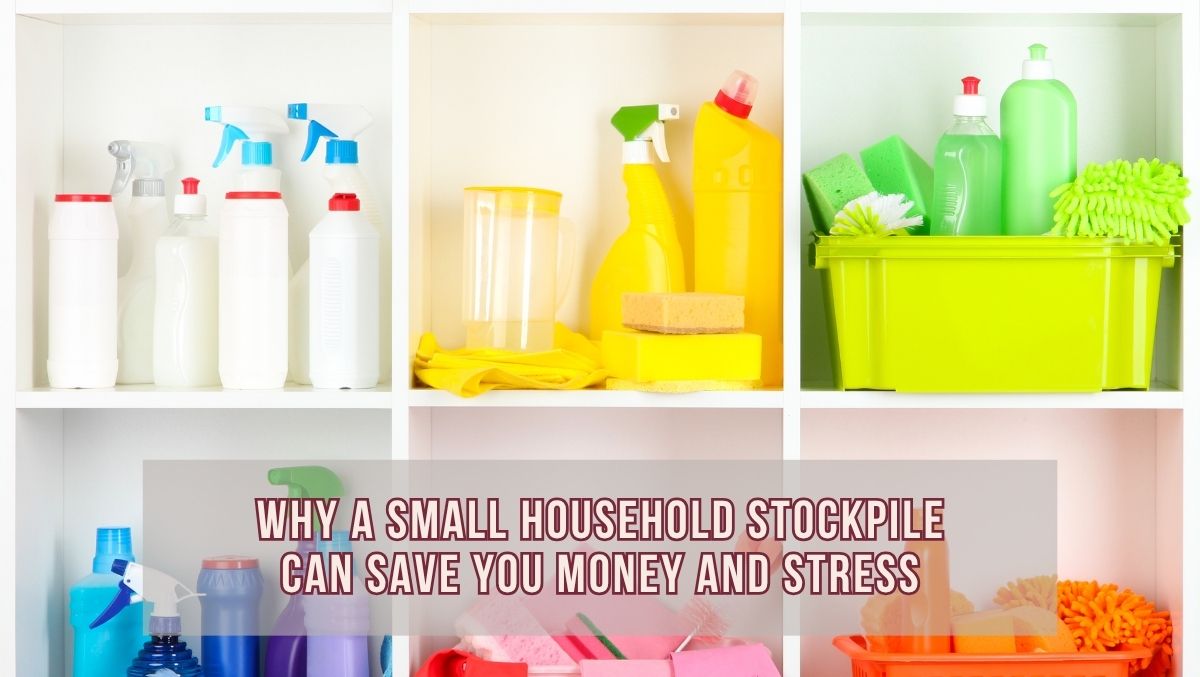
When money is tight, building a household stockpile can sound as unrealistic as building an emergency fund.
It may feel like something that requires extra time, extra space and extra money you don’t have.
But a simple stockpile doesn’t have to be large or complicated. Even a small cushion of everyday essentials can help you avoid higher prices, last-minute store trips and unnecessary stress.
Here’s why building a basic household stockpile can make a real difference with your budget.
You Avoid Full-Price, Last-Minute Purchases
One of the biggest benefits of a stockpile is that it lets you buy items when the price is right, not when you’re out.
When you run out of something, you don’t have much choice. You go to the store, pay whatever it costs that day and often pick up a few extra items you didn’t plan to buy.
A small stockpile helps you skip those last-minute trips.
Instead of reacting, you’re planning ahead. You can wait for better prices and avoid paying full price just because you need something now.
Over time, this simple shift lowers your average cost and reduces those unplanned spending trips that quietly add up.
It Gives You Breathing Room in the Budget
When your shelves are a little fuller, your budget feels a little less tight.
There’s comfort in knowing you already have what you need for the next week or two.
If money gets especially tight for one month, your stockpile can help you carry you through without having to spend as much.
It acts like a small buffer that helps smooth out your expenses. Think of it as a mini emergency fund that can help you get through tight-budget weeks.
What Stockpiling Replaces in Your Budget
A small stockpile doesn’t add to your spending. It shifts it.
Instead of paying full price when you run out, you’re buying ahead at a lower price.
Over time, this replaces:
- Last-minute, full-price purchases
- Extra store trips (and the impulse buys that come with them)
- Price spikes that hit when you need something now
You’re not spending more. You’re spending smarter and more on your terms.
You’re Less Affected by Price Spikes or Shortages
Prices don’t stay the same.
Some items jump in price without much warning. Others become hard to find for a while.
When you already have a few extras on hand, those changes don’t affect you as much.
You can wait things out instead of scrambling to find what you need (like bottled water as a hurricane approaches or toilet paper during a pandemic).
Want MORE TIPS for Stretching Your Budget?
Get the free eBook with 226 simple money-saving tips — plus the Dollar Stretcher newsletter with practical, real-life ways to make a tight budget go further.
We value your privacy.
Unsubscribe anytime.
You Shop Less
Less shopping can mean, whether in-store or online:
- Less impulse spending
- Less time spent shopping
- Less gas used if shopping in-store
When you’re not constantly running out of basics, you naturally shop less often.
That alone can lead to noticeable savings over time.
You Can Help Others When You Have Extra
A stockpile doesn’t have to be large to be useful.
Even having a little extra can make it easier to help a friend, neighbor or family member who’s going through a tough time.
You can share what you have and replace it later when you find a good sale.
What Happens If You Don’t Stockpile
When you run out of things, you:
- Pay whatever the price is that day
- Make an extra trip to the store
- Often buy more than you planned
A small stockpile helps you avoid all three.
The Quiet Benefit Most People Don’t Expect
A stockpile doesn’t just save money.
It reduces those small, stressful moments when you realize you’re out of something you need. Having a little extra on hand makes day-to-day life easier.
About The Dollar Stretcher
The Dollar Stretcher shares practical ways to lower everyday costs, build steadier money habits and move from stuck to stable on a tight budget.
Learn more about how we can help you.
Get All 226 Money-Saving Tips—Free Download
You’ll also get our free newsletter each week. It’s full of useful ways to cut costs and stretch your dollars.
Budget Level Savings: Starting a Stockpile
No need to tackle every tip at once. Start with the tips best suited for your budget.
If money is stretched and you’re living paycheck to paycheck:
Start with one item. When you find a good price, buy just one extra. Focus on items you use every week.
Build a small backup of your most-used items (2–3 extras). Add to it only when prices are lower than usual.
If your budget is strong, but you want additional savings:
Keep a deeper stock of essentials so you can go weeks without buying them. Focus on buying almost everything at a discount.
A Simple Stockpile Approach That Works
One of the biggest misconceptions about stockpiling is that you need to build it quickly.
You don’t.
Start small.
Pick a few household items you use regularly and buy an extra one during a sale. Over time, those small additions build into a useful stockpile without straining your budget.
A basic stockpile works best when you keep it simple:
- Focus on items you already use
- Buy a little extra when prices are low
- Avoid stocking up on things you won’t use
- Build it gradually over time
You don’t need shelves full of products to benefit from stockpiling.
Even a small stockpile can help you spend less, shop less often and feel more in control of your budget.
The One Rule That Makes Stockpiling Work
Only stock up on items you already use.
Buying something just because it’s on sale doesn’t save money if it sits unused. A stockpile should make your regular spending cheaper, not add new spending.
A Simple Starting Point (Takes 10 Minutes)
If you’re not sure where to begin, try this:
- Pick 5 items you use all the time
- Check current prices
- When one drops to a good price, buy one extra
That’s it. No complicated system needed.
Did this article help you save or stretch a few dollars or plug a financial leak? The Dollar Stretcher can help you make your dollars go even further.
Join the free Dollar Stretcher newsletter to get money-saving tips and articles delivered to your inbox each week, plus a copy of the 226 money-saving tips eBook — a reference you can use whenever money feels tight.
About the Author
Andrea Norris-McKnight is the Money-Saving Strategist behind The Dollar Stretcher.
She helps people on tight budgets cut everyday costs, build steadier money habits and create a little breathing room—without guilt, gimmicks, or unrealistic advice.
More Ways To Save

Is a Warehouse Club Membership Worth It on a Tight Budget?
This quick guide explains when a warehouse club membership saves money. And when it doesn’t.
Buying in Bulk: An Investment Anyone Can Afford
Perhaps you don’t have a lot of money to invest.

Foods Worth Buying in Bulk To Save Money + Storage Tips
Some foods are worth buying in bulk if you have the space and means to store them properly to prevent spoilage.

11 Foods You’ll Find in a Frugal Pantry
There are many benefits of keeping your pantry stocked with frugal foods.
About The Dollar Stretcher
The Dollar Stretcher shares practical ways to lower everyday costs, build steadier money habits and move from stuck to stable on a tight budget.
Learn more about how we can help you.