
Before You Toss It: 10 Pantry Ingredients That Can Get a Second Life
Some pantry ingredients become less useful in recipes long before they need to go in the trash. Learn which common ingredients may deserve a second life and when something really should be tossed.
TDS Money-Saving Strategist: Andrea Norris-McKnight | posted October 2026
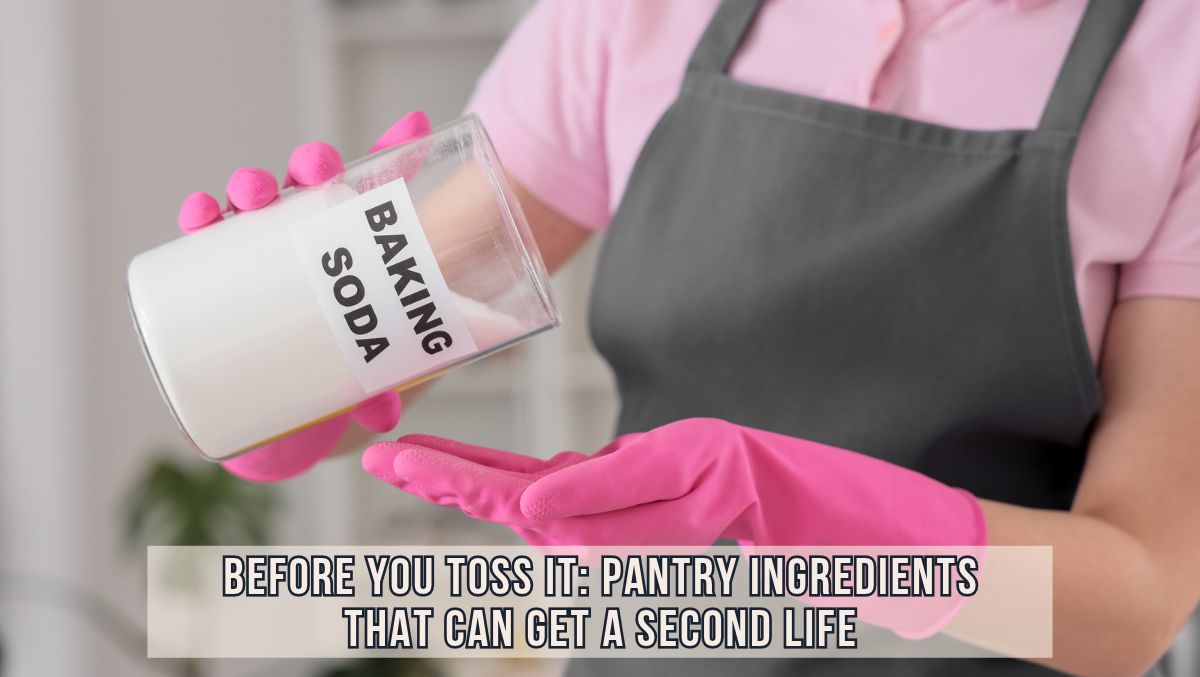
You clean out the pantry and find a can of baking powder you can’t remember buying.
Does it still work?
What about that ancient container of cornstarch? Or the tea nobody likes? And surely that bottle of vinegar has been there forever.
Food dates can make this confusing because “old,” “past its best quality” and “unsafe to use” aren’t necessarily the same thing.
Some shelf-stable ingredients can remain usable for a very long time when stored properly. Others gradually lose the quality that makes them useful for their original purpose.
And some can get a second job around the house even when you no longer want to cook with them.
Before throwing out these 10 common pantry ingredients, see whether there’s still some value left in them.
A Food-Safety Note
This article is about ingredients that are old, stale or no longer performing well for their intended purpose — not spoiled or contaminated food.
Discard anything showing mold, pests or other signs of contamination. Discard oils that smell or taste rancid rather than repurposing them for food or personal care.
When you’re unsure whether a food is safe to eat, don’t try to save a few cents by taking a chance.
1. Baking Soda
How Long Is It Good for Baking?
Baking soda doesn’t necessarily become unsafe when it’s old, but an opened box can gradually lose effectiveness as a leavening agent, particularly if it has been exposed to moisture.
Instead of relying solely on the date printed on the package, test older baking soda before using it in an important recipe.
Place a small amount in a dish and add an acidic liquid such as vinegar or lemon juice. A vigorous fizz indicates it’s still reactive.
If the reaction is weak, replace it for baking.
Give It a Second Life
Old baking soda can still be useful for jobs that don’t depend on its leavening ability.
Use it as a mild abrasive for appropriate cleaning jobs, deodorize trash cans or use it for other household cleaning purposes.
You can also move an opened box from the baking cupboard to your cleaning supplies and clearly label it NOT FOR BAKING.
Don’t toss it because: Its usefulness as a household product can outlast its usefulness as a reliable baking ingredient.
2. Cornstarch
How Long Is It Good for Cooking?
Cornstarch is one of the easier pantry ingredients to keep.
When stored tightly sealed in a cool, dry place and protected from moisture and pests, it has a very long shelf life. It doesn’t normally lose its thickening ability simply because the package has been sitting in your pantry for a while. So an old date alone isn’t necessarily a reason to replace it.
Give It a Second Life
If you’ve decided not to cook with an older box, cornstarch has other household uses.
It can help absorb fresh grease and oil stains, provide mild abrasive action for some cleaning jobs and be used in certain crafts and homemade mixtures.
Don’t toss it because: Properly stored cornstarch may still be perfectly useful, even if you no longer want it taking up space in the cooking cupboard.
3. Baking Powder
How Long Is It Good for Baking?
Baking powder is one pantry ingredient where freshness matters.
Over time, it loses the chemical activity needed to make baked goods rise properly. That doesn’t necessarily mean there’s anything wrong with the powder. It means you may end up with some very disappointing biscuits.
Test questionable baking powder before baking with it. Put a small amount into hot water. Fresh, active baking powder should bubble vigorously. A weak reaction is a sign that it’s time for a new can for baking.
Give It a Second Life
Baking powder isn’t nearly as versatile as baking soda, but you don’t necessarily have to dump the remainder immediately.
Because it contains baking soda along with acidic ingredients and starch, it can provide mild abrasive action for some household cleaning jobs. Try it on appropriate surfaces for jobs such as cleaning stained mugs or tackling light grime.
It may also provide some deodorizing action, although baking soda is generally the better choice.
Don’t toss it because: A can that can’t reliably raise a cake may still scrub a coffee-stained mug.
Want MORE TIPS for Stretching Your Budget?
Get the free eBook with 226 simple money-saving tips — plus the Dollar Stretcher newsletter with practical, real-life ways to make a tight budget go further.
We value your privacy.
Unsubscribe anytime.
4. Cream of Tartar
How Long Is It Good for Cooking?
That little container of cream of tartar may be one of the oldest things in your spice cupboard.
Fortunately, cream of tartar is quite stable when stored properly. Keep it tightly sealed and dry. If moisture or contamination has gotten into it, that’s another matter.
If you’ve owned it for years but it still looks and smells as it should, don’t assume its age alone makes it useless.
Give It a Second Life
Cream of tartar’s acidity makes it useful for certain cleaning jobs.
Combined with a little water or other appropriate ingredients, it can be used in homemade cleaning pastes for some metal surfaces, stained cookware and other household jobs.
Always make sure an acidic cleaner is appropriate for the surface first.
Don’t toss it because: That seldom-used baking ingredient may have more value in your cleaning cupboard.
5. White Vinegar
How Long Is It Good for Cooking?
Here’s one ingredient you probably don’t need to worry much about “expiring.”
Because of its acidity, distilled white vinegar is extremely shelf-stable. Over time, you may notice harmless changes in some types of vinegar, but you generally don’t need to discard an old bottle of distilled white vinegar just because you’ve had it for years.
Give It a Second Life
Even if you no longer want to use an old bottle for food, white vinegar is one of the most useful inexpensive household cleaners.
Depending on the surface and appliance manufacturer’s instructions, vinegar can be useful for tackling mineral deposits, soap residue and other cleaning jobs.
However, vinegar’s acidity means it shouldn’t be used everywhere. Avoid using it on acid-sensitive surfaces such as natural stone and follow manufacturers’ care instructions for appliances and specialty finishes.
And never mix vinegar with chlorine bleach.
Don’t toss it because: An old bottle can potentially replace several household cleaning products.
Mark It When You Open It
Some pantry ingredients become harder to evaluate because you can’t remember whether you opened them three months or three years ago.
Keep a permanent marker in the kitchen and write the month and year opened on packages where freshness after opening matters.
That one small habit can make it easier to rotate pantry supplies, use older ingredients first and recognize which products you consistently buy in quantities larger than your household needs.
About The Dollar Stretcher
The Dollar Stretcher shares practical ways to lower everyday costs, build steadier money habits and move from stuck to stable on a tight budget.
Learn more about how we can help you.
Get All 226 Money-Saving Tips—Free Download
You’ll also get our free newsletter each week. It’s full of useful ways to cut costs and stretch your dollars.
6. Salt
How Long Is It Good for Cooking?
Plain salt doesn’t spoil under normal dry storage conditions.
Specialty salts and products containing additional ingredients may have different quality considerations, so check the package. Moisture can also cause salt to clump.
But that forgotten container of plain table salt doesn’t become useless simply because it’s old.
Give It a Second Life
Salt’s texture makes it a useful mild abrasive for some household jobs.
It can be incorporated into appropriate scrubbing mixtures, used with lemon for certain cleaning tasks and put to work in other household applications. An old box can easily become part of your cleaning supplies.
Don’t toss it because: Plain salt can remain useful almost indefinitely when it stays clean and dry.
7. Lemons
How Long Are They Good for Cooking?
Unlike most of the ingredients on this list, fresh lemons are obviously perishable.
Don’t try to salvage moldy or spoiled fruit.
But there’s a window between beautiful fresh lemon and spoiled lemon when an aging lemon may still have some usefulness. A lemon that’s beginning to shrivel may no longer look attractive sliced into someone’s iced tea, for example, but you may still be able to zest or juice it if it’s otherwise sound.
Give Them a Second Life
Get the food value first whenever possible.
Zest usable lemons before squeezing them and freeze the zest for later. You can also freeze the extra juice in small portions (see 10 Uses for Extra Fruit Juices in the Kitchen).
Squeezed lemon halves can sometimes get one last job tackling appropriate hard-water deposits, cleaning certain cutting boards or helping steam loosen microwave grime.
Avoid using lemon juice on natural stone and other acid-sensitive surfaces.
Don’t toss them because: A lemon can potentially provide zest, juice and a final household use before heading to the compost or trash.
8. Coffee and Coffee Grounds
How Long Are They Good for Drinking?
Coffee is primarily a quality issue.
Once opened, coffee gradually loses the aroma and flavor that make a good cup enjoyable. Proper airtight storage helps preserve quality, but coffee doesn’t stay at peak freshness forever.
If those old beans or grounds make a cup nobody wants to drink, forcing yourself to drink bad coffee isn’t the only alternative to throwing them away.
Give Them a Second Life
Unused coffee grounds can potentially go into a compost pile where appropriate.
Brewed leftover coffee has even more possibilities. Freeze it into cubes for future coffee drinks, use it in certain chocolate desserts or savory recipes or incorporate it into other foods where coffee flavor works. (See Leftover Coffee? 10 Ways To Use Every Last Drop.)
The key is to tell leftover fresh-brewed coffee apart from coffee that has sat too long to be safely consumed.
Don’t toss it because: Coffee that’s disappointing in your mug may still add useful flavor to a recipe or serve another purpose.
9. Tea
How Long Is It Good for Drinking?
Tea leaves and bags gradually lose flavor and aroma, particularly when exposed to air, moisture, heat and strong odors.
An old tea bag may produce a weak, uninspiring cup without necessarily being spoiled.
Moisture is the bigger concern. Tea that has gotten damp or shows signs of mold or contamination belongs in the trash.
Give It a Second Life
Stale but otherwise sound tea can still have some uses.
Depending on the type, you can use brewed tea in cooking and baking (like coffee) when its flavor complements the recipe. Unwanted dry tea can also be composted when the tea and bag materials are suitable for your compost system.
And before relegating a box to household use, consider whether someone else would actually drink it. An unopened, unexpired tea you simply don’t like may be better donated where accepted than repurposed.
Don’t toss it because: Loss of peak flavor doesn’t automatically make dry tea useless.
10. Coconut Oil
How Long Is It Good for Cooking?
Coconut oil lasts quite a while when stored properly, but unlike salt or vinegar, it’s a fat and can eventually become rancid.
Pay attention to changes in smell, flavor and appearance rather than assuming an old jar deserves an unlimited extension.
Once oil has become rancid, toss it.
Give It a Second Life — Before It Goes Bad
Coconut oil is slightly different from the other items on this list.
The goal isn’t to find something clever to do with rancid coconut oil. It’s to find other uses for a jar you realize you’re never going to finish eating before it reaches that point.
Depending on the application, coconut oil can be useful for removing some sticky residues, conditioning certain appropriate wood items and various personal care purposes.
Check the manufacturer’s care instructions before applying oil to furniture or other valuable surfaces, and stop using it for personal care if it irritates your skin.
Don’t toss it because: If you catch an unwanted jar while it’s still good, you have time to put it to work somewhere besides the kitchen.
Past Its Prime or Time To Toss It?
Before repurposing an old pantry ingredient, sort it into one of three groups:
- Still good for its original purpose: Keep using it. An old date doesn’t automatically make every shelf-stable ingredient unusable.
- No longer ideal for cooking but otherwise sound: See whether there’s a safe, practical second use.
- Spoiled, rancid, moldy, pest-infested or contaminated: Toss it. Saving a small amount of money isn’t worth creating a food-safety, skin or household problem.
When in doubt about food safety, err on the side of discarding it.
Budget Level Savings: Start With What You Already Own
No need to tackle every tip at once. Start with the tips best suited for your budget.
If money is stretched and savings need to be meaningful:
Don’t buy ingredients specifically to try household hacks.
The savings come from finding another purpose for something you’ve already paid for and might otherwise throw away.
Before replacing an older pantry item, determine whether it actually needs replacing. Some shelf-stable ingredients last much longer than people realize.
If you’re cutting back but still have some flexibility:
Create a small spot for pantry ingredients you’ve retired from food use but intend to use elsewhere.
Label everything clearly so nobody accidentally uses old baking powder in a birthday cake or mistakes cleaning supplies for cooking ingredients.
Most importantly, don’t accumulate clutter in the name of frugality. If you haven’t found a realistic second use, it’s OK to toss something.
If you just want small, easy wins:
Use this exercise to reconsider package sizes.
If you repeatedly end up with half a container of baking powder, specialty ingredients or oils you can’t finish while they’re at their best, buying the smaller package may provide better value, even if its unit price is higher.
Preventing waste usually beats finding ways to deal with it later.
TDS Takeaway: Second Lives Are Good. Not Creating Waste Is Better.
Finding another use for something you’ve already bought is satisfying.
But the ultimate goal isn’t to build a collection of expired ingredients under the kitchen sink.
It’s to notice patterns.
- If your baking powder repeatedly loses its effectiveness before you finish the can, buy a smaller one next time.
- If nobody drinks that particular tea, stop buying it.
- If you use only a few tablespoons of coconut oil each year, don’t buy the giant warehouse-club jar because it has a lower price per ounce.
- And if your cornstarch has been sitting untouched for five years but is still perfectly good, perhaps you simply don’t need to replace it because a date on the package made you nervous.
Getting a second life from an ingredient saves money. Not buying more than you can reasonably use can save even more.
Did this article help you save or stretch a few dollars or plug a financial leak? The Dollar Stretcher can help you make your dollars go even further.
Join the free Dollar Stretcher newsletter to get money-saving tips and articles delivered to your inbox each week, plus a copy of the 226 money-saving tips eBook — a reference you can use whenever money feels tight.
About the Author
Andrea Norris-McKnight is the Money-Saving Strategist behind The Dollar Stretcher.
She helps people on tight budgets cut everyday costs, build steadier money habits and create a little breathing room—without guilt, gimmicks, or unrealistic advice.
More Ways To Save

Waste Less, Save More: Clever Kitchen Reuses
These simple reuses may stretch your grocery budget and cut down on waste without extra effort.

9 Money-Saving Uses for Epsom Salt
Here’s how to use it to cut costs in your bathroom, cleaning routine, first-aid supplies and even the garden.
Borax: Where It Still Makes Sense and Saves Cents (And Where It Doesn’t)
Borax still has a place in a tight budget household — if you use it strategically.

Make It or Buy It? 15 Pantry Staples Worth Comparing
You can make everything from taco seasoning and cream soups to ketchup and pancake mix from scratch. But should you?
About The Dollar Stretcher
The Dollar Stretcher shares practical ways to lower everyday costs, build steadier money habits and move from stuck to stable on a tight budget.
Learn more about how we can help you.