
Practical Ways To Repurpose Dryer Lint (and When To Toss It)
TDS Money-Saving Strategist: Andrea Norris-McKnight | posted July 2026
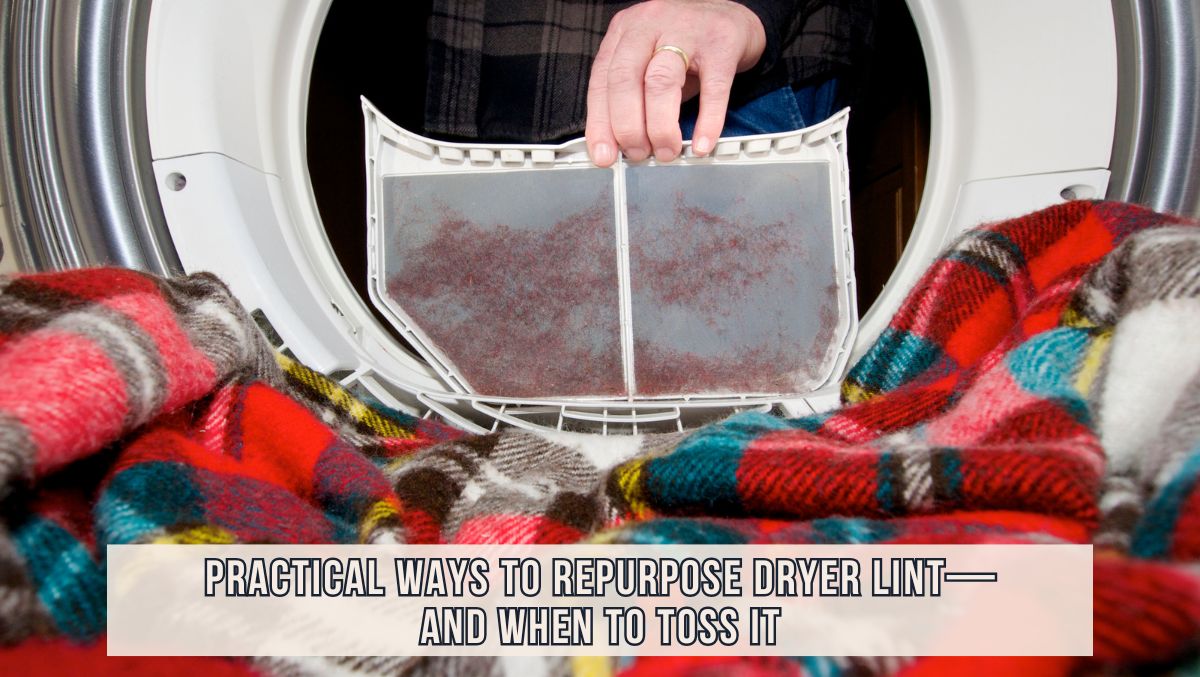
Cleaning your dryer’s lint screen after every load is one of the easiest ways to improve drying efficiency and reduce the risk of a dryer fire.
Most of us simply toss the lint in the trash.
While dryer lint isn’t nearly as versatile as baking soda or vinegar, there are a handful of ways you may be able to put it to use before throwing it away.
One important note before getting started: many of these ideas work best—or only work—with lint made primarily from natural fibers like cotton, linen or wool. If much of your laundry contains polyester, nylon, acrylic or other synthetic fabrics, the lint may contain tiny plastic fibers that aren’t suitable for some of the uses below.
Save It for Fire Starters
One of the best-known uses for dryer lint is as tinder for campfires, fireplaces or fire pits.
Lint catches fire quickly, making it useful for helping larger pieces of wood ignite.
Some people store lint in cardboard toilet paper tubes or paper egg cartons and add melted wax to create homemade fire starters.
Only use dryer lint for controlled fires. Never store large amounts near a heat source, furnace or water heater.
Keep a Small Bag for Emergency Fire Kits
If you camp, hike or keep an emergency preparedness kit, a small sealed bag of dryer lint can serve as lightweight fire-starting material.
It weighs almost nothing and takes up very little space.
Again, natural-fiber lint is generally the better choice.
Add Natural-Fiber Lint to Compost
If your lint comes mostly from natural fibers like cotton or wool, you can add small amounts to your compost pile.
The lint acts as a carbon-rich “brown” material.
Avoid composting lint that contains a significant amount of synthetic fibers, as those tiny plastic fibers do not break down the way natural materials do.
WeDoLaundry also recommends that if you’re using lint for garden or compost purposes, skip softener/sheets on those loads beforehand for the best result. They point out that even natural-fiber lint can carry fabric softener or dryer sheet residue, which coats the fibers and slows down how well they absorb moisture or break down.
Want MORE TIPS for Stretching Your Budget?
Get the free eBook with 226 simple money-saving tips — plus the Dollar Stretcher newsletter with practical, real-life ways to make a tight budget go further.
We value your privacy.
Unsubscribe anytime.
Use It in Crafts
Dryer lint can sometimes be useful for:
- Homemade paper
- Paper mâché
- Stuffing lightweight craft projects
- Kids’ art projects (with supervision)
Because lint can contain dust, pet hair and detergent residue, it’s generally best for decorative projects rather than items that will be handled frequently.
Stuff Decorative Crafts
If you make seasonal decorations, ornaments or other decorative items, dryer lint can sometimes be used as filler instead of purchasing fiberfill.
Avoid using it for toys, pillows or anything that will be handled regularly since lint can compress, shed and collect dust over time.
About The Dollar Stretcher
The Dollar Stretcher shares practical ways to lower everyday costs, build steadier money habits and move from stuck to stable on a tight budget.
Learn more about how we can help you.
Get All 226 Money-Saving Tips—Free Download
You’ll also get our free newsletter each week. It’s full of useful ways to cut costs and stretch your dollars.
Use It as Packing Material
Need to cushion a fragile item you’re mailing or storing?
Dryer lint can provide light padding when sealed inside a paper bag or reused plastic bag.
It’s not as protective as bubble wrap, but it can work for lightweight items and gives one more use to something that would otherwise be discarded.
Does Your Lint Contain Mostly Natural Fibers?
These reuse ideas work best if your laundry is primarily made from:
- Cotton
- Linen
- Wool
- Hemp
- Bamboo (natural rayon-based fibers may vary)
If most of your clothing is polyester, nylon, acrylic or fleece, your lint will likely contain synthetic fibers, making some uses—especially composting and gardening—less suitable.
Uses You May Want To Skip
The internet is full of creative ideas for dryer lint, but not all of them are good ones.
Some suggestions are better avoided.
Pet Bedding
Although you may see this recommendation online, many animal experts discourage using dryer lint as bedding because it can retain moisture, become compacted and may contain detergent residue or synthetic fibers.
Commercial bedding designed for your pet is generally a better option.
Garden Mulch
Lint that contains synthetic fibers can introduce tiny plastic particles into the soil.
Even natural-fiber lint may contain residues from detergents, fabric softeners or dryer sheets.
If you compost lint, make sure it’s primarily natural fibers instead of spreading it directly around plants.
Filling Gaps Around the House
Some older articles suggest using dryer lint as temporary insulation.
This isn’t recommended.
Because lint is highly flammable and can absorb moisture, it’s not an appropriate material for sealing gaps or insulating your home.
Household Cleaning
While dryer lint can pick up dust, it also tends to leave fibers behind, making microfiber cloths or old cotton T-shirts much better choices for most cleaning jobs.
When It’s Best To Throw It Away
Sometimes the simplest answer is the best one.
If your household mostly wears synthetic clothing or you use dryer sheets and heavily scented laundry products, many of the reuse ideas become less practical.
There’s nothing wrong with simply cleaning the lint trap and throwing the lint away.
The important thing is cleaning the trap after every load to keep your dryer operating safely and efficiently.
The Most Valuable Thing You Can Do With Dryer Lint
The biggest money-saving benefit of dryer lint isn’t reusing it.
It’s removing it from the lint screen after every load.
A clean lint filter helps your dryer:
- Dry clothes more efficiently.
- Use less energy.
- Reduce wear on the appliance.
- Lower the risk of dryer fires.
That simple habit is worth far more than finding a second use for the lint itself.
TDS Takeaway
Dryer lint isn’t a household item you’ll find dozens of uses for, and that’s okay.
A few practical uses—particularly as a fire starter, compost ingredient for natural fibers or lightweight craft material—can help you get a little more value from something that usually ends up in the trash.
Just remember that not every idea you see online is a good one. Consider what your lint is made of and choose uses that are both practical and safe.
Did this article help you save or stretch a few dollars or plug a financial leak? The Dollar Stretcher can help you make your dollars go even further.
Join the free Dollar Stretcher newsletter to get money-saving tips and articles delivered to your inbox each week, plus a copy of the 226 money-saving tips eBook — a reference you can use whenever money feels tight.
About the Author
Andrea Norris-McKnight is the Money-Saving Strategist behind The Dollar Stretcher.
She helps people on tight budgets cut everyday costs, build steadier money habits and create a little breathing room—without guilt, gimmicks, or unrealistic advice.
More Ways To Save

9 Money-Saving Uses for Coffee Grounds
Coffee grounds are good for much more than enriching your compost pile.
Creative Uses for Shredded Paper for the Home and Garden
There are plenty of ways to reuse it around your house and in the garden.

13 Surprising Frugal Uses for Fabric Softener — and a Few No-Nos
Before You Buy Another Cleaner: 12 Jobs Dawn Dish Soap May Already Handle
Before buying another specialty product, see whether the dish soap you already have can do the job.
About The Dollar Stretcher
The Dollar Stretcher shares practical ways to lower everyday costs, build steadier money habits and move from stuck to stable on a tight budget.
Learn more about how we can help you.