
Before You Buy Another Cleaner: 12 Jobs Dawn Dish Soap May Already Handle
You bought Dawn to wash dishes, but it may handle several cleaning jobs around your home that normally send you to the cleaning aisle. Before buying another specialty product, see whether the dish soap you already have can do the job.
TDS Money-Saving Strategist: Andrea Norris-McKnight | posted September 2026
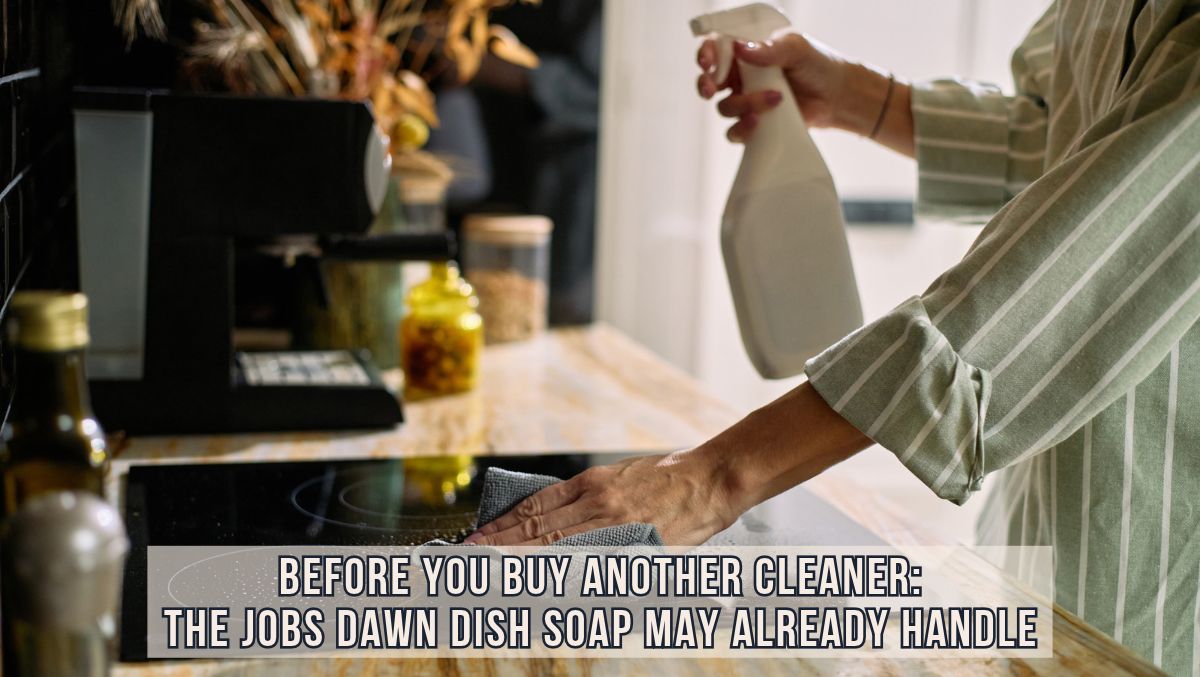
The cleaning aisle is full of products designed for very specific jobs: stovetop cleaner, cabinet degreaser, laundry pretreatment, outdoor furniture cleaner, tire cleaner and more.
Sometimes a specialty cleaner is exactly what you need.
But sometimes you already own something that will do the job.
Dawn dish soap is formulated to cut grease, which makes it useful well beyond the kitchen sink. If you already keep it in the house, using a small amount for other compatible cleaning jobs could save you from buying another bottle that gets used twice and then sits under the sink.
Here are 12 places to try the dish soap you already have before buying something new.
1. Pretreat Greasy Laundry Stains
Grease stains can be particularly stubborn because water alone doesn’t do much to remove oil.
Since dish soap is designed to break up grease, a small amount can help pretreat oily food stains, cooking splatters and similar marks on washable clothing.
Apply a drop to the stain, gently work it into the fabric, and let it sit briefly before laundering according to the garment’s care instructions.
Use a small amount. Dishwashing liquid creates a lot of suds and shouldn’t be poured into the washing machine as a substitute for laundry detergent.
And as with any stain treatment, test delicate or questionable fabrics first.
What this may replace: A separate grease-specific laundry stain remover.
With three active boys, I find that most items have at least one area that needs a pre-wash stain remover. I found a cheap mix that works on dirt, grass, ink and food stains.
Mix the following in an old spray bottle:
1/3rd rubbing alcohol
1/3rd hydrogen peroxide
1/6th Dawn dish liquid
1/6th water
I spray the stains and brush the mixture in with an old toothbrush before washing. Just remember to label the bottle you use, and always make sure you know what chemicals you’re mixing. Some mixes can be harmful.
Gail
2. Degrease Kitchen Cabinets
Cabinets near the stove can develop a sticky film made up of cooking grease, dust and everyday grime.
A few drops of dish soap in warm water may be all you need to clean many washable cabinet surfaces.
Use a damp, not dripping, cloth and follow with a clean, damp cloth if needed.
Cabinet finishes vary considerably, so check the manufacturer’s recommendations or test a hidden area first.
What this may replace: A specialty citrus kitchen degreasing product.
3. Clean Greasy Backsplashes
The same grease that settles on cabinets lands on backsplashes.
For many washable tile and other compatible surfaces, warm water with a little Dawn can cut through the film without requiring a separate kitchen degreaser.
However, pay attention to the material. Natural stone and specialty surfaces may have specific cleaning requirements.
Want MORE TIPS for Stretching Your Budget?
Get the free eBook with 226 simple money-saving tips — plus the Dollar Stretcher newsletter with practical, real-life ways to make a tight budget go further.
We value your privacy.
Unsubscribe anytime.
4. Clean a Greasy Stovetop
You don’t necessarily need a different bottle of cleaner for every appliance.
Once the stovetop is completely cool, a solution of dish soap and warm water may be enough for routine grease and food splatters.
The key word is routine. Burned-on deposits may require a cleaning method recommended for your cooktop type.
Always follow the appliance manufacturer’s care instructions, particularly for glass and specialty cooktops.
What this may replace: Everyday stovetop cleaner.
5. Clean Range Hood Filters
If you have a washable metal range hood filter, grease can build up quickly.
Soaking the filter in hot water with grease-cutting dish soap can loosen the buildup before you scrub and rinse.
Check your range hood instructions first. Not all filters are washable, and charcoal filters generally need to be replaced rather than washed.
Keeping a reusable filter clean may also help it do its job without buying a special filter-cleaning product.
About The Dollar Stretcher
The Dollar Stretcher shares practical ways to lower everyday costs, build steadier money habits and move from stuck to stable on a tight budget.
Learn more about how we can help you.
Get All 226 Money-Saving Tips—Free Download
You’ll also get our free newsletter each week. It’s full of useful ways to cut costs and stretch your dollars.
6. Wash Outdoor Furniture
Patio tables and chairs don’t always require an outdoor furniture cleaner.
For many washable plastic, resin and metal pieces, a bucket of water with a small amount of dish soap can remove ordinary dirt, pollen and grime.
Rinse thoroughly afterward and check the manufacturer’s recommendations before using it on specialty finishes, wood or fabrics.
7. Clean Vinyl Blinds
Blinds can accumulate dust and greasy household residue that’s hard to remove with dry dusting alone.
For washable vinyl blinds, diluted dish soap can help cut through the grime.
Depending on the style of blind, wipe the slats with a cloth dampened with soapy water or wash removable blinds according to the manufacturer’s instructions.
8. Clean Greasy Tools
Some household and garden tools pick up oily or greasy grime that plain water won’t remove.
A little dish soap and warm water may be enough to clean compatible tool surfaces before drying them thoroughly.
Don’t soak tools with electrical components, wooden handles or parts that shouldn’t be submerged. Some metal tools may also need to be dried immediately and oiled afterward to prevent rust.
What this may replace: General-purpose degreasing cleaner.
9. Wash Trash Cans
Kitchen and outdoor trash cans can develop sticky residue and odors even when you use liners.
Rather than buying a special deodorizing cleaner, start with the basics: dish soap, water and a scrub brush or cleaning cloth.
Removing the actual grime that holds odors may be more effective than simply covering the smell with fragrance.
Rinse the container and allow it to dry thoroughly before replacing the liner.
10. Clean Grease From Some Car Surfaces
Dish soap can be useful for cleaning certain greasy automotive items, but it’s important to distinguish between parts and paint.
A small amount can help clean greasy tools, removable rubber mats or other compatible washable surfaces.
However, don’t make dish soap your regular car-wash soap. Products formulated for vehicle exteriors are designed with automotive finishes and protective coatings in mind.
11. Clean Combs and Hairbrushes
Hairbrushes and combs collect hair oils and residue from styling products.
After removing trapped hair, you can often clean washable plastic combs and brushes in warm water with a few drops of dish soap.
Don’t soak wooden brushes, cushioned brushes or anything the manufacturer says should not be submerged.
12. Make a Simple Soap-and-Water Cleaning Solution
Sometimes we buy a cleaner because we’ve been conditioned to think every surface requires its own bottle.
For many washable household surfaces, it doesn’t.
A few drops of dish soap added to water can provide a simple cleaning solution for ordinary dirt and grease. Depending on the surface, that may be all you need.
Don’t assume it is appropriate everywhere. Electronics, natural stone, unfinished wood, specialty finishes and certain flooring may have specific cleaning requirements.
But before reaching for another bottle at the store, it’s worth asking whether plain soap and water will handle the job.
What this may replace: One or more general-purpose specialty cleaners.
The Bigger Savings Isn’t in the Soap
You probably won’t save a noticeable amount of money by calculating how many pennies’ worth of Dawn you used to clean your kitchen cabinets.
That’s not where the real savings are.
The savings come when you don’t buy the $4, $6 or $8 bottle designed for one particular cleaning problem because something already under your sink can handle it.
It’s especially worth considering for a product you’d use infrequently. A specialty cleaner that lasts three years because you rarely need it isn’t necessarily a bargain. It’s money sitting under the sink and another item taking up space.
What This May Replace (and Save)
Depending on your household and the surfaces you own, Dawn may reduce your need for separate:
- Kitchen degreaser
- Grease-specific laundry pretreatment
- Stovetop cleaner for everyday grease
- Outdoor furniture cleaner
- Beauty-tool cleaner
- General degreaser
Use up any of these cleaners you may have if they work for you. Then, when the bottle is empty, consider whether you actually need to replace it or if Dawn will do the job.
Where Dawn Isn’t a Money-Saving Substitute
The cheapest cleaner isn’t cheap if it damages what you’re cleaning.
Don’t assume Dawn is safe simply because it’s relatively gentle on dishes. Before using it on natural stone, specialty flooring, painted or finished wood, electronics, delicate fabrics or manufacturer-treated surfaces, check the care instructions.
And don’t automatically substitute dish soap for products that serve a function beyond basic cleaning. Dishwasher detergent, laundry detergent, disinfectants and automotive wash products, for example, are formulated for their particular jobs.
There is also no benefit to using more soap than necessary. Extra dish soap generally means extra rinsing, not extra cleaning.
Budget Level Savings
No need to tackle every tip at once. Start with the tips best suited for your budget.
Before buying any specialty cleaner, ask whether dish soap and water can safely do the job. Use up what you own rather than building a collection of cleaning products.
If you’re cutting back but still have some flexibility:
As cleaners run out, decide which ones genuinely earn a place in your cleaning cabinet. Replace only those that perform a job your multipurpose basics can’t handle well.
If you just want small, easy wins:
Simplify rather than stockpile. Keeping fewer cleaners can reduce clutter, duplicate purchases and the chance that half-used products sit around for years.
Already Buying These Ingredients? Get Your Money’s Worth
If you’re purchasing ingredients to make your own cleaners or detergents, stretch your dollars by using them in other ways around your home.
Before you buy, make sure you can use each ingredient in more than one way.
More ways to use:
- Castile soap: hand soap, body wash, all-purpose cleaner
- Borax: laundry booster, odor control, general cleaning
- Vinegar: rinse aid, glass cleaner, deodorizer
Dollar Stretcher tip: If you can’t see at least two or three uses for an ingredient, the “DIY savings” may not be as strong as they look.
TDS Takeaway: Try the Cheapest Solution First
There’s a useful rule for cleaning on a budget: Start with the simplest product likely to work and move up only if you need to.
Sometimes that will be water. Sometimes it’s soap and water. Sometimes you’ll genuinely need the specialty cleaner.
Dawn isn’t a miracle product and it doesn’t belong on every surface in your home. But because you may already buy it for dishes, every additional job it can safely handle gives that bottle a little more value.
The next time you’re tempted to buy a cleaner for one specific problem, check under your kitchen sink first. The solution may already be there.
Did this article help you save or stretch a few dollars or plug a financial leak? The Dollar Stretcher can help you make your dollars go even further.
Join the free Dollar Stretcher newsletter to get money-saving tips and articles delivered to your inbox each week, plus a copy of the 226 money-saving tips eBook — a reference you can use whenever money feels tight.
About the Author
Andrea Norris-McKnight is the Money-Saving Strategist behind The Dollar Stretcher.
She helps people on tight budgets cut everyday costs, build steadier money habits and create a little breathing room—without guilt, gimmicks, or unrealistic advice.
More Ways To Save
Getting More Life Out of Household Supplies and Everyday Items
Some household items get replaced sooner than necessary simply because of how they’re used, stored or maintained.

How Dollar Stretchers Are Saving on Fabric Softeners
These reader-tested ideas show how to soften clothes, reduce static and make commercial fabric softeners last much longer while spending less.
20+ Money-Saving Uses for Rubbing Alcohol Around the House
A bottle of rubbing alcohol costs just a few dollars but can replace several specialty cleaners around your home.

10 Things You Shouldn’t Clean With Vinegar (That Could Cost You More Later)
Vinegar works well for many cleaning jobs, but not all.
About The Dollar Stretcher
The Dollar Stretcher shares practical ways to lower everyday costs, build steadier money habits and move from stuck to stable on a tight budget.
Learn more about how we can help you.