
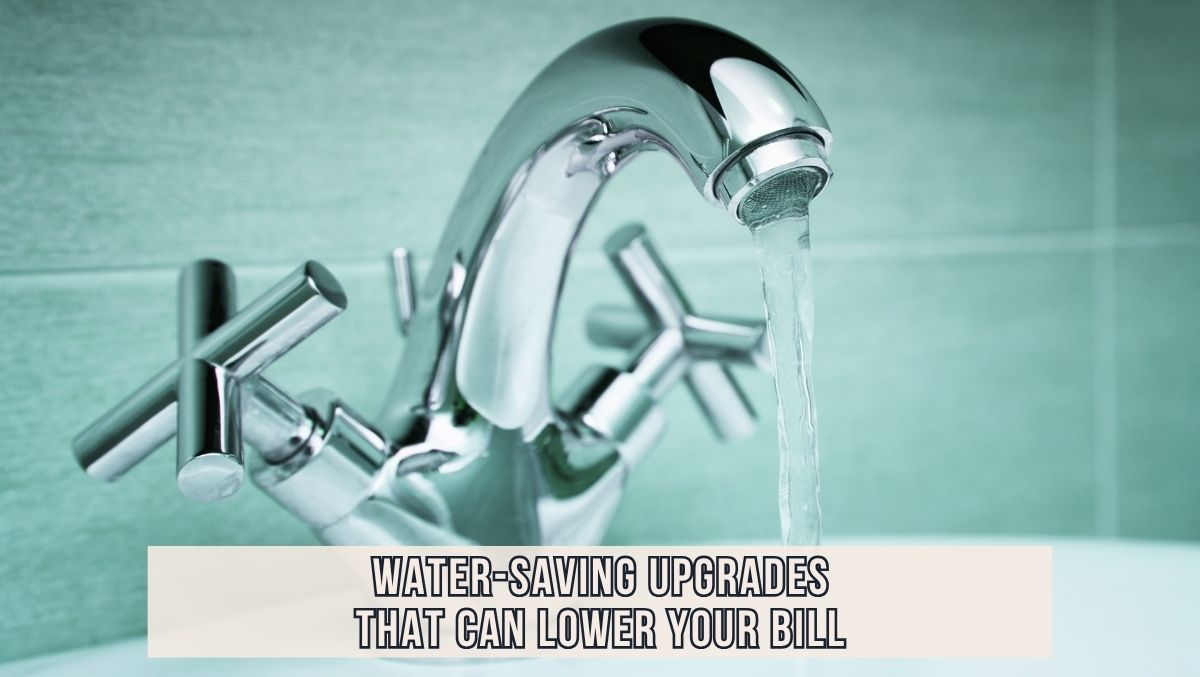
Water-Saving Upgrades That Can Lower Your Bill
Once you’ve tackled the free ways to reduce water use, certain upgrades may help you save even more. Some cost just a few dollars, while others make the most financial sense when you’re already replacing an old fixture or appliance.
TDS Money-Saving Strategist: Andrea Norris-McKnight | posted August 2026
These tips may contain affiliate links. The Dollar Stretcher is an Amazon Associate and may earn a small commission if you purchase through a link, at no extra cost to you. Prices fluctuate, and featured products aren’t guaranteed to be the lowest price. As always, we recommend checking prices and buying only when it makes sense for your budget. Learn how we choose and recommend products.
Changing everyday habits is one of the easiest ways to reduce household water use.
Turn off the faucet. Take shorter showers. Run full loads of laundry. Fix obvious leaks. Don’t water the sidewalk.
Those changes don’t require you to buy anything.
But once you’ve eliminated unnecessary water use, you may wonder whether spending money on water-saving fixtures and equipment could lower your bill further.
Sometimes it can.
The trick is deciding which upgrades are likely to pay off in your household.
You don’t need to replace everything that uses water simply because something newer uses less. Start with inexpensive improvements and fixtures that get heavy use. For expensive upgrades, replacement time is often the best time to improve efficiency.
Here are some options to consider.
1. Add Faucet Aerators
Faucet aerators are one of the least expensive places to start.
An aerator attaches to the end of a faucet and mixes air into the water stream. A water-efficient model can reduce the amount of water flowing from the faucet while still providing a useful stream for washing hands and many other everyday tasks.
Before buying one, check your existing faucet.
It may already have an efficient aerator, particularly if it’s relatively new. You also need the right size and type for your faucet.
If you have an older faucet with a high flow rate, however, an inexpensive aerator can be a simple way to reduce water use without replacing the entire fixture.
Worth considering when: You have older, frequently used bathroom or kitchen faucets.
2. Replace an Inefficient Showerhead
Showers use both water and energy because most of us shower with heated water.
That means an efficient showerhead potentially reduces two expenses: the water itself and the energy required to heat it.
Don’t assume “water-saving” has to mean a miserable shower.
Modern efficient showerheads are designed to provide satisfactory performance while using less water. Look for the flow rate when comparing models rather than relying solely on marketing claims.
Before replacing yours, determine what you already have. If the current showerhead is already efficient and works well, replacing it with another similar model probably won’t produce meaningful savings.
Worth considering when: Your existing showerhead has a relatively high flow rate, someone in the household takes long showers or the shower gets heavy daily use.
3. Consider a WaterSense-Labeled Fixture
When shopping for showerheads, bathroom faucets, toilets and certain other water-related products, you may see the WaterSense label.
WaterSense is a U.S. Environmental Protection Agency program. Products earning the label must meet water-efficiency and performance criteria.
That performance component matters.
A fixture that uses less water doesn’t save much if you’re unhappy with it and compensate by running it longer or flushing it twice.
You don’t necessarily need to replace a functioning fixture just to get a WaterSense model. But when you’re already buying a replacement, the label can make it easier to identify efficient choices.
Worth considering when: You’re replacing a fixture anyway and want an easy way to compare water-efficient options.
Want MORE TIPS for Stretching Your Budget?
Get the free eBook with 226 simple money-saving tips — plus the Dollar Stretcher newsletter with practical, real-life ways to make a tight budget go further.
We value your privacy.
Unsubscribe anytime.
4. Replace an Older, Water-Hungry Toilet
Toilets can account for a significant portion of indoor household water use, and older toilets may use considerably more water per flush than current efficient models.
That doesn’t automatically mean you should rip out every old toilet in your house tomorrow.
A new toilet costs money. Installation may add to that cost. If your household has relatively low water and sewer rates, it could take a while for water savings alone to recover the expense.
But if an old toilet needs replacing anyway, water consumption should be part of the buying decision.
Also consider how frequently the toilet is used. Replacing a heavily used older toilet will generally yield greater savings than replacing a rarely used guest-bath toilet.
Worth considering when: You have a much older toilet, water and sewer costs are high, the toilet gets heavy use or you already need a replacement.
5. Fix Leaks With New Parts Rather Than Replacing Entire Fixtures
Not every water-saving “upgrade” needs to be an upgrade at all.
Sometimes you just need a part.
A running toilet may need a new flapper or another internal component. A dripping faucet might need a washer, cartridge or other repair.
If a relatively inexpensive part stops water from being wasted around the clock, it may provide a better return than replacing a functioning faucet or toilet solely for efficiency.
DIY the repair only if it’s a job you can handle safely and correctly. Otherwise, compare the cost of professional repair with replacement.
Worth considering when: Something leaks, drips or runs when it shouldn’t.
About The Dollar Stretcher
The Dollar Stretcher shares practical ways to lower everyday costs, build steadier money habits and move from stuck to stable on a tight budget.
Learn more about how we can help you.
Get All 226 Money-Saving Tips—Free Download
You’ll also get our free newsletter each week. It’s full of useful ways to cut costs and stretch your dollars.
6. Look at Water Use When Replacing a Washing Machine
A washing machine is a much bigger purchase than a faucet aerator.
So don’t replace a dependable washer solely because a new one might use less water without doing the math first.
Manufacturing a financial “payback” from water savings alone can take time.
But when your washer reaches the end of its useful life, water and energy efficiency deserve a place on your comparison list along with price, capacity, reliability and features.
A water-efficient washer may also reduce the energy needed to heat the wash water, depending on your laundry habits.
Compare models appropriate for your household size. Buying more machine than you need can undermine some of the financial benefits you’re trying to gain.
Worth considering when: Your existing washer needs replacing.
7. Do the Same When Replacing a Dishwasher
Modern dishwashers can wash dishes using surprisingly little water compared with washing the same number of dishes under continuously running water.
As with washing machines, however, don’t automatically replace a functioning dishwasher to save water.
When replacement time comes, compare water and energy use along with purchase price, expected reliability, capacity and repair considerations.
Then use the new dishwasher efficiently. Even an efficient machine wastes resources if you’re repeatedly running nearly empty loads.
Worth considering when: You’re already shopping for a dishwasher.
Upgrade Now or Wait?
- Upgrade now: The current item is leaking, malfunctioning, extremely inefficient or inexpensive to improve.
- Consider it: The fixture gets heavy use and the potential savings appear reasonable compared with the cost.
- Wait until replacement: The current appliance or fixture works well and replacing it solely for water savings would require a substantial investment.
Sometimes the most frugal water-saving upgrade is the one you don’t buy yet.
8. Add an Automatic Shutoff Nozzle to the Garden Hose
Outdoor water-saving improvements don’t have to be expensive.
A hose nozzle that stops water flow when you release the handle can prevent water from running while you move between plants, wash the car or change outdoor tasks.
It’s a small convenience that makes turning off the water automatic rather than requiring a walk back to the faucet every time.
Inspect hose connections while you’re at it. Replacing an inexpensive washer may stop a connection that leaks whenever the hose is running.
Worth considering when: You frequently use a garden hose.
9. Use a Rain Barrel Where It Makes Sense
A rain barrel captures water from a roof downspout for later use in appropriate outdoor watering.
Whether one will save enough money to justify its cost depends heavily on where you live, how much rain you receive, how much outdoor watering you do and what you pay for water.
Before installing one, check local rules. Rainwater collection requirements vary by location, and you’ll also want to consider mosquito prevention, overflow management and safe placement.
Don’t assume you need an expensive decorative system, either. Compare the cost with the realistic amount of municipal water it will replace.
Worth considering when: You regularly water gardens or landscaping, have sufficient rainfall and can properly install and maintain a system.
10. Improve Irrigation Controls
An automatic irrigation system can be convenient.
It can also faithfully water the lawn even when it doesn’t need water.
If you have an irrigation system, upgrading its control mechanism may reduce unnecessary watering. Weather-based or soil-moisture-based controls can adjust irrigation based on actual conditions rather than simply watering according to a fixed schedule.
But technology isn’t automatically frugal.
If you have a tiny yard and already adjust your irrigation manually, an expensive controller may not save enough to justify itself.
Worth considering when: You have significant irrigated landscaping and an automatic system that currently operates mostly on a fixed schedule.
11. Repair and Adjust Sprinkler Heads
Before investing in a sophisticated irrigation upgrade, observe your existing system in operation.
- A broken sprinkler head can waste water.
- A poorly aimed one may be watering the driveway.
- A clogged or malfunctioning head may leave part of the lawn dry, tempting you to run the entire system longer to compensate.
Sometimes the most cost-effective irrigation upgrade is a replacement sprinkler head, a simple adjustment or a repair.
Worth considering when: You see water spraying onto pavement, pooling in one area or failing to reach the intended landscaping.
12. Consider Drip Irrigation for the Right Areas
For gardens, shrubs and certain landscaped areas, drip irrigation can deliver water directly around plants rather than spraying a broad area.
That can reduce water lost to evaporation, runoff or watering areas where it isn’t needed.
However, installation costs vary and drip systems still require maintenance. Emitters can clog, tubing can become damaged and poorly designed systems can still waste water.
Don’t install one merely because it’s labeled water-efficient.
Consider what you’re watering, how you currently water it and how much water the new system would realistically save.
Worth considering when: You regularly irrigate garden beds, shrubs or other targeted plantings.
13. Consider a Pool Cover
If you own a swimming pool, evaporation can account for a substantial amount of water loss.
A pool cover can reduce evaporation, which means less replacement water may be needed.
Depending on the type of cover and your climate, there may be other benefits, too, such as reducing heat loss or keeping debris out of the pool.
But pool covers vary significantly in price, purpose and safety. Make sure any cover you consider is appropriate for your pool and household, particularly if children or pets have access to the area.
Worth considering when: You own a pool and regularly need to replace water lost to evaporation.
14. Check for Utility Rebates Before You Buy
Before purchasing a toilet, washing machine, irrigation controller or other water-saving product, check with your local water utility.
Some utilities offer rebates, free conservation kits or other incentives for specific water-efficient products.
Your electric or gas utility may also offer incentives for appliances that reduce energy consumption.
Check requirements before making the purchase.
A rebate program may require a specific product, an efficiency rating, a purchase date, an application or proof of installation.
A rebate you discover after buying the wrong model doesn’t save you anything.
Don’t Replace Something Just To Save Water Without Doing the Math
A product can save water without saving you money overall.
Suppose replacing a fixture costs $300 but reduces your water and sewer bill by only $20 per year.
It would take a long time for the utility savings to recover that expense.
That doesn’t necessarily make the upgrade a bad choice. You might have other reasons for wanting it.
But if your primary goal is saving money, calculate:
Purchase price + installation cost − rebates = your upfront cost
Then estimate: How much will this realistically reduce my annual water, sewer and water-heating costs?
The calculation doesn’t need to be exact. You simply want enough information to distinguish a promising upgrade from one unlikely to pay for itself.
Before Buying a Water-Saving Upgrade
Ask these questions first:
How much water does my current fixture or appliance use?
You can’t estimate your savings if you don’t know your starting point.
How often do we use it?
Improving something used several times every day generally offers more opportunity to save than improving something rarely used.
Does it need replacing anyway?
Replacement time is often the most economical time to upgrade efficiency.
What will installation cost?
Include parts and professional labor if you’ll need it.
Are rebates available?
Check local water and energy utilities before buying.
Will it reduce other bills, too?
Using less hot water may reduce water-heating costs, while lower water consumption may affect sewer charges in some communities.
How long might it take to recover the cost?
An upgrade doesn’t have to pay for itself immediately, but you should know whether you’re looking at a short-term saver or a very long-term investment.
Budget Level Savings: Which Water-Saving Upgrades Make Sense?
No need to tackle every tip at once. Start with the tips best suited for your budget.
If money is stretched and savings need to be meaningful:
Start with this article’s no-cost water-saving habits before buying anything.
If you do spend money, focus on inexpensive fixes with an obvious source of waste: a replacement toilet flapper, a faucet repair part, a hose washer or an inexpensive aerator for an inefficient faucet.
A leak that’s wasting water every day deserves priority over replacing a functioning fixture simply because a newer one uses less.
Also check whether your utility provides free water-saving devices or rebates before purchasing anything yourself.
If you’re cutting back but still have some flexibility:
Consider relatively inexpensive improvements to heavily used fixtures.
An efficient showerhead, faucet aerators or basic outdoor watering improvements may make sense, particularly when your current equipment uses substantially more water.
Prioritize upgrades with low upfront costs and frequent use.
If you just want small, easy wins:
When replacing toilets, washing machines, dishwashers or irrigation equipment, include water efficiency in your purchasing decision.
You might also consider larger outdoor upgrades if water use is significant in your household.
But even with more room in the budget, don’t replace efficient, functioning equipment simply to chase small utility savings. Waiting until normal replacement time can often provide better value.
TDS Takeaway: Start With Your Biggest Water Users
You could replace every faucet aerator in your house and still overlook the toilet that’s quietly running 24 hours a day.
Or spend hundreds on irrigation technology while someone in the household takes a 30-minute shower every morning.
That’s why water conservation works best in the right order.
- First, stop obvious waste and change the free habits. (See 21 Everyday Habits That Save Water and Lower Your Bill.)
- Second, make inexpensive repairs and improvements where they can have a meaningful effect.
- Third, choose water-efficient equipment when expensive fixtures and appliances actually need to be replaced.
The goal isn’t to create the most water-efficient house possible at any cost.
It’s to spend your money where it has a reasonable chance of reducing your household expenses.
Did this article help you save or stretch a few dollars or plug a financial leak? The Dollar Stretcher can help you make your dollars go even further.
Join the free Dollar Stretcher newsletter to get money-saving tips and articles delivered to your inbox each week, plus a copy of the 226 money-saving tips eBook — a reference you can use whenever money feels tight.
About the Author
Andrea Norris-McKnight is the Money-Saving Strategist behind The Dollar Stretcher.
She helps people on tight budgets cut everyday costs, build steadier money habits and create a little breathing room—without guilt, gimmicks, or unrealistic advice.
More Ways To Save

What To Check When Your Utility Bill Jumps — and It’s Not the Rate
Here’s what may be quietly raising your costs—and what to do about it.

Energy-Saving Myths That May Not Lower Your Bills
Some popular energy-saving habits barely make a dent—and a few can even cost more.

The Bathroom Money Traps That Quietly Drain Your Budget
Here’s how to spot them and start saving right away — without giving up comfort.
How To Clear a Clogged Drain Naturally and Inexpensively
About The Dollar Stretcher
The Dollar Stretcher shares practical ways to lower everyday costs, build steadier money habits and move from stuck to stable on a tight budget.
Learn more about how we can help you.