
21 Everyday Habits That Save Water and Lower Your Bill
TDS Money-Saving Strategist: Andrea Norris-McKnight | posted August 2026
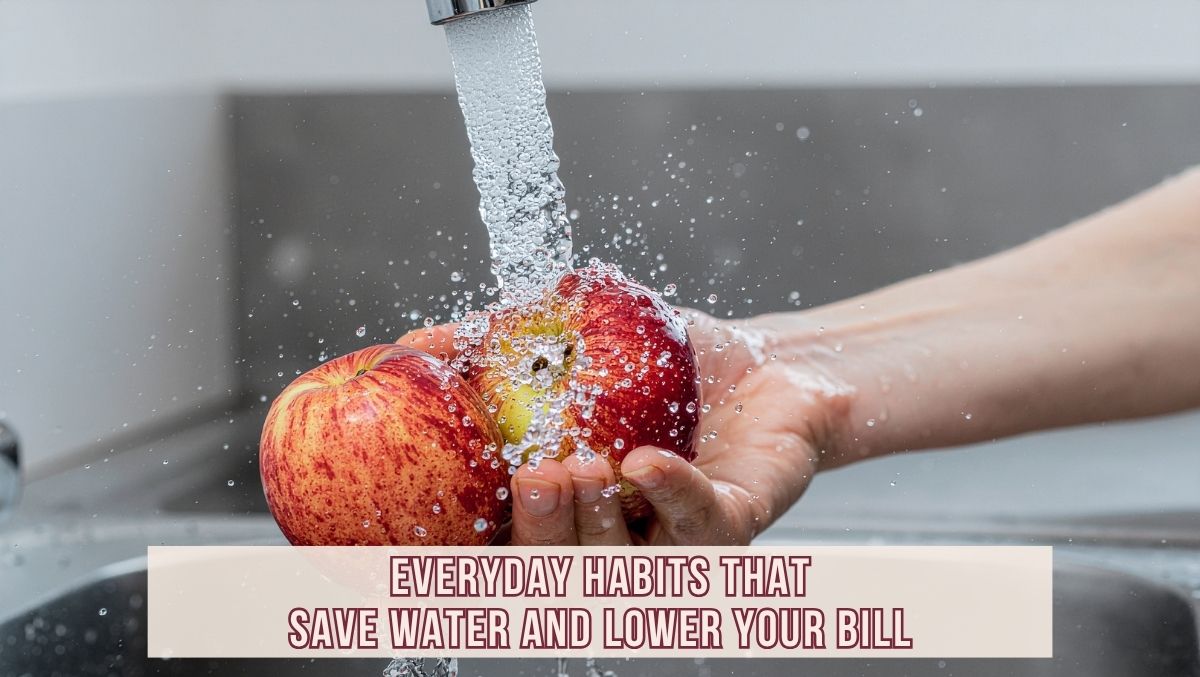
When you’re looking for ways to lower household bills, water is one expense where small habits can make a difference.
A faucet runs while you do something else. The washing machine runs with a partial load. The sprinkler stays on longer than necessary.
None of these seem like significant expenses on their own.
But water use happens all day, every day. And depending on where you live, using less water may reduce more than your water bill. When you’re using hot water, you’re also paying to heat it. If your sewer charges are based partly on water consumption, reducing water use may help there, too.
Best of all, many water-saving changes don’t require buying anything.
Start with your habits.
1. Turn Off the Faucet While Brushing Your Teeth
This is probably one of the oldest water-saving tips around, but it’s still worth doing.
Wet your toothbrush, turn off the faucet and turn it back on when you need to rinse.
The same idea applies when shaving, washing your face or doing anything else at the sink that doesn’t require continuously running water.
If water is flowing down the drain while you aren’t actually using it, turn it off.
2. Take Slightly Shorter Showers
You don’t have to turn a relaxing shower into a two-minute race.
Just pay attention to how much time you’re spending under running water when you’re not actually washing or rinsing.
Cutting even a few minutes from a daily shower reduces both water use and, when you’re using hot water, water-heating costs.
If you tend to lose track of time, use a timer or a short playlist to give yourself a cue to stop.
3. Turn Off the Shower When You Don’t Need the Water
If you’re comfortable doing so, briefly shut off the shower while you’re shampooing, conditioning, shaving or soaping up.
This can be especially useful for someone who likes a longer shower but doesn’t actually need the water running during the entire thing.
Just be careful when turning the water back on since the temperature may have changed.
Want MORE TIPS for Stretching Your Budget?
Get the free eBook with 226 simple money-saving tips — plus the Dollar Stretcher newsletter with practical, real-life ways to make a tight budget go further.
We value your privacy.
Unsubscribe anytime.
4. Don’t Let the Faucet Run While Washing Dishes
Hand-washing dishes under continuously running water can use more water than necessary.
Instead, fill part of the sink or a basin with soapy water for washing. Depending on your setup, you can use another basin for rinsing or turn the faucet on only when you’re ready to rinse several items.
If you need to soak a dirty pan, put a small amount of water directly in the pan rather than filling the entire sink.
5. Scrape Dishes Instead of Pre-Rinsing Them
If you use a dishwasher, check its instructions before automatically rinsing every plate until it’s nearly clean.
Modern dishwashers and detergents are designed to handle food residue, although large scraps should be scraped into the trash or compost.
If your dishwasher can clean the dishes without a full pre-rinse, you’re essentially paying to wash them twice.
About The Dollar Stretcher
The Dollar Stretcher shares practical ways to lower everyday costs, build steadier money habits and move from stuck to stable on a tight budget.
Learn more about how we can help you.
Get All 226 Money-Saving Tips—Free Download
You’ll also get our free newsletter each week. It’s full of useful ways to cut costs and stretch your dollars.
6. Run Full Dishwasher Loads
Don’t run the dishwasher for a few plates and glasses unless you have a good reason.
Wait until you have a full load, but don’t cram dishes together so tightly that they can’t get clean. Having to rewash them defeats some of the savings.
If your dishwasher offers different cycles, use the least water-intensive cycle that will adequately clean that particular load.
7. Wash Full Loads of Laundry
The same principle applies in the laundry room.
Combine smaller loads when practical, rather than running the washing machine half-full.
If you do need to wash a partial load and your machine allows you to select a water level or load size, adjust it appropriately.
Also consider whether something actually needs washing yet. Towels, jeans and other items don’t necessarily need to go into the laundry after every single use when they’re still clean.
Fewer unnecessary loads save water, along with detergent, electricity or gas, and wear on your clothing.
8. Don’t Use Running Water To Thaw Food
Forgot to thaw the chicken?
Running water over frozen food may speed things up, but it can send a considerable amount of water straight down the drain.
Plan ahead and thaw food safely in the refrigerator when possible.
For faster thawing, use another food-safe method appropriate for the item, such as your microwave’s defrost setting or cold-water thawing, following food-safety guidelines. If using the cold-water method, follow recommended procedures rather than simply leaving the faucet running.
If you’re unfamiliar with safe thawing methods, see these guidelines from the USDA.
9. Keep Drinking Water in the Refrigerator
Do you run the faucet and wait for the water to get cold every time you want a drink?
Fill a pitcher or reusable bottle and keep it refrigerated instead.
You’ll have cold water ready without sending several seconds’ worth of perfectly usable water down the drain each time.
10. Find a Use for Water You’re Waiting On
Sometimes you can’t avoid waiting for hot water to reach the faucet or shower.
But the cold water coming out first doesn’t necessarily have to go down the drain.
Capture it in a clean container and use it for something appropriate, such as watering plants or certain cleaning tasks.
Keep this simple. If saving a few cups of water results in containers of water sitting all over your house, the habit probably isn’t worth the trouble.
11. Wash Produce in a Bowl Instead of Under Running Water
Rather than leaving the faucet running while you wash individual fruits and vegetables, use a bowl of water when appropriate and finish with any necessary rinse.
Water that hasn’t been contaminated with soap or unsafe substances may also be suitable for watering household plants.
You’re getting two uses from the same water rather than one.
12. Don’t Use the Toilet as a Trash Can
Every unnecessary flush uses water.
Tissues, small pieces of trash, hair and other items that belong in the garbage shouldn’t be flushed simply because the toilet is convenient.
There’s another potential saving here, too: keeping inappropriate items out of toilets may reduce your risk of plumbing problems.
13. Pay Attention To How Often Your Toilet Runs
A toilet that occasionally seems to run for no reason shouldn’t become background noise.
If you hear it cycling when nobody has flushed it, investigate.
Sometimes the problem is inexpensive and easy to correct. Ignoring it can allow water to continue flowing day and night.
The same applies to dripping faucets and other small leaks.
A leak doesn’t have to create a puddle on the floor to cost you money.
14. Don’t Walk Away From Running Water
This is an easy habit to develop.
You start filling a pot, bucket, bathtub or sink and decide to accomplish something else while you wait.
Then the phone rings.
Or someone asks you a question.
Or you simply forget.
Stay nearby when water is running. If you need to leave, turn it off and finish filling whatever you’re filling when you return.
Besides saving water, this habit can help prevent an overflow and potentially costly water damage.
15. Use the Right Amount of Water for Cooking
A huge pot of water isn’t necessary for every cooking job.
Use an appropriately sized pot and only as much water as the cooking method requires.
When steaming vegetables, for instance, you generally need far less water than you would to boil them in a full pot.
Put a lid on pots when appropriate, too. It can help the water heat up faster, potentially reducing energy use and cooking time.
16. Don’t Dump Usable Water Automatically
Before pouring relatively clean, unneeded water down the drain, ask whether you have an immediate use for it.
A half-finished glass of water could go onto a houseplant.
Water used for certain cooking purposes may have another culinary use, depending on what was cooked in it.
Water emptied from a pet bowl before refreshing it might be used on an appropriate outdoor plant.
Don’t go to extremes trying to save every ounce. Just look for obvious opportunities to get a second use from water you’ve already paid for.
Where Are You Wasting Water?
For one day, pay attention every time someone turns on a faucet, a shower, a washing machine, a dishwasher or an outdoor hose.
Don’t try to change anything yet. Just notice.
- Is water running while nobody is using it?
- Are partial loads being washed?
- Are you waiting for water to heat or cool while usable water goes down the drain?
- Is the toilet running when nobody has flushed it?
- Is outdoor water landing somewhere it doesn’t need to?
You may quickly discover that your easiest water savings don’t require buying a thing.
17. Water Plants When They Actually Need It
A watering schedule can be useful, but the calendar doesn’t know whether it rained yesterday.
Check soil conditions and your plants’ specific needs before automatically watering.
Houseplants are an easy place to practice this habit. Overwatering wastes water and isn’t necessarily good for the plant.
The same principle applies outdoors.
18. Water the Yard With the Weather in Mind
Don’t water the lawn simply because it’s “watering day” if rain has already provided what it needs.
Pay attention to recent rainfall and the forecast.
If you use sprinklers, occasionally watch them run rather than turning them on and walking away. Make sure you’re watering the lawn and landscaping rather than the sidewalk, driveway or street.
Wind matters, too. Watering when it’s windy can send more of that water somewhere you didn’t intend.
19. Sweep Outdoor Surfaces Instead of Hosing Them Down
A hose can make quick work of leaves, dirt and grass clippings on a driveway, patio or sidewalk.
A broom can often do the same job without using any water.
Save the hose for outdoor cleaning jobs where water is actually necessary.
20. Wash the Car With the Faucet Off When Possible
If you wash your car at home, don’t leave the hose running throughout the entire wash.
Fill a bucket for washing, and use the hose primarily to rinse.
If you’re stopping to scrub wheels, move around the vehicle or tackle a stubborn spot, turn off the water until you’re ready for it again.
Before washing a vehicle at home, also check any local restrictions regarding outdoor water use and runoff.
21. Watch Your Water Bill for Changes
One of the most useful water-saving habits doesn’t involve using water at all.
Look at your bill.
Know roughly what your household normally uses and pay attention when consumption unexpectedly increases.
A sudden unexplained jump could mean your habits have changed. But it could also indicate a running toilet, irrigation problem or hidden leak.
Catching the problem quickly may save both water and money.
Budget Level Savings: Start With the Free Changes
No need to tackle every tip at once. Start with the tips best suited for your budget.
If money is stretched and savings need to be meaningful:
This is one household expense where you can make plenty of changes without spending anything.
Focus on turning off running water, taking shorter showers, running full laundry and dishwasher loads, reducing unnecessary toilet flushes and adjusting outdoor watering to actual need.
Also investigate running toilets and dripping faucets promptly. Stopping wasted water can be more valuable than trying to reduce legitimate water use.
If you’re cutting back but still have some flexibility:
Once you’ve changed your habits, you may decide that spending a small amount to repair a leak, replace a worn toilet component or address another source of wasted water makes financial sense.
Just don’t assume you need to buy water-saving products before working on the free changes.
If you just want small, easy wins:
If you’ve already reduced unnecessary water use, your next step may be looking at fixtures, appliances, irrigation or other equipment that affect household consumption.
But make those decisions based on your household’s actual usage and potential savings rather than replacing perfectly functional items simply because a more water-efficient option exists.
TDS Takeaway: Don’t Make Saving Water Complicated
You could measure every shower, collect every stray cup of water, and develop an elaborate system to track every gallon your household uses.
You probably don’t need to.
Start by noticing when clean water is flowing straight down the drain or somewhere it isn’t needed.
Turn off the faucet.
Run full loads.
Fix the toilet that keeps running.
Don’t water the sidewalk.
Most of these changes take only seconds.
And once they become habits, you’ll use less water without having to think much about it at all.
If you have room in your budget, consider these water-saving upgrades to further lower your water bill.
Did this article help you save or stretch a few dollars or plug a financial leak? The Dollar Stretcher can help you make your dollars go even further.
Join the free Dollar Stretcher newsletter to get money-saving tips and articles delivered to your inbox each week, plus a copy of the 226 money-saving tips eBook — a reference you can use whenever money feels tight.
About the Author
Andrea Norris-McKnight is the Money-Saving Strategist behind The Dollar Stretcher.
She helps people on tight budgets cut everyday costs, build steadier money habits and create a little breathing room—without guilt, gimmicks, or unrealistic advice.
More Ways To Save

Energy-Saving Myths That May Not Lower Your Bills

The Bathroom Money Traps That Quietly Drain Your Budget
Here’s how to spot them and start saving right away — without giving up comfort.

What To Check When Your Utility Bill Jumps — and It’s Not the Rate
Here’s what may be quietly raising your costs—and what to do about it.

'Smart Home' Upgrades That Can Save Money Over Time
Home automation doesn’t have to be expensive to be useful.
About The Dollar Stretcher
The Dollar Stretcher shares practical ways to lower everyday costs, build steadier money habits and move from stuck to stable on a tight budget.
Learn more about how we can help you.