
Car Maintenance That Improves Gas Mileage
TDS Money-Saving Strategist: Andrea Norris-McKnight | posted August 2026
Most drivers know that slowing down and avoiding aggressive driving can save gas. But how well your vehicle is maintained also affects how much fuel it uses.
According to mechanic Chris Stevenson, routine maintenance helps your engine and tires operate more efficiently, which can improve fuel economy and reduce unnecessary wear. Oil executive Chris Faulkner also notes that a few simple maintenance habits can help every tank of gas go a little farther.
While no maintenance task will magically add 10 miles per gallon, keeping your vehicle in good condition helps ensure you’re getting the fuel economy it was designed to deliver.
How Much This Can Save
Proper vehicle maintenance won’t produce dramatic overnight savings, but it can help prevent a gradual decline in fuel economy.
According to the U.S. Department of Energy, fixing a serious maintenance problem or keeping up with routine maintenance can improve gas mileage by several percentage points, depending on the issue.
For someone spending $200 a month on gas, even a 5% improvement can save about $10 per month, or $120 per year. Preventing costly repairs down the road can save even more.
1. Keep Your Tires Properly Inflated
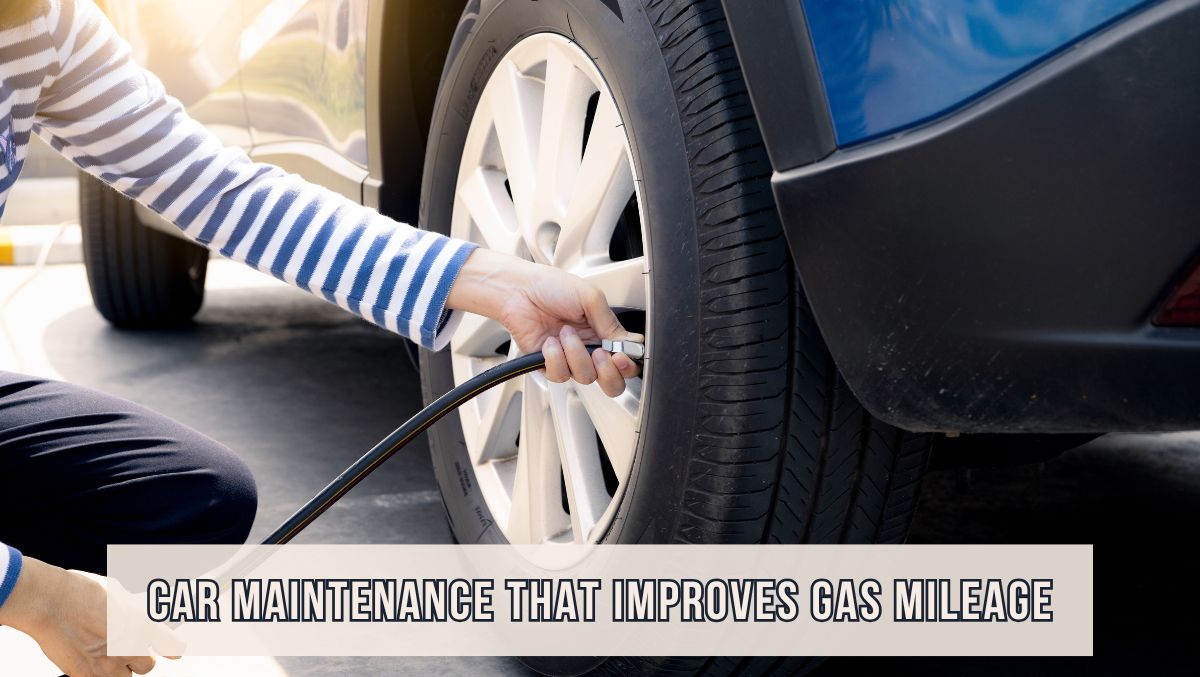
Underinflated tires create more rolling resistance, forcing your engine to work harder.
Chris Faulkner notes that even a small drop in tire pressure can reduce fuel economy. Tire pressure naturally changes with the weather, so it’s worth checking your tires regularly rather than waiting until one looks low.
Use the tire pressure listed on the driver’s door jamb or in your owner’s manual rather than the maximum pressure printed on the tire sidewall.
2. Replace a Dirty Engine Air Filter When Needed
Your engine needs clean air to burn fuel efficiently.
Chris Stevenson explains that a clogged air filter can restrict airflow, though its effect on fuel economy varies by vehicle. Replacing a dirty filter is inexpensive and is part of routine maintenance.
Follow your manufacturer’s replacement schedule or inspect the filter during oil changes if it’s easy to access.
3. Stay Current on Oil Changes
Clean oil reduces friction inside the engine and helps it run efficiently.
Using the oil grade recommended by your manufacturer and changing it at the recommended intervals helps keep the engine performing its best.
4. Follow Your Vehicle’s Maintenance Schedule
Modern vehicles are designed to run efficiently when they’re properly maintained.
Replacing worn spark plugs, addressing ignition problems and following the service schedule in your owner’s manual can help prevent fuel economy from gradually declining.
Stevenson recommends following the manufacturer’s maintenance intervals rather than waiting until problems develop.
Want MORE TIPS for Stretching Your Budget?
Get the free eBook with 226 simple money-saving tips — plus the Dollar Stretcher newsletter with practical, real-life ways to make a tight budget go further.
We value your privacy.
Unsubscribe anytime.
5. Keep Your Wheels Properly Aligned
If your wheels are out of alignment, your tires drag slightly instead of rolling smoothly.
Besides reducing gas mileage, poor alignment causes uneven tire wear and can shorten tire life.
If your vehicle pulls to one side or your steering wheel isn’t centered, it’s worth having the alignment checked.
6. Remove Roof Racks When You’re Not Using Them
Roof racks, cargo boxes and bike carriers create aerodynamic drag, especially at highway speeds.
If you only use them occasionally, removing them between trips can help improve fuel economy while also reducing wind noise.
About The Dollar Stretcher
The Dollar Stretcher shares practical ways to lower everyday costs, build steadier money habits and move from stuck to stable on a tight budget.
Learn more about how we can help you.
Get All 226 Money-Saving Tips—Free Download
You’ll also get our free newsletter each week. It’s full of useful ways to cut costs and stretch your dollars.
7. Lighten the Load
Extra weight requires extra fuel to move.
Faulkner recommends removing unnecessary items from your trunk or cargo area. Emergency supplies should stay, but old sports equipment, boxes of donations or tools you no longer need can add unnecessary weight.
8. Use the Octane Your Vehicle Requires
Many drivers assume premium gasoline will improve fuel economy.
In reality, most vehicles are designed to run on regular gasoline. Unless your owner’s manual specifically recommends or requires premium fuel, paying more usually won’t improve mileage enough to justify the extra cost.
Both Faulkner and Stevenson advise using the octane rating your manufacturer recommends.
9. Address the “Check Engine” Light Promptly
A glowing check engine light doesn’t always signal a major repair, but ignoring it can affect fuel economy.
Problems with oxygen sensors, ignition components or the emissions system can cause your vehicle to burn more fuel than necessary.
Having the issue diagnosed early may save money on both gas and future repairs.
TDS Takeaway: Focus on the Maintenance That Matters
Some older gas-saving advice hasn’t held up over time. For example, routinely using fuel additives or overinflating your tires beyond the manufacturer’s recommendation isn’t necessary for most modern vehicles.
Instead, focus on the basics: properly inflated tires, regular maintenance, clean oil and fixing problems before they become bigger and more expensive.
Those simple habits won’t just help your gas mileage. They’ll also help your vehicle last longer and perform more reliably.
Did this article help you save or stretch a few dollars or plug a financial leak? The Dollar Stretcher can help you make your dollars go even further.
Join the free Dollar Stretcher newsletter to get money-saving tips and articles delivered to your inbox each week, plus a copy of the 226 money-saving tips eBook — a reference you can use whenever money feels tight.
About the Author
Andrea Norris-McKnight is the Money-Saving Strategist behind The Dollar Stretcher.
She helps people on tight budgets cut everyday costs, build steadier money habits and create a little breathing room—without guilt, gimmicks, or unrealistic advice.
More Ways To Save
Why You Should Track Your Gas Mileage (and How To Do It)

Car Maintenance Habits That Help Your Car Hold Its Value
You can’t stop car depreciation, but you can slow it. These practical tips help your vehicle hold its value longer.

3 Things That May—or May Not—Save You Money Insuring an Older Car
Here are three common insurance-saving strategies for older vehicles.
How Often Should You Shop for Cheaper Auto Insurance?
Shopping too frequently and not often enough can both cost you.
About The Dollar Stretcher
The Dollar Stretcher shares practical ways to lower everyday costs, build steadier money habits and move from stuck to stable on a tight budget.
Learn more about how we can help you.