
The Grocery Shortcut That Backfires for Tight Budgets
TDS Money-Saving Strategist: Andrea Norris-McKnight | posted September 2026
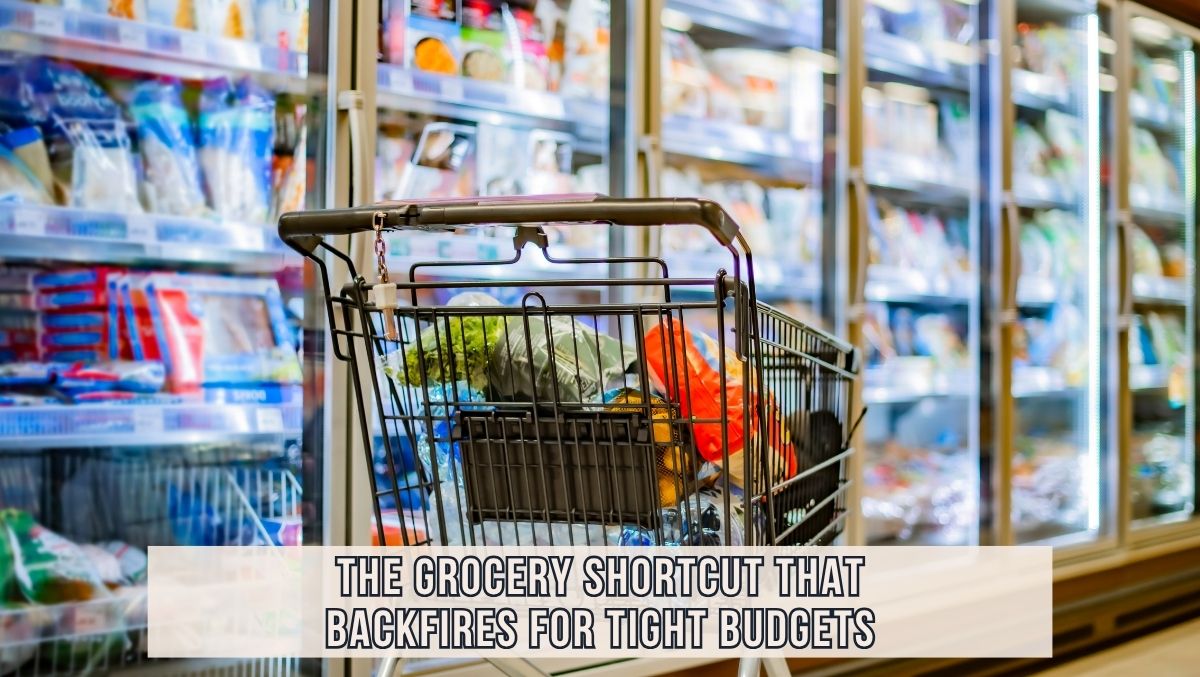
When money is tight, the grocery store presents an interesting problem.
You need to keep your food bill down. But you also need to make sure everyone is fed.
And sometimes those two goals don’t play nicely together.
The solution seems obvious: cook more from scratch.
Except you’re tired. You’re busy. You don’t particularly want to chop three vegetables, cook dried beans and bake a loaf of bread just to prove you’re frugal.
So convenience foods find their way into the cart.
There’s nothing inherently wrong with that.
In fact, I think strategically buying convenience foods can save money if they keep you from ordering pizza or going through the drive-thru.
The grocery shortcut starts backfiring when you’re paying someone else to do small jobs you could easily do yourself — over and over throughout your grocery cart.
A dollar here. Two dollars there.
Suddenly, convenience is consuming money you really need for food.
Shortcut #1: Paying Someone Else To Cut It Up
Precut fruit and vegetables can save substantial preparation time.
They can also cost considerably more than their whole counterparts.
Compare:
- Whole melon vs. containers of cut melon
- Whole carrots vs. carrot sticks
- Whole onions vs. diced onions
- Blocks of cheese vs. cheese cubes
- Whole fruit vs. fruit trays
Don’t assume whole is always cheaper. Check unit prices when possible.
And consider waste. If buying an entire watermelon means half eventually goes bad, the smaller precut container might actually be the better financial choice.
But if you’re paying extra primarily to avoid two minutes of chopping, that’s convenience worth reconsidering on a very tight grocery budget.
Shortcut #2: Buying Individual Portions
Convenience gets expensive when manufacturers divide a larger package into several smaller ones.
Snack bags. Individual cups. Single-serving packages. Lunchbox portions.
Compare the unit price of individually packaged foods with larger containers.
Could you buy the larger bag of crackers and portion them yourself? Spoon yogurt from a large container into a reusable one? Divide snacks into small containers?
You don’t need to eliminate individual portions entirely.
Sometimes they’re useful. They may help with portion control, prevent waste or make it easier to get everyone out the door.
Just recognize what you’re paying for.
You’re often buying packaging and portioning along with the food.
Shortcut #3: Buying Convenience Ingredients You Could Easily Make
Take a look at the ingredient list on some of the packets and mixes you buy.
Taco seasoning is largely spices.
Some baking mixes are combinations of basic baking ingredients.
Many marinades and simple salad dressings can be made from ingredients you already have.
That doesn’t mean you need to make your own mayonnaise, ketchup and bread while you’re at it.
Look for the easy wins.
If making something takes two minutes and uses ingredients already in your pantry, the convenience markup may not be worthwhile.
If making it requires six ingredients you don’t own and creates a sink full of dishes, buy the convenient version.
Want MORE TIPS for Stretching Your Budget?
Get the free eBook with 226 simple money-saving tips — plus the Dollar Stretcher newsletter with practical, real-life ways to make a tight budget go further.
We value your privacy.
Unsubscribe anytime.
Shortcut #4: Buying Prepared Produce and Then Letting It Spoil
Here’s where convenience can become especially expensive.
You pay extra for washed lettuce, cut fruit or prepared vegetables because you’re going to save time.
Then you don’t use them.
Prepared fresh foods can have a shorter usable life than their whole counterparts. Once produce has been cut, you may have less time to get it onto the table.
Before paying extra for preparation, make sure the convenience actually increases the likelihood you’ll eat the food promptly.
A whole head of lettuce that spoils costs you money.
But a bag of pre-cut salad that spoils costs you even more.
Shortcut #5: Paying for Convenience on Foods You Could Prep Once
Some grocery convenience can be replicated with a single short prep session.
Instead of buying individually packaged snacks all week, divide a larger package once.
Instead of repeatedly buying chopped vegetables, chop enough for several meals.
Cook extra rice and refrigerate or freeze portions safely for another meal.
Shred enough cheese for several uses at once if a block is cheaper than shredded cheese.
You’re not cooking from scratch every night.
You’re essentially creating your own convenience foods while paying grocery-store prices for the ingredients rather than convenience-food prices for the labor.
About The Dollar Stretcher
The Dollar Stretcher shares practical ways to lower everyday costs, build steadier money habits and move from stuck to stable on a tight budget.
Learn more about how we can help you.
Get All 226 Money-Saving Tips—Free Download
You’ll also get our free newsletter each week. It’s full of useful ways to cut costs and stretch your dollars.
Shortcut #6: Buying Complete Convenience Meals
A frozen entrée or prepared meal can still be much cheaper than restaurant food.
But feeding several people entirely from individual entrées can get expensive quickly.
Look for ways to use convenience as part of the meal rather than the entire meal.
- Maybe buy a rotisserie chicken but prepare inexpensive sides at home.
- Use a frozen pizza, but serve it with a simple salad or vegetables instead of buying two pizzas.
- Pair prepared soup with sandwiches.
- Add rice, beans, vegetables or another inexpensive ingredient to stretch a prepared food.
You still get the time-saving benefit without paying someone else to prepare every part of dinner.
Shortcut #7: Buying Convenience Because You Didn’t Plan
Some convenience spending doesn’t begin at the grocery store.
It begins at 5:30 p.m.
Nobody knows what’s for dinner. The chicken is frozen. You don’t have the right ingredients for the recipe you were thinking about making.
That’s when the frozen entrée, deli counter or prepared-food section starts looking very appealing. And if nothing there looks good, takeout is next.
You don’t need an elaborate meal plan to prevent this.
Even deciding on four or five dinners before grocery shopping can reduce the need for expensive last-minute food decisions.
Better yet, plan at least one extremely easy meal.
Sandwiches. Eggs and toast. Pasta and sauce. Quesadillas. Soup and grilled cheese.
A cheap emergency meal can be one of the most valuable convenience foods in your kitchen.
Shortcut #8: Assuming Convenience Is Always More Expensive
This is where we can take frugality too far.
Sometimes the shortcut wins.
- A frozen vegetable may be less expensive than fresh produce and requires no chopping.
- A jar of pasta sauce bought BOGO may cost only a little more than making your own.
- Shredded cheese on sale may cost the same as a block.
- A rotisserie chicken may provide enough meat for several meals at a very reasonable price.
- And a $7 frozen pizza is considerably cheaper than $30 worth of delivered pizza.
Don’t reject convenience simply because someone else did part of the work.
Compare the actual costs.
The Real Question: What Is the Convenience Replacing?
This is probably the most important question to ask.
Suppose a prepared grocery-store meal costs $12.
Compared with a $5 homemade meal, it looks expensive.
Compared with $40 worth of restaurant takeout, it looks pretty good.
The same applies to individual snacks, frozen foods and other convenience products.
Before deciding something is “too expensive,” ask:
What would I realistically do if I didn’t buy this?
If you’d cook something cheaper, the convenience product is costing you money. If you’d order takeout, it may save you money.
If the ingredients would go unused because you don’t have time to prepare them, a convenient version may help prevent food waste.
Frugal grocery shopping isn’t about choosing the option requiring the most work.
It’s about choosing the option that gives you the lowest realistic cost.
The Convenience Food Test
Before paying extra for a grocery shortcut, ask:
How much extra am I paying?
A 20-cent difference may not be worth worrying about. A $3 difference every week might be.
How much time does it actually save?
There’s a big difference between eliminating 30 minutes of work and eliminating two minutes of chopping.
Will it reduce waste?
A smaller prepared package can beat a cheaper whole item if you’ll actually finish it.
Will I use it?
Convenience food that spoils isn’t convenient or frugal.
Can I easily create the convenience myself?
Batching, portioning or prepping once may provide the same benefit for less.
What would I buy instead?
Always compare a convenience food with the alternative you’d realistically choose, not with an imaginary scratch-made meal you probably won’t make.
Budget Level Savings: How Much Convenience Can You Afford?
No need to tackle every tip at once. Start with the tips best suited for your budget.
If money is stretched and savings need to be meaningful:
Focus your convenience dollars where they solve a genuine problem.
Buy whole or larger-package foods when the savings are meaningful and you know you’ll use them. Portion snacks yourself and look for easy mixes or prepared ingredients you can replace using what you already have.
But keep one or two inexpensive convenience meals available if they’ll prevent a much more costly takeout purchase.
If you’re cutting back but still have some flexibility:
Choose convenience selectively.
Maybe chopped onions aren’t worth paying extra for, but frozen vegetables are. Perhaps you make taco seasoning but buy pasta sauce on BOGO.
Spend extra where convenience makes your household function better and save elsewhere.
If you just want small, easy wins:
Time may carry more weight in your calculation.
You may decide that prepared produce, meal components or other shortcuts are worth buying because they make home cooking easier.
Just periodically check whether you’re using the convenience you’re paying for.
TDS Takeaway: Don’t Turn Saving Money Into Another Job
There’s a point where cutting grocery costs can become exhausting.
You don’t need to grind your own flour, make every condiment and spend Sunday afternoon portioning pretzels into 17 reusable containers.
Choose the shortcuts that are easy to eliminate.
Pay for the ones that genuinely make your life easier.
And perhaps most importantly, keep enough inexpensive, easy food around that a difficult day doesn’t automatically become an expensive food day.
The best grocery shortcut isn’t necessarily the cheapest item in the store.
It’s the one that helps you spend less overall and still get everyone fed.
Did this article help you save or stretch a few dollars or plug a financial leak? The Dollar Stretcher can help you make your dollars go even further.
Join the free Dollar Stretcher newsletter to get money-saving tips and articles delivered to your inbox each week, plus a copy of the 226 money-saving tips eBook — a reference you can use whenever money feels tight.
About the Author
Andrea Norris-McKnight is the Money-Saving Strategist behind The Dollar Stretcher.
She helps people on tight budgets cut everyday costs, build steadier money habits and create a little breathing room—without guilt, gimmicks, or unrealistic advice.
More Ways To Save

The Best Ways To Reduce Meat and Poultry Costs When Money Is Tight
These practical tips can help you lower costs by stretching meals, shopping smarter and wasting less.

Is a Warehouse Club Membership Worth It on a Tight Budget?
How To Stretch a Household Stockpile Through Tight Money Times
Learn how to make it last longer, reduce spending and replenish it gradually when money is tight.

Purchases That Make the Rest of the Month Harder When Money Is Tight
Learn how to spot the spending habits that quietly reduce your financial flexibility.
About The Dollar Stretcher
The Dollar Stretcher shares practical ways to lower everyday costs, build steadier money habits and move from stuck to stable on a tight budget.
Learn more about how we can help you.