
When the Cheapest Home Supplies Can End Up Costing the Most
TDS Money-Saving Strategist: Andrea Norris-McKnight | posted June 2026
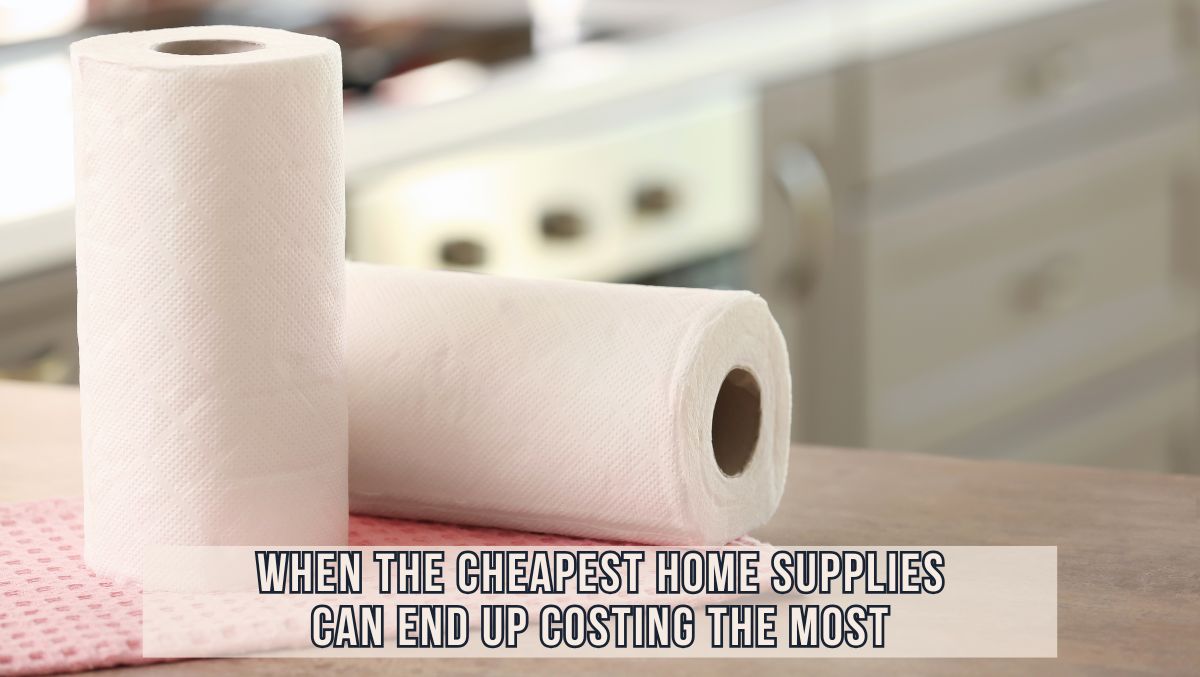
Saving money on household supplies makes sense.
But sometimes the cheapest option on the shelf isn’t actually the best bargain.
A lower price can be appealing—especially when money is tight—but some products cost more over time because they wear out quickly, don’t work well or require you to use more of them.
This doesn’t mean you should always buy premium brands.
Far from it.
The goal is simply to look beyond the sticker price and ask:
“What will this really cost me over time?”
Here are some household supplies where the cheapest option may not always be the best value.
Paper Towels and Toilet Paper
Ultra-cheap paper products sometimes create a false bargain.
You may find yourself using:
- More sheets per use
- Multiple layers
- Replacing rolls more often
That doesn’t automatically make premium brands the better deal.
The key is comparing:
- Sheet count
- Roll size
- Unit price
- Real-world usage
Sometimes a mid-range option stretches further and lowers the cost per use.
Laundry Detergent
The cheapest detergent may look appealing until you realize you need more per load—or end up rewashing clothing.
A better question is: How much does this cost per load?
Some detergents clean effectively with smaller amounts, while others require more product or perform poorly.
Look beyond the bottle price and compare:
- Number of loads
- Cleaning performance
- Amount used per load
Trash Bags
Few things feel less frugal than a trash bag ripping at the wrong moment.
Very inexpensive bags may:
- Tear easily
- Leak
- Require double-bagging
And suddenly the cheaper box doesn’t look so cheap.
This is another category where durability matters.
Want MORE TIPS for Stretching Your Budget?
Get the free eBook with 226 simple money-saving tips — plus the Dollar Stretcher newsletter with practical, real-life ways to make a tight budget go further.
We value your privacy.
Unsubscribe anytime.
Cheap Cleaning Tools
The lowest-cost mop, broom or scrub brush may not last long enough to justify the savings.
Low-quality tools often:
- Break sooner
- Clean poorly
- Need replacing more often
Sometimes spending slightly more once saves repeat purchases later.
Light Bulbs
The cheapest bulb upfront may not be the cheapest overall. According to CNET, some bulb manufacturers “try to save money on cheap drivers and converters (as well as sloppy assembly techniques), which is a major cause behind early failure.”
CNET recommends spending a little more on well-known, reliable brands rather than off-brands.
About The Dollar Stretcher
The Dollar Stretcher shares practical ways to lower everyday costs, build steadier money habits and move from stuck to stable on a tight budget.
Learn more about how we can help you.
Get All 226 Money-Saving Tips—Free Download
You’ll also get our free newsletter each week. It’s full of useful ways to cut costs and stretch your dollars.
Cheap Hardware and Repair Supplies
When repairing something at home, extremely low-cost materials can occasionally create repeat problems.
Examples might include:
- Low-quality caulk
- Cheap tape
- Poor-quality paintbrushes
- Weak fasteners
If a repair fails and needs to be redone, the bargain may disappear quickly.
Disposable Household Products
Some disposable products appear inexpensive because the package price is low.
But repeated replacement adds up.
Examples include:
- Disposable dusters
- Single-use cleaning products
- Certain convenience cleaning tools
Reusable options aren’t always cheaper—but they sometimes reduce long-term supply costs.
Cost Per Use: A Better Question To Ask
Instead of asking:
“What costs the least today?”
try asking:
“Which option gives me the most use for the money?”
That shift often leads to better buys.
Cost Per Use Quick Examples
- Laundry Detergent: A larger bottle may cost more upfront but less per load.
- Paper Products: A cheaper roll may require using twice as much.
- Trash Bags: If bags tear and require double-bagging, the savings disappear.
TDS Takeaway: Cheap Isn’t Always the Same as Frugal
Being frugal doesn’t mean buying the cheapest option every time.
It means getting the best overall value for your money.
Sometimes that’s the lowest price.
Sometimes it’s the product that lasts longer, works better or helps you avoid repeat spending later.
And that’s an important difference when every dollar matters.
Did this article help you save or stretch a few dollars or plug a financial leak? The Dollar Stretcher can help you make your dollars go even further.
Join the free Dollar Stretcher newsletter to get money-saving tips and articles delivered to your inbox each week, plus a copy of the 226 money-saving tips eBook — a reference you can use whenever money feels tight.
About the Author
Andrea Norris-McKnight is the Money-Saving Strategist behind The Dollar Stretcher.
She helps people on tight budgets cut everyday costs, build steadier money habits and create a little breathing room—without guilt, gimmicks, or unrealistic advice.
More Ways To Save
The Difference Between Frugal and Cheap in Personal Care
Trying to save on personal care? Here’s how to make sure those “savings” are actually saving you money.
How To Stretch a Household Stockpile Through Tight Money Times
A household stockpile can provide valuable breathing room during tough times.
How a Household Stockpile Is Beneficial to Your Budget
You don’t need a large inventory of household supplies, food or toiletries to see the benefits of stockpiling.

When Buying Generic Doesn’t Save as Much as You Think
Generic products and store brands are usually cheaper—but not every time. Here’s how to tell when the savings are real and when they’re not.
About The Dollar Stretcher
The Dollar Stretcher shares practical ways to lower everyday costs, build steadier money habits and move from stuck to stable on a tight budget.
Learn more about how we can help you.