
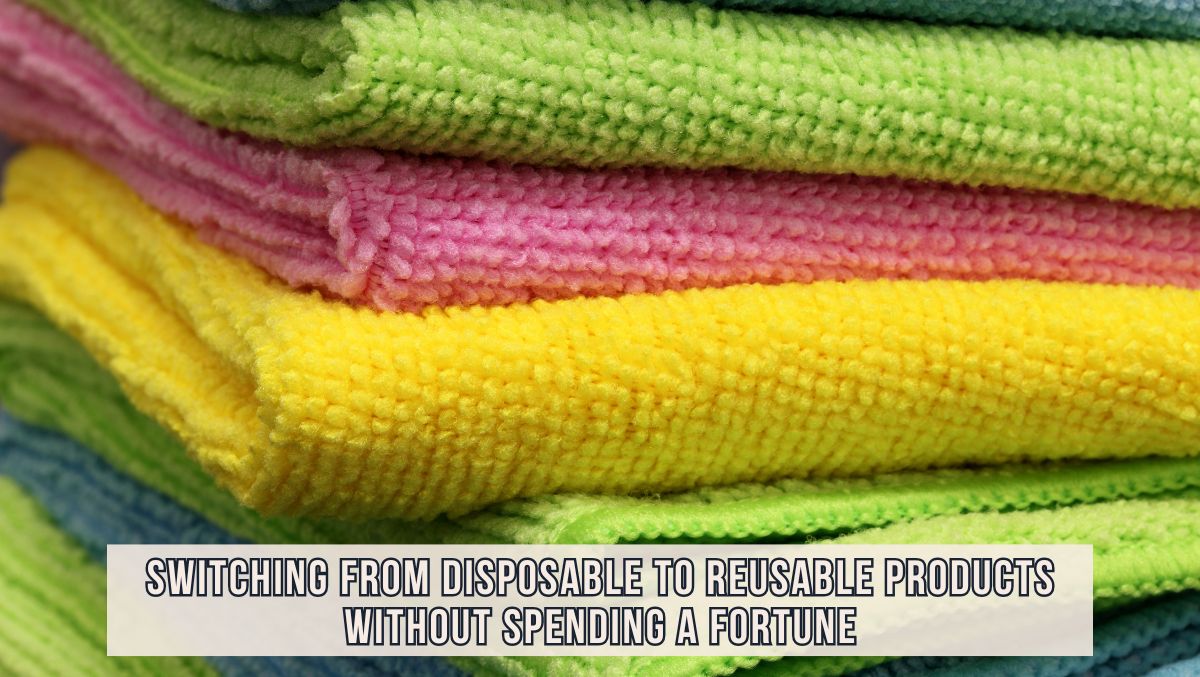
Switching From Disposable to Reusable Products Without Spending a Fortune
TDS Money-Saving Strategist: Andrea Norris-McKnight | posted July 2026
These tips may contain affiliate links. The Dollar Stretcher is an Amazon Associate and may earn a small commission if you purchase through a link, at no extra cost to you. Prices fluctuate, and featured products aren’t guaranteed to be the lowest price. As always, we recommend checking prices and buying only when it makes sense for your budget. Learn how we choose and recommend products.
If you’ve ever looked into replacing disposable products with reusable ones, you’ve probably noticed something frustrating.
The reusable version often costs more.
A set of cloth napkins costs more than a package of paper ones. A reusable mop system costs more than disposable pads. Refillable food storage containers aren’t as cheap as a box of plastic bags.
When money is tight, it’s easy to conclude that reusable products simply aren’t practical.
But here’s the good news: you don’t have to switch everything at once.
In fact, that’s probably the most expensive way to do it.
Instead, think of reusable products as gradual upgrades. As you use up disposable items, replace the ones that make the most sense for your household. Over time, you’ll build a home that requires fewer repeat purchases without taking a big hit to your budget.
Don’t Throw Away What You Already Own
One of the biggest mistakes people make is deciding to “go reusable” and immediately replacing perfectly usable disposable products.
If you have unopened paper towels, plastic wrap or sandwich bags, use them.
There’s no financial benefit to throwing away something you’ve already paid for.
When those supplies run low, that’s the time to decide whether a reusable option makes sense.
Replace One Product at a Time
Trying to replace everything in one shopping trip can easily cost hundreds of dollars.
Instead, choose one item.
Use it for a few months. See if it fits your routine.
Then move on to another.
This gradual approach spreads the cost over time and lets you discover which reusable products you’ll actually use.
Start With the Items You Buy Most Often
Look at your grocery receipts over the last few months.
Which disposable products do you purchase again and again?
Those are often the best candidates for replacing because they’re the ones most likely to reduce future spending.
Every household is different.
For one family, it might be paper towels. For another, it’s bottled water. For someone else, it’s disposable mop pads.
Start where your money is already going.
Want MORE TIPS for Stretching Your Budget?
Get the free eBook with 226 simple money-saving tips — plus the Dollar Stretcher newsletter with practical, real-life ways to make a tight budget go further.
We value your privacy.
Unsubscribe anytime.
Reuse Before You Replace
Not every reusable solution requires buying something new.
Before shopping, ask yourself:
- Can I wash and reuse what I already have?
- Can I repurpose something instead?
- Do I already own something that serves the same purpose?
Old T-shirts become cleaning cloths.
Glass food jars become storage containers.
Old hand towels can replace paper towels for many everyday messes.
Sometimes the most frugal reusable product is one you already own.
Watch for Sales and Secondhand Finds
Many reusable products don’t have to be purchased new.
Check:
- Thrift stores
- Yard sales
- Estate sales
- Buy Nothing groups
- Facebook Marketplace
- Clearance sections
Items like cloth napkins, glass containers, baskets, stainless steel water bottles and storage bins are often available for a fraction of retail prices.
Reusable Doesn’t Have to Mean Expensive
Before buying a reusable replacement, ask yourself:
- Can I make one from something I already own?
- Can I find it secondhand?
- Can I wait until the disposable version runs out?
- Will I actually use it enough to justify the purchase?
- Is there a simpler or less expensive reusable option?
Those five questions can help you avoid spending more money in the name of saving money.
About The Dollar Stretcher
The Dollar Stretcher shares practical ways to lower everyday costs, build steadier money habits and move from stuck to stable on a tight budget.
Learn more about how we can help you.
Get All 226 Money-Saving Tips—Free Download
You’ll also get our free newsletter each week. It’s full of useful ways to cut costs and stretch your dollars.
Ask for Reusable Gifts
If birthdays or holidays are coming up, consider asking for reusable household items instead of decorative gifts.
A quality insulated water bottle, food storage containers or cloth napkins can replace purchases you’d eventually make yourself.
See Which Disposable Products Make Sense To Replace
Not every reusable alternative is right for every household.
Instead of trying to replace everything, look through this list and see which changes would actually fit your lifestyle.
Kitchen
- Paper towels
- Paper napkins
- Plastic sandwich bags
- Plastic wrap
- Aluminum foil for food storage (continue using it when it serves a purpose that reusable products cannot)
- Disposable food storage containers
- Bottled water
- Disposable coffee cups
- Coffee filters (if your coffee maker allows reusable filters)
- Disposable straws
- Plastic utensils
- Disposable plates, bowls and cups used at home
- Single-use baking liners (where reusable mats work well)
- Snack bags
- Juice boxes (reusable bottles may work for many families)
Cleaning
- Disposable mop pads
- Disposable dusting cloths
- Disposable cleaning wipes
- Paper dusters
- Disposable toilet cleaning systems (when refillable options work)
- Disposable sponges (look for longer-lasting alternatives)
Laundry
- Dryer sheets
- Single-use stain-removal wipes
- Disposable lint rollers (replace only the refill instead of the entire handle when possible)
Personal Care
- Cotton rounds
- Makeup remover wipes
- Facial cleansing wipes
- Disposable razors (consider replaceable-blade systems)
- Plastic floss picks (if traditional floss works for you
Around the House
- Air freshener refills
- Disposable shopping bags
- Gift bags (reuse them)
- Wrapping tissue
- Decorative gift boxes
- Batteries
Don’t Aim for Perfect
Some disposable products still make sense.
You may need paper towels for especially messy jobs.
Plastic bags can be useful when freezing certain foods.
Disposable gloves may be appropriate for some cleaning tasks.
The goal isn’t to eliminate every disposable item.
It’s to reduce the ones that create repeated expenses without making your life harder.
Budget Level Savings: Where To Start
No need to tackle every tip at once. Start with the tips best suited for your budget.
If money is stretched and savings need to be meaningful:
Start by reusing what you already have.
- Turn worn towels and T-shirts into cleaning cloths.
- Wash and reuse food containers from products you buy.
- Reuse gift bags and shipping boxes.
- Replace one disposable product only after you’ve completely used up the old one.
If you’re cutting back but still have some flexibility:
Replace your most frequently purchased disposable items one at a time.
Watch for sales, thrift store finds and seasonal discounts on quality reusable products.
If you just want small, easy wins:
Invest in durable reusable products that you’ll use for years.
Focus on quality over quantity and replace items gradually rather than trying to overhaul your household all at once.
TDS Takeaway
One of the biggest myths about switching to reusable products is that you need to spend a lot of money to get started.
You don’t.
In fact, the most budget-friendly approach is often the slowest one.
- Use what you already have.
- Replace items only when they wear out or run out.
- Buy reusable alternatives gradually, shop secondhand when possible and skip products that don’t make sense for your household.
Remember, the goal isn’t to have a perfectly reusable home.
It’s to build one that’s a little less expensive to maintain each year.
Start With Just Three
If replacing everything feels overwhelming, choose just three disposable products that you buy most often.
For the next six months, focus only on those.
Once those changes become routine, pick three more.
Small, steady changes are usually easier on both your budget and your habits than trying to do everything at once.
Did this article help you save or stretch a few dollars or plug a financial leak? The Dollar Stretcher can help you make your dollars go even further.
Join the free Dollar Stretcher newsletter to get money-saving tips and articles delivered to your inbox each week, plus a copy of the 226 money-saving tips eBook — a reference you can use whenever money feels tight.
About the Author
Andrea Norris-McKnight is the Money-Saving Strategist behind The Dollar Stretcher.
She helps people on tight budgets cut everyday costs, build steadier money habits and create a little breathing room—without guilt, gimmicks, or unrealistic advice.
More Ways To Save

Waste Less, Save More: Clever Kitchen Reuses
Think twice before throwing these things out in your kitchen.

How To Safely Reuse Aluminum Foil (and Stretch Every Sheet Further)
With a few simple habits, you can safely reuse foil and get more value from every roll.

When Buying Generic Doesn’t Save as Much as You Think
Generic products and store brands are usually cheaper—but not every time.
When the Cheapest Home Supplies Can End Up Costing the Most
Learn where spending a little differently may save more over time.
About The Dollar Stretcher
The Dollar Stretcher shares practical ways to lower everyday costs, build steadier money habits and move from stuck to stable on a tight budget.
Learn more about how we can help you.