
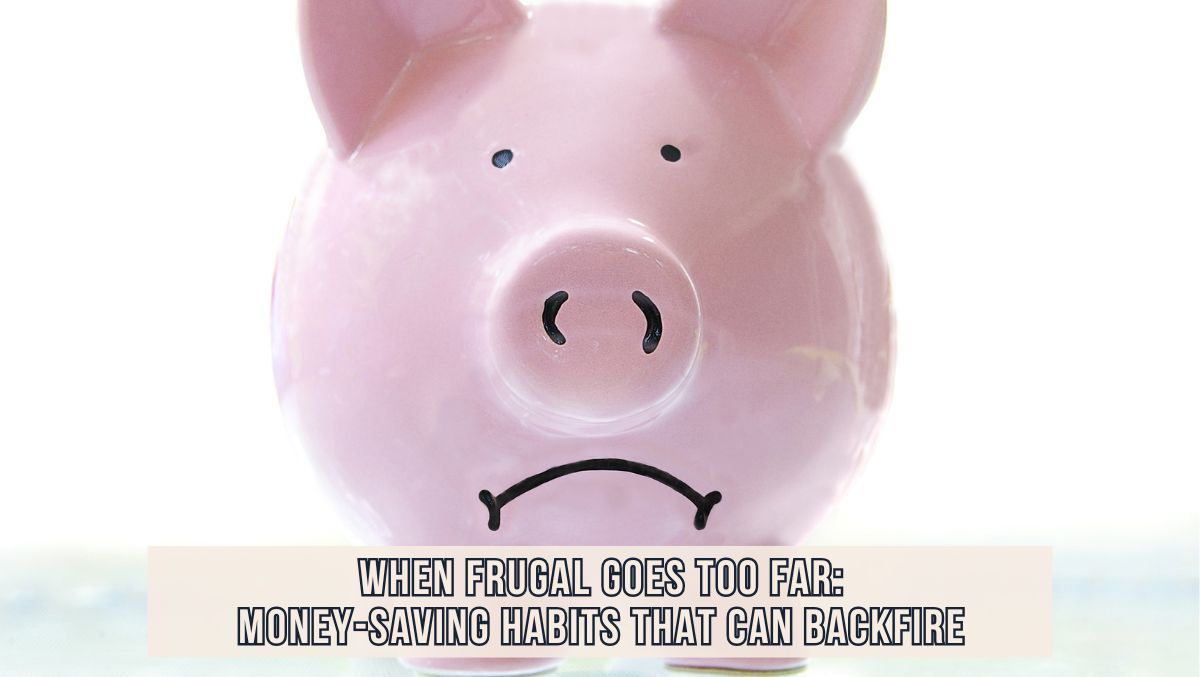
When Frugal Goes Too Far: 8 Money-Saving Habits That Can Backfire
TDS Money-Saving Strategist: Andrea Norris-McKnight | posted August 2026
I’m a big believer in frugality. Obviously.
But I’m also a big believer in frugality having a purpose.
We save on groceries so there’s more money available for other things. We maintain our cars to avoid costly repairs. We comparison shop because we’d rather keep an extra $20 than hand it over unnecessarily.
Saving money is a tool that helps us make better use of what we have.
But every once in a while, that tool can get used a little too aggressively.
We can spend an hour trying to save $2. Buy things we don’t need because they’re 75% off. Put off maintenance to avoid spending $100 and eventually face a $1,000 repair.
Or we can get so accustomed to saying “That’s too expensive” that we forget to occasionally ask a different question:
Is this worth spending money on?
Here are eight ways frugality can backfire and how to keep your money-saving habits working for you.
1. Spending Too Much Time To Save Too Little
I’m not going to tell you that your time is worth some arbitrary dollar amount per hour.
Sometimes saving $5 matters.
And sometimes a money-saving activity is enjoyable enough that you don’t particularly care how much you save.
Gardening is a good example.
If you enjoy gardening, the tomatoes you grow are almost a bonus. You get a hobby, exercise, time outdoors and some food for your efforts.
But if you hate gardening and spend hours every week tending a garden to save $20 on produce, you might want to rethink your strategy.
That same time could potentially save more money elsewhere through meal planning, cooking at home or tackling a DIY project you actually enjoy.
Not every frugal activity needs to produce the greatest possible return. But if something requires a lot of your limited time and produces very little savings or enjoyment, you’re allowed to stop doing it.
2. Automatically Buying the Cheapest Option
The lowest price and the lowest cost aren’t necessarily the same thing.
A $15 item you replace three times costs more than a $30 item that lasts for years.
This doesn’t mean you should automatically buy the expensive version, either.
Think about how you’ll use something.
For an item you’ll use once or twice, inexpensive may be perfectly adequate. For something you’ll rely on every day, durability may matter more.
The goal isn’t to buy cheap.
It’s to buy value.
3. Buying Too Much of a Good Deal
This is one I’ve had to watch myself.
You find something your household uses regularly at a fantastic price.
So you buy two.
Then you think, At this price, maybe I should get four.
Before you know it, you’ve spent $75 “saving money.”
Stocking up at a good price can absolutely reduce your expenses. But eventually you reach a point where you’re tying up money in products you won’t use for months or even years.
And deals on things you might use someday are even riskier.
A bargain isn’t a bargain if someday never comes.
Before stocking up, consider how much you already have, how quickly you’ll realistically use it and whether that money has a better job to do right now.
Want MORE TIPS for Stretching Your Budget?
Get the free eBook with 226 simple money-saving tips — plus the Dollar Stretcher newsletter with practical, real-life ways to make a tight budget go further.
We value your privacy.
Unsubscribe anytime.
4. Letting Frugality Affect Other People
There is a difference between being frugal with your money and saving money at someone else’s expense.
That’s an important line to watch.
Maybe you don’t want to spend much when going out with friends. That’s fine. Suggest an inexpensive restaurant or invite everyone over instead.
But choosing to eat out and then leaving an inadequate tip isn’t a frugal solution.
The same principle applies to gifts, shared expenses and other situations involving friends and family.
You don’t have to spend beyond your means to be generous.
Generosity can mean giving your time, sharing something you have or simply being thoughtful.
But frugality works best when we apply it to our own choices rather than making someone else absorb the cost.
Related: Frugal Without Being Stingy
5. Saving Money at the Expense of Opportunity
Sometimes spending money can help you earn money, save time or create opportunities.
Suppose you pay someone $50 to mow your lawn twice a month.
At first glance, doing it yourself seems like the obvious frugal choice.
But what if those few hours allow you to work on a side business that brings in $300 a month?
Paying someone else may actually leave you financially better off.
The same might apply to taking a class, purchasing equipment for a side gig, paying for childcare or hiring help for a task that consumes time you could use more productively.
Self-sufficiency is valuable.
But you don’t get bonus frugal points for doing absolutely everything yourself.
Sometimes spending money buys you something even more valuable: time or opportunity.
About The Dollar Stretcher
The Dollar Stretcher shares practical ways to lower everyday costs, build steadier money habits and move from stuck to stable on a tight budget.
Learn more about how we can help you.
Get All 226 Money-Saving Tips—Free Download
You’ll also get our free newsletter each week. It’s full of useful ways to cut costs and stretch your dollars.
6. Skipping Spending That Prevents Bigger Expenses
This is one of the most expensive forms of frugality.
You skip the oil change because the car seems fine.
You don’t service the HVAC system because it’s still cooling.
You ignore a small roof leak because calling someone will cost money.
Then the inexpensive problem becomes an expensive one.
Preventive spending can feel frustrating because you’re paying money when nothing appears to be wrong.
But maintaining your car, home, appliances and other expensive possessions can help them last longer and reduce the risk of much larger repair bills.
Sometimes spending $100 today really does save $1,000 tomorrow.
7. Making Saving Money Mentally Exhausting
There are people who genuinely enjoy tracking every penny, comparing prices at five stores and squeezing the last drop from every tube.
If that’s you, carry on.
But if managing every tiny expense leaves you exhausted, your frugal system may be too complicated.
You don’t need to optimize every purchase.
Focus most of your energy on the areas where you spend the most money or where relatively easy changes produce meaningful savings.
Saving $100 on groceries deserves more attention than spending 20 minutes figuring out how to save 17 cents on paper clips.
A sustainable frugal lifestyle should reduce financial stress, not become another source of it.
8. Forgetting That Money Is Also Meant To Be Enjoyed
This may be the hardest one for longtime savers.
Once you’ve trained yourself to question every purchase, it can become difficult to give yourself permission to spend even when you can afford to.
But money has more than one job.
It pays the mortgage.
It buys groceries.
It builds emergency savings.
It funds retirement.
And sometimes it buys concert tickets, dinner with someone you love or the ridiculously overpriced coffee you thoroughly enjoy.
That’s OK.
You don’t have to spend money recklessly to enjoy it.
In fact, frugality can make those purchases easier to enjoy because you’ve deliberately made room for them.
Is This Frugal Choice Still Serving You?
Every so often, reconsider a few of your longtime money-saving habits.
Ask yourself:
- Does this still save enough money to be worthwhile?
- Would paying more now prevent a larger expense later?
- Am I sacrificing quality where durability matters?
- Is my saving creating a cost for someone else?
- Would spending money here give me valuable time or opportunity?
- Can I comfortably afford something that would genuinely improve my life?
A frugal habit doesn’t have to be permanent. As your finances, priorities and life change, your money-saving strategies can change with them.
Budget Level Savings: Your Balance May Change With Your Circumstances
No need to tackle every tip at once. Start with the tips best suited for your budget.
If money is stretched and savings need to be meaningful:
When you’re struggling to cover necessities, you may need to prioritize savings much more aggressively. Even small amounts matter.
But try not to cut expenses that protect your health, safety, income or expensive possessions if doing so is likely to create a larger problem.
If you’re cutting back but still have some flexibility:
Once your essentials are covered, look for a balance you can maintain. Keep the savings habits that yield a worthwhile return, and consider dropping the ones that take significant time or make your budget unnecessarily restrictive.
If you just want small, easy wins:
Having more room in your budget doesn’t mean abandoning frugality. It means you have more freedom to decide where spending adds genuine value to your life.
Continue saving where spending doesn’t matter much to you so you can comfortably spend more where it does.
TDS Takeaway: Frugality Should Give You More Choices, Not Fewer
Ultimately, I think that’s a good test for whether frugality is working.
Over time, good money habits should give you more choices.
More ability to handle an unexpected bill.
More freedom to leave a bad job.
More opportunity to help someone.
More money available for things you enjoy.
More control over where your paycheck goes.
If your version of frugality is making life increasingly restrictive without moving you toward anything, it may be time to reconsider a few habits.
You don’t have to stop being frugal.
You may just need to become more selective about where frugality is worth the effort and where spending is worth the money.
After all, stretching your dollars isn’t about seeing how little you can spend.
It’s about getting as much as you reasonably can from the money you have.
Did this article help you save or stretch a few dollars or plug a financial leak? The Dollar Stretcher can help you make your dollars go even further.
Join the free Dollar Stretcher newsletter to get money-saving tips and articles delivered to your inbox each week, plus a copy of the 226 money-saving tips eBook — a reference you can use whenever money feels tight.
About the Author
Andrea Norris-McKnight is the Money-Saving Strategist behind The Dollar Stretcher.
She helps people on tight budgets cut everyday costs, build steadier money habits and create a little breathing room—without guilt, gimmicks, or unrealistic advice.
More Ways To Save

3 Easy Ways To Start Trimming Your Budget Without Feeling Deprived
When money gets tight, the last thing you want is a long list of sacrifices.

The Spending Category That Grows When Life Feels Stressful
Learn how to spot it and keep it from straining your budget.

Save Money Without Sacrifice: Learn To Love the “Next Best” Thing
You don’t always have to give something up to save money.

20 Ways Money Slips Through Your Fingers
About The Dollar Stretcher
The Dollar Stretcher shares practical ways to lower everyday costs, build steadier money habits and move from stuck to stable on a tight budget.
Learn more about how we can help you.