
No Bread Machine Needed: 4 Easy Bread Recipes That May Save You Money
You don’t need a bread machine or complicated bread-making skills to make some of the breads your family buys. These four recipes show that homemade bread can be much simpler than you might think.
TDS Money-Saving Strategist: Andrea Norris-McKnight | posted September 2026
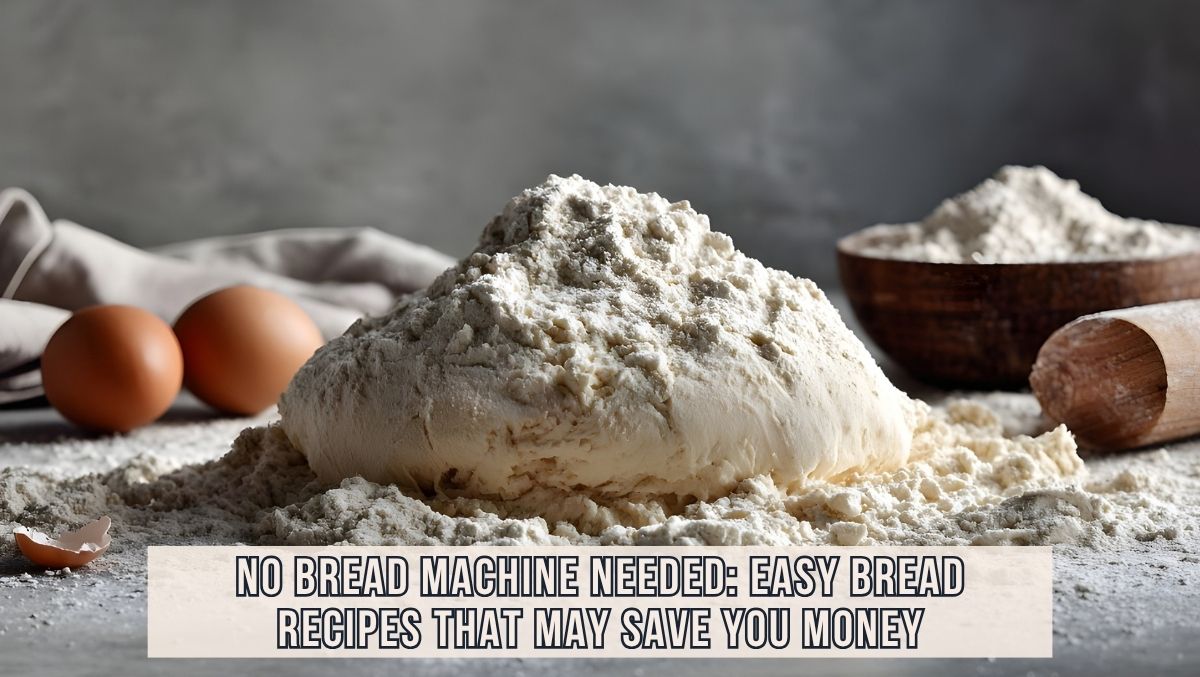
Mention homemade bread and it’s easy to picture a bread machine taking up half the kitchen counter or someone spending the day kneading dough, waiting for it to rise and hoping the finished loaf actually looks like bread.
But “homemade bread” covers a lot more than a traditional yeast loaf.
→ Biscuits are bread.
→ Tortillas are bread.
→ Bagels are something you can make yourself.
→ Quick breads can go from mixing bowl to dinner table without waiting hours for dough to rise.
Making some of these foods yourself can also help reduce grocery costs, especially if flour and other baking basics are already regular pantry staples.
Will homemade always be cheaper? No.
Your ingredient prices, local bread prices, energy costs and what you normally buy all matter. And your time counts, too.
But these four recipes are simple enough to show that you don’t necessarily need special equipment or advanced baking skills to add a little homemade bread to your grocery-saving toolbox.
1. Quick and Cheap Homemade Biscuits
Dollar Stretcher reader EM shared this remarkably simple biscuit recipe that uses only three ingredients.
And don’t let the mayonnaise scare off anyone who doesn’t like mayo. As EM points out, her husband doesn’t like mayonnaise but loves these biscuits.
Ingredients
- 2 cups self-rising flour
- 1 cup milk
- 1 tablespoon mayonnaise
Directions
Preheat oven to 375°F.
Stir the flour, milk and mayonnaise together until combined.
Turn the dough onto a floured surface and gently pat it out. Cut or shape the biscuits as large or small as desired.
Bake for approximately 15 minutes or until the biscuits are cooked through and lightly browned. Oven temperatures and baking times can vary, so begin checking them as they approach the end of the baking time.
Recipe courtesy of Dollar Stretcher reader EM.
Why This One May Save
There’s no yeast, rising time or specialized equipment.
If self-rising flour, milk and mayonnaise are foods you already keep on hand, you can make fresh biscuits without buying refrigerated dough, baking mix or bakery biscuits.
It can also be a useful “we’re out of bread” recipe that saves an extra trip to the store.
And avoiding the store for one forgotten item can prevent buying a few unplanned items while you’re there.
A Different Cooking Method →
You can also “bake” this biscuit recipe on your stovetop in any pan with a tight-fitting lid.
Swap the mayo for 1/4 cup of any kind of oil, including bacon grease. Preheat your pan on low heat with the lid on while you mix up the biscuit batter. Place heaping tablespoons of the batter on a lightly floured surface. Using floured hands, shape the biscuits and let them sit for 3-5 minutes. Place 4 biscuits evenly spaced in your hot pan and cover. Cook for 5-6 minutes, flip and cook an additional 5-6 minutes, until browned to your liking. Makes 8-9 biscuits, and you don’t have to turn on your oven.
Kelly via Facebook
A Time Saver →
Instead of rolling your dough into a circle and cutting it with a cup or biscuit cutter, pat it into a large square and cut it into 12 or 16 small squares. This saves time and effort, and no wasted dough! My family and friends think that these square biscuits are ‘neat’.
Melissa
Another Time Saver →
Like most families, we don’t have much time. When I make biscuits, I make a triple batch. After I cut them out, I put most of them on aluminum pans, cover them with wax paper, and freeze them. Whenever we want some, I thaw them out and bake a few or a whole batch. When I take them out of the freezer, I remove the wax paper and let them sit for a few minutes. Then I bake them at 450 degrees until they’re golden.
Rudy
2. Homemade Bagels
Bagels look like one of those foods you couldn’t possibly make without special equipment.
You can.
This recipe from former Dollar Stretcher contributor Alison Wood does require yeast, kneading and rising time. The bagels also get their characteristic prep step: briefly simmering in water before baking.
So this isn’t a five-minute recipe like EM’s biscuits.
But most of the time involved is waiting rather than working.
Ingredients
- 1 1/2 cups water
- 2 packages yeast
- 1/2 cup sugar
- 1 tablespoon salt
- 3 1/2 cups bread flour
- 2 quarts water, for boiling
- 1 egg white
Directions
In a large mixing bowl, combine the yeast, sugar and warm water. Let the mixture stand for several minutes.
In another bowl, combine 2 cups of the flour with the salt. Add the flour mixture to the yeast mixture and mix thoroughly.
Slowly add the remaining flour, about 1/2 cup at a time.
Once the flour has been incorporated, place the dough on a floured surface and knead for about five minutes.
Place the dough in a greased bowl and let it rise in a warm place until doubled in size, about one hour.
Punch down the dough and divide it into 12 equal pieces. Shape each piece into a bagel.
Bring 2 quarts of water to a boil in a large saucepan, then reduce the heat to a simmer.
Working about three at a time, place the bagels into the simmering water and cook for one minute. Remove and drain them, then place them on a parchment-lined baking sheet.
Bake at 350°F for approximately 30 minutes or until golden brown, turning once during baking for more even cooking.
Yields: 12 bagels
Recipe courtesy of former Dollar Stretcher contributor Alison Wood.
Make the Bagels You Like
One advantage of homemade bagels is that the basic dough doesn’t have to stay basic.
Depending on what you have available, experiment with appropriate additions or toppings such as cinnamon, raisins, sesame seeds, poppy seeds, dried onion or an everything-style seasoning blend.
Just remember that adding specialty ingredients also adds to your homemade cost.
If your goal is to save money, start with what you already own.
3. Homemade Tortillas
Tortillas are another bread product that can seem more complicated to make than they really are.
It takes some hands-on time because you need to roll and cook each tortilla individually. But there’s no yeast and no hour-long rise.
Alison’s recipe makes approximately 15 tortillas from basic ingredients.
Ingredients
- 3 cups all-purpose flour
- 2 tablespoons baking powder
- 1 tablespoon salt
- 1/2 cup oil, or 4 tablespoons shortening
- Water, as needed to form the dough
Directions
Combine the flour, baking powder and salt in a large mixing bowl.
If using shortening, cut it into the dry ingredients until the pieces are approximately pea-sized.
If using oil, stir it into the combined dry ingredients.
Gradually add enough water to create a kneadable dough. If the dough is too dry, add a little more water. If it becomes too sticky, add a little more flour.
Knead the dough for about five minutes, until smooth.
Divide and roll the dough into approximately 15 medium-sized balls.
Lightly flour a large work surface and rolling pin. Roll each ball into a tortilla of your desired thickness.
Transfer one tortilla at a time to a lightly oiled skillet over medium-low heat.
When small bubbles begin to appear, flip the tortilla and cook the opposite side (like cooking pancakes). Remove from the skillet when cooked and repeat with the remaining dough.
Serve warm.
Yields: Approximately 15 tortillas
Recipe courtesy of former Dollar Stretcher contributor Alison Wood.
Where the Savings May Be
Flour tortillas don’t require expensive ingredients, which gives homemade a chance to compete well on cost.
But compare with what you normally pay.
If you regularly find tortillas on BOGO or buy an inexpensive store brand, your savings may be modest.
If tortillas have gotten expensive where you live or you need them frequently, homemade becomes more attractive.
There’s another potential benefit: you can make them when you need them rather than discovering halfway through taco night that someone ate the last tortilla.
→ A Cheap Meal Idea
Turn flour tortillas into quick, thin-crust pizzas. Lightly brush one side and the edges of each tortilla with olive oil, then warm it in a skillet for about a minute. Add pizza sauce, your choice of toppings and shredded cheese. Transfer to a baking sheet and bake at 350°F until the cheese is melted and lightly browned.
It’s a quick way to use up leftover tortillas and whatever pizza toppings you have on hand while turning them into an easy lunch, snack or light meal.
Stephanie
→ Another Tortilla Transformation
I make my own tortilla chips by “pizza cutting” tortillas into eighths and putting them on a baking sheet coated with cooking oil. I then dampen the tops of the chips with a sprinkling of water, sprinkle them with coarse ground salt (use whatever seasonings you’d like), and pop them into the oven at 375 degrees. I can fit two full cookie sheets of chips at a time. They bake for around 17 minutes (check after 13 minutes).
I think they taste far better than any bagged chip. I make a few servings at a time rather than buying a big bag I have to eat up before it goes to waste.
Terri
Want MORE TIPS for Stretching Your Budget?
Get the free eBook with 226 simple money-saving tips — plus the Dollar Stretcher newsletter with practical, real-life ways to make a tight budget go further.
We value your privacy.
Unsubscribe anytime.
4. Rustic Round Bread
This final recipe is a different kind of homemade bread.
There’s no yeast and no rising time. Baking powder and baking soda provide the leavening instead.
The cheddar, butter and herbs make it more expensive than a very basic loaf of homemade bread, so I wouldn’t choose this recipe primarily because you’re trying to produce the absolute cheapest bread possible.
Think of it instead as an easy accompaniment that can help turn an inexpensive soup or other simple dish into a more substantial meal.
Ingredients
- 2 cups white whole-wheat flour
- 1 cup shredded cheddar cheese
- 1 tablespoon sugar
- 2 teaspoons baking powder
- 1/4 teaspoon baking soda
- 1/2 teaspoon salt
- 1/2 teaspoon rubbed sage
- 1/2 teaspoon crushed thyme
- 8 tablespoons cold butter
- 1 egg
- 1 1/2 cups milk
Directions
Preheat oven to 400°F.
Combine all dry ingredients in a large mixing bowl.
Cut in the cold butter until the pieces are small and approximately pea-sized.
Add the egg and milk and stir just until everything is moistened. The batter should have a consistency similar to cornbread batter.
Transfer to a greased and floured 8-inch round cake pan.
Bake for approximately 25 minutes or until the bread is cooked through.
Yields: 6 servings
Recipe courtesy of former Dollar Stretcher contributor Alison Wood.
Use It To Stretch a Simple Meal
This is the kind of bread that can make a pot of inexpensive soup, beans or another lighter meal feel more complete.
And that can be another way homemade bread saves money.
The bread itself doesn’t necessarily need to be extraordinarily cheap.
If adding a homemade bread helps turn inexpensive ingredients into a dinner everyone finds filling and satisfying, it may help keep a simple meal in the meal rotation.
Do You Need a Bread Machine To Save Money Making Bread?
No.
A bread machine can be convenient for someone who makes bread frequently, but don’t assume you need to buy one before trying homemade bread.
None of these four recipes requires one.
In fact, before purchasing any specialized kitchen appliance for a money-saving project, I prefer to see whether the habit sticks first.
Make bread by hand a few times.
If you enjoy it and begin doing it regularly, you can decide later whether a bread machine would save enough time and effort to justify the cost and storage space.
And if you eventually want one, bread machines are the type of appliance worth checking for secondhand. People often buy specialized kitchen appliances with good intentions and then discover they don’t use them much.
About The Dollar Stretcher
The Dollar Stretcher shares practical ways to lower everyday costs, build steadier money habits and move from stuck to stable on a tight budget.
Learn more about how we can help you.

Get All 226 Money-Saving Tips—Free Download
You’ll also get our free newsletter each week. It’s full of useful ways to cut costs and stretch your dollars.
Is Homemade Bread Really Cheaper?
It certainly can be, but don’t assume that anything homemade automatically saves money.
Do a quick comparison using the ingredients you actually buy.
For a recipe, roughly total the cost of the flour, yeast, milk, butter, oil, cheese and other ingredients used. You don’t need to calculate the cost of a teaspoon of salt down to a fraction of a penny.
Then compare the recipe yield with the equivalent food you’d normally purchase.
Don’t compare homemade bagels with the most expensive bagels in town if you’d normally buy an inexpensive supermarket package.
Compare them with what you would realistically buy instead.
Also consider:
- Ingredients you already own. A recipe using pantry staples may be inexpensive to start making. A recipe requiring five ingredients you don’t own has a much higher upfront cost.
- Your local prices. Flour may be inexpensive while bakery products are costly in one area. Another household may have access to very inexpensive bread.
- Sales. If you normally stock up on bread products during BOGO sales, use your usual sale price in the comparison.
- Energy. Your oven or stove isn’t free to operate. You don’t need an elaborate calculation for every batch, but energy is part of the cost.
- Waste. Homemade isn’t cheaper if half of it gets thrown away.
- Your time. You may enjoy baking and consider the time well spent. Someone already overwhelmed may reasonably decide that a $2 package of bread is worth buying.
Cost It Once: Is Your Homemade Bread Actually Cheaper?
You don’t need to calculate the cost of every batch you bake. Cost the recipe once and you’ll have a good idea whether homemade saves you money.
Step 1: Add Up the Ingredients You Use
Calculate the approximate cost of the amount used in the recipe, not the entire package.
For example:
Flour: ______
Yeast or baking powder: ______
Milk or water: ______
Butter, oil or shortening: ______
Eggs: ______
Other ingredients: ______
Approximate batch cost: $______
Don’t worry about calculating a teaspoon of salt down to the penny. A reasonable estimate is enough.
Step 2: Divide by the Yield
Batch cost ÷ number of servings/items = homemade cost per item
If 12 homemade bagels cost $4.20 to make:
$4.20 ÷ 12 = 35¢ per bagel
Step 3: Compare With What You Really Buy
If the bagels you’d normally buy cost 60¢ each, your approximate savings would be:
60¢ − 35¢ = 25¢ per bagel
For 12 bagels, that’s about $3 saved per batch.
Use your normal store price — including the BOGO or sale price you usually pay — rather than comparing homemade with a more expensive product you wouldn’t have purchased anyway.
Don’t Forget the Other Costs
Your oven or stove uses energy and your time has value. You don’t necessarily need an exact dollar figure for either, but include them when deciding whether the savings are worthwhile.
And consider waste. Homemade bread that gets eaten can save money. A cheaper batch that ends up in the trash doesn’t.
The goal isn’t to prove homemade is always cheaper. It’s to find the homemade foods that save enough money to be worth making at home.
Make Extra When It Makes Sense
If you’re going to spend the time making bread, consider whether you can make more than you need immediately.
Some breads and bread products freeze well.
Making a double batch spreads the hands-on work across more servings and gives you homemade convenience food for another day.
Just make sure you’ve successfully made the single recipe first.
It’s better to find out your family doesn’t like a recipe after one batch than after four.
Budget Level Savings: Is Homemade Bread Worth Trying?
No need to tackle every tip at once. Start with the tips best suited for your budget.
If money is stretched and savings need to be meaningful:
Start with recipes requiring ingredients you already have.
The three-ingredient biscuits are a particularly good example. Homemade tortillas may also be inexpensive if flour, baking powder, salt and oil are regular pantry staples.
Don’t buy a bread machine or a collection of special baking equipment to begin.
Your kitchen, a mixing bowl, your hands and the equipment you already own may be enough.
If you’re cutting back but still have some flexibility:
Experiment with replacing one or two bread products your household buys regularly.
Track what the homemade version costs and whether your family actually eats it.
If a recipe works, consider making larger batches and freezing extras where appropriate.
If you just want small, easy wins:
Homemade bread may be worthwhile even when the savings are small if you enjoy baking, prefer controlling the ingredients or simply like having fresh bread.
But you still don’t need specialized equipment unless it genuinely makes a frequent task easier.
TDS Takeaway: Homemade Doesn’t Have To Mean Complicated
You don’t need to start your bread-making adventure with sourdough starter, specialized flour and an afternoon devoted to perfecting a loaf.
Start with a biscuit. Or a tortilla.
Try bagels on a weekend when you have time to let the dough rise.
Serve a rustic round of bread with an inexpensive pot of soup.
You may discover that making some of the bread products you normally buy is easier than you expected. And if it knocks a little off the grocery bill along the way, that’s even better.
Did this article help you save or stretch a few dollars or plug a financial leak? The Dollar Stretcher can help you make your dollars go even further.
Join the free Dollar Stretcher newsletter to get money-saving tips and articles delivered to your inbox each week, plus a copy of the 226 money-saving tips eBook — a reference you can use whenever money feels tight.
About the Author
Andrea Norris-McKnight is the Money-Saving Strategist behind The Dollar Stretcher.
She helps people on tight budgets cut everyday costs, build steadier money habits and create a little breathing room—without guilt, gimmicks, or unrealistic advice.
More Ways To Save

How Dollar Stretchers Are Saving on Lunch Meat

Make It or Buy It? 15 Pantry Staples Worth Comparing
You can make everything from taco seasoning and cream soups to ketchup and pancake mix from scratch. But should you?
9 Surprising Ways To Use Bread Around the Kitchen (Besides Making Sandwiches)
Try these practical kitchen hacks that use ordinary bread.
Mix Once, Bake Many Ways: A Homemade Baking Mix for Busy Households
A homemade shortcut for biscuits, pancakes, muffins, cakes, cookies and more.
About The Dollar Stretcher
The Dollar Stretcher shares practical ways to lower everyday costs, build steadier money habits and move from stuck to stable on a tight budget.
Learn more about how we can help you.