
Mix Once, Bake Many Ways: A Homemade Baking Mix for Busy Households
Scratch baking can save money, but measuring ingredients every time takes time. These two make-ahead baking mixes let you do much of the work at once, giving you a homemade shortcut for biscuits, pancakes, muffins, cakes, cookies and more.
TDS Money-Saving Strategist: Andrea Norris-McKnight | posted September 2026
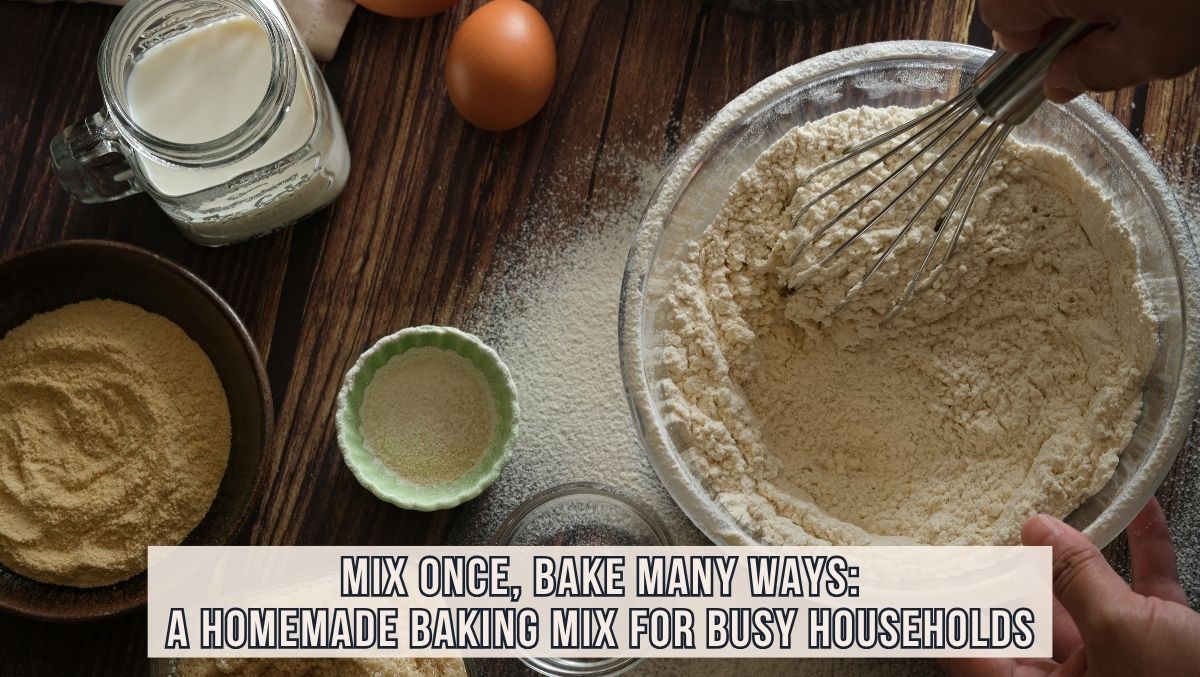
One reason boxed baking mixes are convenient is that someone else has already done much of the work.
The flour is measured. The leavening is added. The other dry ingredients are combined.
You open the package, add a few ingredients and bake.
But you can create some of that same convenience in your own kitchen.
Former Dollar Stretcher contributor Janean Nusz shared two homemade master mixes you can prepare ahead and use to make a variety of baked goods.
The first is an all-purpose baking mix that can become biscuits, pancakes, muffins, cornbread, breadsticks, doughnuts or cookies.
The second is a cocoa mix that provides a head start on cakes, brownies and cookies.
Could making your own mixes save money?
Possibly.
It depends on what you pay for ingredients, what commercial mixes cost where you live and whether you’ll use everything you make.
But even when the dollar savings are modest, a master mix offers another potential benefit:
You do much of the measuring and mixing once rather than every time you bake.
That can make scratch baking considerably more convenient.
Basic All-Purpose Baking Mix
This is the original large recipe that makes about 26 cups. It is the basic mix used in the many recipe variations that follow.
Unless you have a large household or bake often, consider cutting the recipe in half or more.
Making a smaller amount also lets you see how often you actually use it before committing several pounds of ingredients to the project.
Ingredients
- 17 cups all-purpose flour
- 8 tablespoons baking powder
- 2 tablespoons salt
- 4 teaspoons cream of tartar
- 2 teaspoons baking soda
- 3 cups instant nonfat dry milk powder
- 4 1/2 cups shortening
Directions
In a very large bowl, thoroughly combine the flour, baking powder, salt, cream of tartar, baking soda and dry milk powder.
Cut in the shortening with a pastry blender until the mixture resembles coarse crumbs and the shortening is evenly distributed.
Transfer the mixture to clean, airtight containers. Label each container with the mix name and the date it was prepared.
Store appropriately based on the ingredients you’re using and their manufacturer storage recommendations. Once again, because this mix contains shortening and dry milk, I prefer making only as much as you expect to use within a reasonable period.
Makes: Approximately 26 cups
Recipe courtesy of former Dollar Stretcher contributor Janean Nusz.
Turn the Basic Mix Into Biscuits
Ingredients
3 cups Basic All-Purpose Baking Mix
2/3 cup water or milk
Directions
Combine the mix and liquid and blend well. Knead the dough lightly, then roll it out and cut into the desired biscuit shape.
Bake at 450°F for 10 to 15 minutes or until cooked through and browned.
For drop biscuits, add approximately 2 additional tablespoons of liquid.
Makes: 10 to 12 biscuits
Turn the Basic Mix Into Pancakes
Ingredients
4 1/2 cups Basic All-Purpose Baking Mix
2 tablespoons sugar
2 eggs, beaten
2 3/4 cups milk, buttermilk or water
Directions
Combine the baking mix and sugar. Add the beaten eggs and liquid and stir until thoroughly combined.
Cook on a greased hot griddle until done, flipping to cook both sides.
Makes: Approximately 13 to 16 six-inch pancakes
Turn the Basic Mix Into Muffins
Ingredients
2 2/3 cups Basic All-Purpose Baking Mix
4 tablespoons sugar
1 egg, beaten
1 cup milk or water
Directions
Combine the baking mix and sugar. Add the egg and liquid and stir just until blended.
Divide among greased muffin cups.
Bake at 425°F for 15 to 20 minutes or until cooked through.
Makes: 12 muffins
Turn the Basic Mix Into Cornbread
Ingredients
3 cups Basic All-Purpose Baking Mix
9 tablespoons cornmeal
1 cup sugar
3 eggs
1 1/2 cups milk or water
1/4 cup butter or margarine, melted
Directions
Combine the baking mix, cornmeal and sugar.
Add the eggs, liquid and melted butter or margarine and mix until combined.
Pour into a greased 9- x 13-inch baking pan.
Bake at 350°F for approximately 30 to 40 minutes or until the cornbread is cooked through.
Turn the Basic Mix Into Breadsticks
Ingredients
2 cups Basic All-Purpose Baking Mix
1/2 cup cornmeal or flour
1/2 teaspoon salt
Scant 1/2 cup milk or water
Directions
Combine the baking mix, cornmeal or flour and salt. Add enough liquid to form a dough. Knead until smooth, then divide and form into 12 small sticks approximately 1/2-inch thick.
Bake at 400°F for 15 to 20 minutes or until crisp and well browned.
Makes: 12 breadsticks
Want MORE TIPS for Stretching Your Budget?
Get the free eBook with 226 simple money-saving tips — plus the Dollar Stretcher newsletter with practical, real-life ways to make a tight budget go further.
We value your privacy.
Unsubscribe anytime.
Turn the Basic Mix Into Doughnuts
Ingredients
- 3 cups Basic All-Purpose Baking Mix
- 1/2 teaspoon ground cinnamon
- 1/2 cup sugar
- 1/2 teaspoon ground nutmeg
- 2 teaspoons vanilla extract
- 2 eggs
- 2/3 cup milk or water
- Oil for frying
- Powdered sugar, optional
Directions
Combine the baking mix, cinnamon, sugar and nutmeg.
In a separate bowl, combine the vanilla, eggs and milk or water.
Add the wet ingredients to the dry ingredients and stir until a dough forms. Turn onto a lightly floured surface and knead until smooth and elastic, approximately eight minutes. Roll the dough to about 1/2 inch thick and cut with a doughnut cutter or drinking glass.
Carefully fry in oil heated to approximately 375°F, turning once so both sides brown.
Remove carefully and drain. If desired, dredge the warm doughnuts in powdered sugar.
Safety note: Hot frying oil can cause serious burns and is a fire risk. Never leave heating oil unattended, keep children and pets away from the cooking area and use an appropriate deep-fry thermometer and heavy pot.
Turn the Basic Mix Into Molasses Cookies
Ingredients
- 2 cups Basic All-Purpose Baking Mix
- 1/4 cup sugar
- 1/2 teaspoon ground cinnamon
- 1/2 teaspoon ground ginger
- 1/2 teaspoon ground cloves
- 1 egg yolk
- 1/2 cup molasses
Directions
Combine the baking mix, sugar, cinnamon, ginger and cloves. Stir in the egg yolk and molasses.
Refrigerate the dough for at least one hour.
Shape into approximately 1 1/2-inch balls. Place on an ungreased baking sheet and flatten with the bottom of a glass dipped in sugar.
Bake at 375°F for approximately 10 minutes or until the edges are browned.
Cool before storing.
Makes: Approximately 2 1/2 dozen cookies
About The Dollar Stretcher
The Dollar Stretcher shares practical ways to lower everyday costs, build steadier money habits and move from stuck to stable on a tight budget.
Learn more about how we can help you.

Get All 226 Money-Saving Tips—Free Download
You’ll also get our free newsletter each week. It’s full of useful ways to cut costs and stretch your dollars.
Cocoa Cake and Brownie Mix
Janean’s second master mix is for the sweet side of the kitchen.
One batch provides a homemade starting point for cocoa cake, brownies and cocoa cookies.
Unlike the basic baking mix, this one doesn’t contain shortening or dry milk. It’s a dry mixture of flour, baking powder, salt, sugar and cocoa.
Again, this makes a substantial amount. If you don’t bake desserts regularly, scale the recipe down rather than letting unused ingredients sit in the pantry.
Ingredients
9 cups all-purpose flour
6 teaspoons baking powder
6 teaspoons salt
12 1/2 cups sugar
12 ounces unsweetened cocoa powder
Directions
Combine all ingredients thoroughly in a large bowl.
Transfer to a clean, airtight container and store in a cool, dry place according to the storage recommendations for the ingredients used.
Label the container with the mix name and preparation date.
Recipe courtesy of former Dollar Stretcher contributor Janean Nusz.
Turn the Cocoa Mix Into Cake
Ingredients
1 cup water
1/4 cup butter or margarine
2 cups Cocoa Cake and Brownie Mix
1/4 cup sour cream
1 egg, beaten
1/2 teaspoon baking soda
Directions
Bring the water and butter or margarine to a boil in a saucepan. In a large bowl, combine the hot water and butter mixture with the cocoa mix, sour cream, beaten egg and baking soda. Blend well.
Pour into a greased cake pan and bake at 375°F for approximately 20 minutes or until the cake tests done.
Makes: One cake layer. Double the recipe for a two-layer cake.
Turn the Cocoa Mix Into Brownies
Ingredients
2 1/4 cups Cocoa Cake and Brownie Mix
2 eggs
1 teaspoon vanilla extract
1/4 cup butter or margarine, melted
1/2 cup chopped walnuts, optional
Directions
Combine all ingredients and blend well.
Pour into a greased and floured 8-inch baking pan.
Bake at 350°F for approximately 30 to 35 minutes or until done.
Turn the Cocoa Mix Into Cookies
Ingredients
1/4 cup butter or margarine, melted
2 eggs
1/4 cup plus 1 teaspoon water
2 1/4 cups Cocoa Cake and Brownie Mix
1/2 teaspoon baking soda
3/4 cup flour
1 teaspoon vanilla extract
Directions
Beat together the melted butter or margarine, eggs and water. Add the cocoa mix, baking soda, flour and vanilla and blend well.
Drop the dough by the teaspoonful onto greased baking sheets, leaving about 2 inches between cookies.
Bake at 375°F for 10 to 12 minutes or until done.
Cool before storing.
Makes: Approximately 3 dozen cookies
Where Does a Homemade Baking Mix Save Time?
At first, making 26 cups of baking mix hardly sounds like a shortcut. You have to measure 17 cups of flour, after all.
The advantage comes later.
Instead of pulling out flour, baking powder, baking soda, salt, dry milk and shortening every time you want biscuits, much of the measuring is already done.
Scoop out the amount of master mix the recipe calls for, add the remaining ingredients and bake.
It can be especially helpful on busy days, when the difference between making something and buying something often comes down to how much effort it feels like it will take.
A homemade mix puts part of that work behind you.
Think of It as Homemade Convenience Food
Convenience foods cost more in part because someone has done some of the work for you.
A homemade master mix lets you do that work ahead of time.
You’re essentially creating your own convenience food. That can make it easier to whip up biscuits for soup, pancakes for breakfast or brownies when you need an inexpensive dessert without starting completely from scratch.
And unlike buying several different commercial mixes, many of the same inexpensive ingredients can form the foundation for multiple recipes.
Will Making Your Own Baking Mix Save Money?
It may, but this is another case where homemade doesn’t automatically mean cheaper.
Compare the cost of the ingredients with what you would realistically buy instead.
If you normally buy an inexpensive store-brand biscuit mix, the difference may be small.
If you regularly buy separate pancake, biscuit, muffin and other baking mixes, a versatile homemade mix may compare more favorably.
The biggest savings opportunity comes when:
- You already keep most of the ingredients on hand
- You buy baking staples at reasonable prices
- You regularly use commercial mixes
- You actually use the homemade mix before its quality declines
- Having the mix available helps you avoid more expensive convenience foods or last-minute store trips
And don’t overlook waste.
Making 26 cups because the per-cup cost looks fantastic doesn’t save anything if half of it eventually gets thrown away.
Cost the Mix Once
Want to know whether a homemade master mix saves your household money?
Add up the approximate cost of all the ingredients in one batch.
Total batch cost: $______
Then divide by the number of cups the recipe makes.
Batch cost ÷ cups of mix = cost per cup
For the Basic All-Purpose Baking Mix:
$______ ÷ 26 cups = $______ per cup
Next, compare what it costs to make a batch of biscuits, pancakes or muffins with what you’d normally buy.
You don’t need to calculate every teaspoon down to the penny. The goal is simply to determine whether the savings are large enough to make the mix worthwhile for you.
Make a Smaller Batch First
If you’ve never used a master baking mix, start smaller. Cut the recipe in half or scale it down further.
Then see what happens.
- Do you reach for it when you want pancakes?
- Does it actually make baking easier?
- Does your family like the recipes?
- Do you use it quickly enough?
If so, make a larger batch next time. If not, you haven’t tied up as many ingredients in a mix that sits unused.
Label It Like You Intend To Keep It
A container of white powder in the pantry becomes surprisingly mysterious a few weeks after you’ve forgotten making it.
Always label homemade mixes clearly. Include:
- Name of the mix
- Date prepared
- Basic preparation instructions if helpful
You might even tape the recipes you use most frequently to the container or keep them inside the cabinet door.
The easier you make the mix to use, the more likely it is to actually save you time.
Budget Level Savings: Are Homemade Baking Mixes Worth Making?
No need to tackle every tip at once. Start with the tips best suited for your budget.
If money is stretched and savings need to be meaningful:
Start with ingredients you already own.
Don’t buy a large quantity of specialty ingredients simply because you’re trying to make something “cheap.”
Calculate what you’d spend to make a smaller batch and compare it with the commercial mixes you normally buy.
If you rarely bake, buying an inexpensive commercial mix when you need one may actually create less waste.
If you’re cutting back but still have some flexibility:
A master mix can be useful if your household regularly eats pancakes, biscuits, muffins and other baked goods.
Make enough for several recipes, but not so much that you’re worried about using it up.
Consider buying frequently used ingredients in larger sizes only after you know you’ll use them.
If you just want small, easy wins:
The time savings may matter as much as the ingredient savings.
A homemade mix can provide some of the convenience of packaged baking products while letting you control what you keep on hand.
But don’t stockpile more than your household can reasonably use simply because bulk ingredients have a lower unit price.
TDS Takeaway: Do the Work Once, Then Make Several Things
The real appeal of these recipes isn’t that everyone should stop buying boxed baking mixes.
It’s that scratch baking doesn’t always have to start from scratch.
Spend some time measuring and combining ingredients once, and you can have the beginnings of biscuits, pancakes, muffins, cornbread, breadsticks, doughnuts, cookies, cake and brownies waiting in the pantry.
That could save a little money. It could save a little time.
And perhaps most importantly, it can make homemade food convenient enough that you actually make it.
Did this article help you save or stretch a few dollars or plug a financial leak? The Dollar Stretcher can help you make your dollars go even further.
Join the free Dollar Stretcher newsletter to get money-saving tips and articles delivered to your inbox each week, plus a copy of the 226 money-saving tips eBook — a reference you can use whenever money feels tight.
About the Author
Andrea Norris-McKnight is the Money-Saving Strategist behind The Dollar Stretcher.
She helps people on tight budgets cut everyday costs, build steadier money habits and create a little breathing room—without guilt, gimmicks, or unrealistic advice.
More Ways To Save
No Bread Machine Needed: 4 Easy Bread Recipes That May Save You Money
Pantry Substitutions That Can Save a Trip to the Store
Missing milk, eggs, butter or another baking staple? Finish the recipe without another grocery run.
Fast and Frugal: Meal Planning Tips for Busy, Budget-Conscious Families
Meal planning doesn’t have to take hours every week.

Make It or Buy It? 15 Pantry Staples Worth Comparing
You can make everything from taco seasoning and cream soups to ketchup and pancake mix from scratch. But should you?
About The Dollar Stretcher
The Dollar Stretcher shares practical ways to lower everyday costs, build steadier money habits and move from stuck to stable on a tight budget.
Learn more about how we can help you.