
17 Foods That Become Budget Leaks When Stored Incorrectly
A good price doesn’t mean much if food spoils before you can use it. These common foods can quietly become budget leaks when buying habits and storage methods don’t match how quickly your household eats them.
TDS Money-Saving Strategist: Andrea Norris-McKnight | posted November 2026
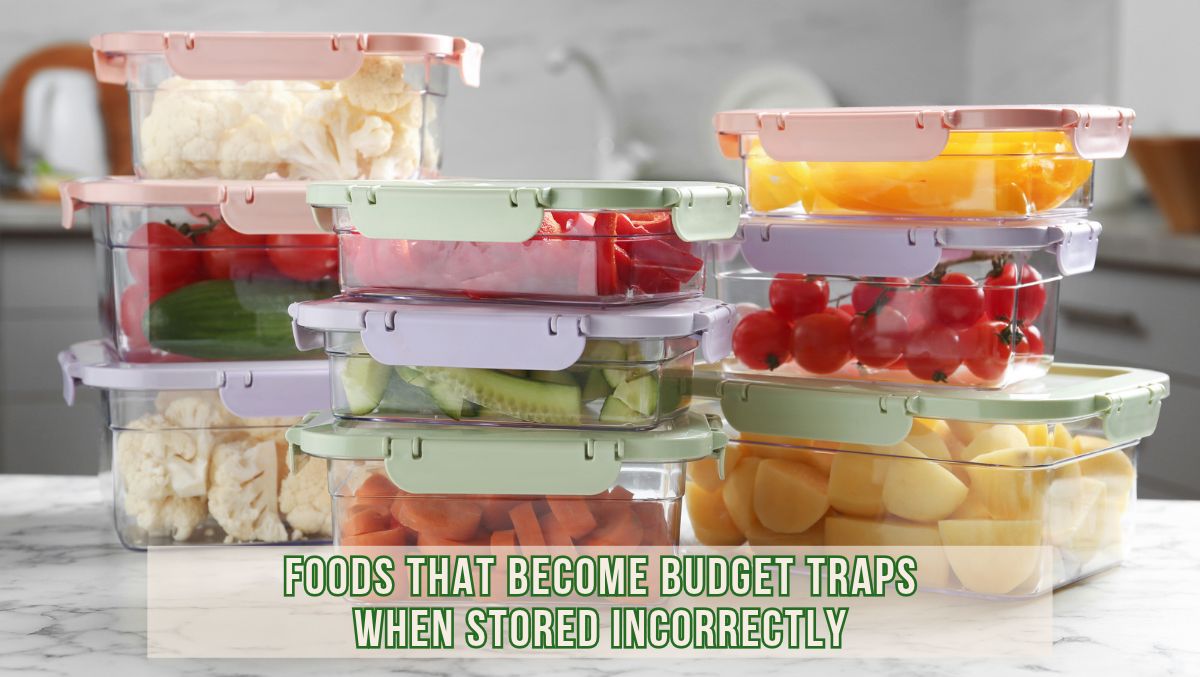
Sometimes an expensive food isn’t expensive because of its price.
It’s expensive because you keep throwing part of it away.
A $4 bag of produce becomes a $2 bag of waste if you routinely eat only half before the rest spoils. A large bottle of cooking oil isn’t a bargain if it turns rancid before you finish it. And buying meat on sale doesn’t save much if forgotten packages eventually suffer enough freezer burn that nobody wants them.
That’s what makes some foods potential budget leaks and traps.
They’re foods we buy thinking we’re getting good value, but poor storage, overbuying or simply forgetting what we have can quietly raise their real cost.
Here are some of the biggest offenders.
1. Bagged Salad and Leafy Greens
Leafy greens can be a great addition to meals.
They can also turn into expensive refrigerator compost surprisingly quickly.
Moisture, damaged leaves and simply buying more than you’ll use can shorten the useful life of greens.
Why It Becomes a Budget Leak
Suppose you regularly spend $4 on a container of greens but throw away the last third.
You’re effectively paying $4 for about $2.67 worth of food you actually eat.
Do that every week and the waste adds up.
Make It Less Costly
Buy an amount that matches your household’s actual consumption, not the amount you hope everyone will eat.
Check greens regularly, remove deteriorating leaves and follow storage recommendations for the particular type you’re buying.
Most importantly, plan when you’ll eat them.
Delicate produce usually shouldn’t be the ingredient you vaguely intend to use “sometime this week.”
2. Fresh Berries
Berries can be expensive even when none are wasted.
Lose a third of the container to mold and they’re considerably more expensive.
Why It Becomes a Budget Leak
Berries are perishable and one moldy berry can quickly turn into several.
Large sale packages can tempt you to buy more than your household can eat while they’re at their best.
Make It Less Costly
Inspect berries when you bring them home and remove any spoiled ones.
Store them properly, and don’t wash them too far in advance unless you’re using a storage method suited to it.
If you realize you bought more than you’ll eat fresh, freeze suitable berries while they’re still in good condition.
A sale price only helps if you use what you bought.
3. Fresh Herbs
Have you ever bought a bunch of parsley or cilantro because a recipe required two tablespoons?
The rest sits in the refrigerator until it becomes a limp reminder of your good intentions.
Why It Becomes a Budget Leak
Fresh herbs are often sold in quantities much larger than one recipe requires.
That means a $2 purchase for one recipe may really be a $2 purchase for two tablespoons if you throw the rest away.
Make It Less Costly
When meal planning, look for several meals that can use the same herb.
If tacos require cilantro tonight, perhaps use it in rice, soup, salsa or another meal later in the week.
Learn the best storage method for the herb you’re buying and freeze herbs when appropriate for how you intend to use them later.
Or reconsider whether dried herbs could work in recipes where fresh isn’t essential.
I like to use fresh herbs in my cooking and to always have some on hand. So I chop them up and fill each spot in an ice cube tray with a teaspoon. Then I add a little water and freeze them. Once frozen, I put them in a baggie marked with the type of “herb cubes.” When I need the herb, I simply add a cube to my soup, sauce or recipe. It melts as it’s cooking. It’s easy and tasty!
Luci
Want MORE TIPS for Stretching Your Budget?
Get the free eBook with 226 simple money-saving tips — plus the Dollar Stretcher newsletter with practical, real-life ways to make a tight budget go further.
We value your privacy.
Unsubscribe anytime.
4. Celery and Carrots
These vegetables can last reasonably well when properly stored, which sometimes creates a different problem:
We assume we have plenty of time to use them.
Then we forget them.
Why They Become Budget Leaks
Large bags usually cost less per pound than small quantities.
But if half the bag becomes limp or unusable, the unit-price advantage disappears.
Make Them Less Costly
Store them properly and check them periodically.
When they’re beginning to lose the texture you prefer for raw eating but are still good, move them into cooked dishes.
Soups, stews, casseroles and stocks can sometimes give aging vegetables another useful destination. Or blanch and freeze them for a future cooked meal.
5. Potatoes
A large bag of potatoes can be an inexpensive base for many meals.
But only if the potatoes survive long enough to become meals.
Why They Become a Budget Leak
Potatoes exposed to poor storage conditions may sprout, shrivel or develop other quality problems before you use them.
Buying a large bag simply because it has a lower per-pound price doesn’t help a small household that repeatedly loses the last few potatoes.
Make Them Less Costly
Keep potatoes in a cool, dark, well-ventilated location and away from onions.
Check the bag periodically rather than waiting until you smell a problem.
And buy the quantity your household can realistically use.
Sometimes the smaller bag with the higher unit price produces the lower cost per potato actually eaten.
6. Onions
Onions are another food many households assume will last almost indefinitely.
They don’t.
Why They Become a Budget Leak
Poor airflow and unsuitable storage can shorten their useful life.
Cut onions also tend to disappear in the fridge unless they’re stored securely and kept visible.
Make Them Less Costly
Store whole onions in a cool, dry, well-ventilated place and don’t keep them next to potatoes.
Once cut, refrigerate them properly and plan to use the remainder. Or chop and freeze them for use in future cooked (not raw) meals.
If your household uses onions slowly, buying a large bag isn’t automatically economical.
7. Bread
Bread is one of the clearest examples of a food whose best storage method depends on how quickly your household eats it.
Why It Becomes a Budget Leak
A family that eats a loaf in three days may have little trouble keeping bread fresh.
A one- or two-person household may repeatedly lose the final third of the loaf to mold or staleness.
Throw away a quarter of every $4 loaf and you’re losing about $1 each time.
Make It Less Costly
If you regularly lose bread before finishing it, stop trying to beat the clock.
Freeze part of the loaf when you bring it home.
You can do the same with buns, bagels, tortillas and many other baked goods.
Instead of asking how to make bread sit on the counter longer, ask whether some of it should be somewhere else.
8. Flour and Whole Grains
Dry foods can still deteriorate.
And some are more vulnerable than others.
Why They Become Budget Traps
Buying flour, brown rice or whole grains in bulk may lower the unit price, but oils naturally present in some grain products can eventually become rancid.
Dry goods can also be lost to moisture or pantry pests.
Make Them Less Costly
Store dry goods securely and buy quantities appropriate to how quickly you use them.
For products you use slowly, investigate whether refrigerator or freezer storage is appropriate.
A 25-pound bag isn’t a bargain simply because it’s cheaper per pound.
9. Nuts and Seeds
Nuts often come with a relatively high price tag, which makes throwing them away particularly painful.
Why They Become Budget Traps
Nuts and seeds contain oils that can become rancid.
Buying large quantities because the bulk price looks attractive may backfire if they sit too long under poor storage conditions.
Make Them Less Costly
Keep only the quantity you’ll use reasonably soon in your everyday storage area and consider refrigerated or frozen storage for longer keeping, depending on the product.
This is especially useful when you’ve bought a larger package for a better price. Protecting a $15 bag of nuts deserves more attention than protecting a 75-cent box of pasta.
10. Cooking Oils
A giant bottle of oil may win the unit-price comparison.
That doesn’t mean it’s the cheapest bottle for your household.
Why It Becomes a Budget Trap
Heat, light and time can degrade oils.
If you use only half a large bottle before it goes rancid, your effective cost per usable ounce may be much higher than it appeared at the store.
Make It Less Costly
Keep oils tightly closed and away from heat and direct light.
Be especially wary of storing them next to the stove just because it’s convenient.
And match bottle size to your actual consumption. If you use a particular specialty oil only occasionally, a smaller bottle may be the better value.
11. Cheese
Cheese is another relatively expensive food that’s easy to lose in the refrigerator.
Why It Becomes a Budget Leak
Large blocks and warehouse-size packages often offer attractive unit prices.
But once opened, improper handling and storage can shorten how long you have to use it.
Shredded cheese can also become buried behind other refrigerator foods.
Make It Less Costly
Keep cheese properly wrapped and refrigerated.
If you buy a large amount, consider whether freezing a portion makes sense for how you’ll eventually use it. Freezing may change the texture of some cheeses, making them better suited to cooking afterward.
And check your cheese supply before buying more. It’s surprisingly easy to have several partially used packages open at once.
About The Dollar Stretcher
The Dollar Stretcher shares practical ways to lower everyday costs, build steadier money habits and move from stuck to stable on a tight budget.
Learn more about how we can help you.
Get All 226 Money-Saving Tips—Free Download
You’ll also get our free newsletter each week. It’s full of useful ways to cut costs and stretch your dollars.
12. Deli Meat
A large package of lunch meat may appear cheaper than a small one.
Until you have to discard half of it.
Why It Becomes a Budget Trap
Deli meat is perishable, and larger packages may simply contain more than a small household can safely use in time.
It’s also easy to lose track of when you opened a package.
Make It Less Costly
Buy based on how much your household actually eats, not cost per ounce alone.
Keep it properly refrigerated and consider marking the date when you open the package.
When a larger package is really the best buy, decide whether you can freeze part of it before committing.
13. Milk and Cream
The larger container frequently has the lower unit price.
You’ve probably spotted the problem by now.
Why They Become Budget Leaks
If your household consistently pours the last quarter of a gallon down the drain, the gallon wasn’t necessarily cheaper than the half gallon.
Improper refrigerator placement can also work against you.
Make Them Less Costly
Keep highly perishable dairy products in a consistently cold area of the refrigerator rather than the door.
Then compare container sizes based on what you normally finish, not simply their unit prices.
Track your waste for a few weeks if you’re unsure.
You may discover that paying a little more per ounce saves money overall.
14. Condiments and Sauces
One bottle of mustard probably isn’t destroying your grocery budget.
Multiply the problem by ketchup, salad dressings, barbecue sauces, marinades, hot sauces, salsa and specialty condiments and things get more interesting.
Why They Become Budget Traps
We tend to accumulate condiments.
A recipe requires something new. A different flavor sounds good. A sale encourages us to buy two.
Soon the refrigerator door contains multiple half-used bottles, some of which nobody remembers buying.
Make Them Less Costly
- Periodically inventory your condiments.
- Before opening a new bottle, finish an existing one when practical.
- Before buying a specialty sauce for one recipe, ask what you’ll do with the remainder.
The cheapest way to store an excessive condiment collection may be to stop adding to it.
15. Leftovers
Leftovers may be the biggest budget trap because you’ve already paid to prepare them.
Throwing them away wastes not only the food but also some of the money and effort that went into the original meal.
Why They Become a Budget Trap
- Leftovers are easily pushed to the back of the refrigerator.
- Nobody remembers when they were cooked.
- The amount is too small to feel like a meal.
Eventually, uncertainty wins and they’re thrown away.
Make Them Less Costly
- Give leftovers a designated refrigerator area.
- Date them.
- Keep older containers toward the front.
- Plan leftover lunches or a leftovers night.
- Freeze appropriate portions promptly if you know you won’t eat them soon enough.
Most importantly, pay attention to what repeatedly becomes leftover waste. If you consistently throw away two servings of the same meal, the real solution may be to cook less.
16. Meat Bought in Bulk
Buying meat on sale can produce meaningful grocery savings.
It can also tie up a substantial amount of money in your freezer.
Why It Becomes a Budget Leak
- Poor wrapping can cause freezer burn and reduce quality.
- Large packages may be inconvenient to thaw.
- Unlabeled meat gets buried.
- Buying more every time there’s a sale can leave you with a freezer full of meat you aren’t using.
Make It Less Costly
- Divide bulk meat into meal-size portions before freezing.
- Use appropriate freezer packaging, remove excess air and label packages with the contents and date. Then rotate what you have.
- Before buying more meat on sale, check your freezer.
A great price isn’t much of an opportunity if you already own six months’ worth.
17. Frozen Leftovers and Batch-Cooked Meals
Freezing leftovers feels like saving them.
Technically, you’ve only postponed the decision.
Why They Become Budget Traps
Containers disappear into the freezer. Labels are missing. Nobody remembers what’s inside. Or everyone remembers perfectly well and nobody wants to eat it.
Eventually, the “saved” food gets thrown away anyway.
Make Them Less Costly
- Freeze foods your household genuinely wants to eat again.
- Label everything.
- Freeze useful portions.
- Keep an inventory if necessary.
- Schedule freezer meals into your meal plan.
Food isn’t rescued when it goes into the freezer. It’s rescued when it eventually comes back out and gets eaten.
The Real Budget Trap: Buying for Unit Price Instead of Usable Price
Many of these foods have something in common.
We buy too much because larger quantities cost less per ounce, pound or serving.
Unit pricing is a useful shopping tool. But it assumes you’ll use the entire package.
If a 32-ounce product costs $6 and a 16-ounce product costs $4, the large package clearly has the better unit price.
But suppose you regularly throw away half of the larger package. You spent $6 for 16 ounces you actually used. The smaller package would have given you the same usable amount for $4.
The best unit price isn’t necessarily the lowest cost per unit actually consumed.
That distinction matters most with foods your household repeatedly loses to spoilage.
What’s Your Real Cost?
Choose one food your household frequently throws away.
What does it cost? $________
How much do you typically use? ________%
How much gets thrown away? ________%
How often do you buy it? ________
Then ask:
- Could I buy less?
- Could I store it differently?
- Could I freeze part immediately?
- Could I plan another meal around it?
- Could I buy a different form that lasts longer?
- Do we actually like this food enough to keep buying it?
Sometimes the biggest savings won’t come from finding the same food for 50 cents less.
They’ll come from finally using the whole thing.
Pay Attention to Your Household’s Repeat Offenders
You don’t need to become an expert on storing every food item in the supermarket.
Instead, look in your own trash. What do you repeatedly throw away?
- Spinach?
- Bread?
- Milk?
- Berries?
- Leftovers?
- Fresh herbs?
- Deli meat?
Those are the foods worth investigating first.
Suppose you throw away $2 worth of salad greens every week. Fixing that one problem could prevent roughly $100 of food waste over a year.
Whether the solution is better storage, buying less, meal planning differently or stopping the purchase altogether doesn’t really matter.
The goal is to stop repeatedly paying for food you don’t eat.
Budget Level Savings: Spend Where It Prevents the Most Waste
No need to tackle every tip at once. Start with the tips best suited for your budget.
Don’t start by buying food-storage products.
Start by identifying what you throw away.
Buy smaller quantities when necessary, freeze excess food sooner, rotate older foods forward and create Eat This First areas in your pantry and refrigerator.
Focus especially on higher-cost foods such as meat, cheese and nuts.
If you’re cutting back but still have some flexibility:
A few storage purchases may pay for themselves if they solve recurring problems.
Freezer bags, airtight containers, refrigerator/freezer thermometers or a few useful bins may help protect foods you buy frequently.
Spend money where you can identify an actual pattern of waste.
If you just want small, easy wins:
Buying in bulk can offer savings and convenience, but don’t let available storage space encourage excessive buying.
Vacuum sealers, extra freezer capacity and specialized produce storage can be useful, but only if they help you consume enough additional food to justify their cost.
TDS Takeaway: A Good Price Is Only a Good Price If You Eat It
We spend a lot of time trying to lower grocery costs.
But there’s another number worth watching:
How much of what you buy does your household actually consume?
Sometimes the best way to make berries cheaper isn’t finding a better sale. It’s stopping them from molding.
The best way to save on bread may be freezing half the loaf.
The best way to reduce the cost of fresh herbs may be planning two more meals that use them.
And the best bulk-buying decision may be leaving the larger package at the store.
Before deciding a food is “too expensive,” look at what happens to it after you bring it home.
You may discover the price isn’t the problem.
The waste is.
Did this article help you save or stretch a few dollars or plug a financial leak? The Dollar Stretcher can help you make your dollars go even further.
Join the free Dollar Stretcher newsletter to get money-saving tips and articles delivered to your inbox each week, plus a copy of the 226 money-saving tips eBook — a reference you can use whenever money feels tight.
About the Author
Andrea Norris-McKnight is the Money-Saving Strategist behind The Dollar Stretcher.
She helps people on tight budgets cut everyday costs, build steadier money habits and create a little breathing room—without guilt, gimmicks, or unrealistic advice.
More Ways To Save
9 Foods Worth Buying in Bulk (and When To Buy Less)
A lower unit price only saves you money if you use what you buy.

Before You Toss It: 10 Pantry Ingredients That Can Get a Second Life
Some pantry ingredients become less useful in recipes long before they need to go in the trash.
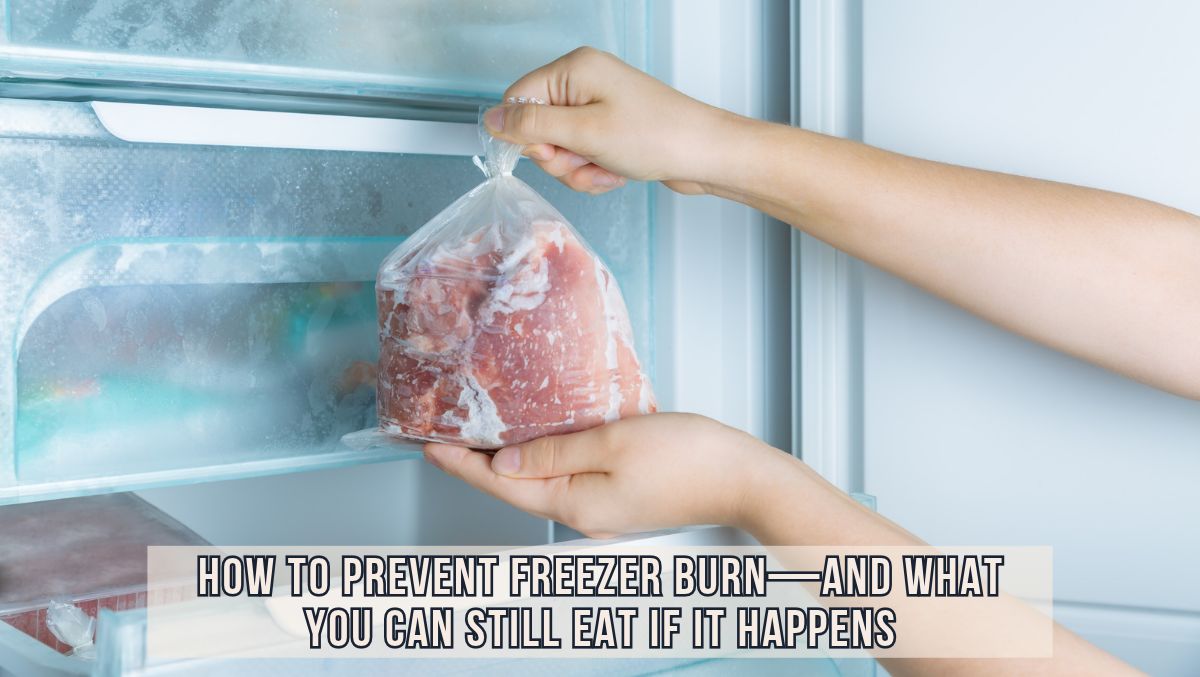
How To Prevent Freezer Burn—and What You Can Still Eat If It Happens
Freezer burn can turn a grocery bargain into a disappointing meal.

When “Stocking Up” Can Quietly Raise Your Monthly Food Costs
Learn the common ways “stocking up” can backfire and how to build a smarter food stockpile.
About The Dollar Stretcher
The Dollar Stretcher shares practical ways to lower everyday costs, build steadier money habits and move from stuck to stable on a tight budget.
Learn more about how we can help you.